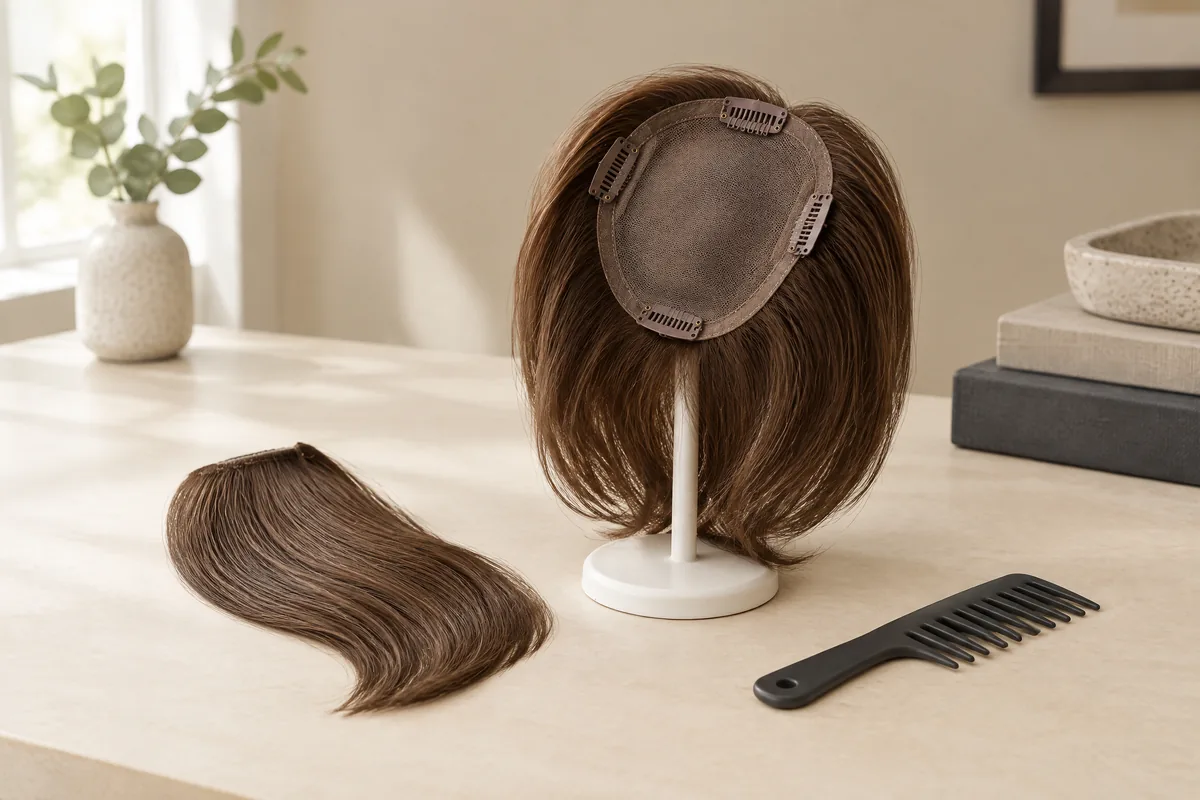
Hong Kong comfort changes by setting. For a wig for hot humid weather, choose by separating outdoor heat, actual sweating, and cap airflow: a lighter style may reduce bulk, a planned break manages sweat, and an open section is only one part of ventilation. Check the specific cap, fit and care instructions rather than expecting one label to solve every warm day.
Start with the weather you are actually facing
A humid walk from a MTR station is not the same problem as sitting in a cool office. The Hong Kong Observatory explains that heat stress reflects temperature, humidity, airflow and solar radiation together, not temperature alone 1. Its Hong Kong Heat Index can be higher when humidity is high and winds are light, even when the thermometer reading is not at the day’s maximum. That is why a cap that feels acceptable indoors may feel oppressive outside.
Before choosing a style, name the setting. Are you commuting in direct sun, moving between shops, attending an air-conditioned event, or spending a quiet afternoon at home? The answer changes what “comfortable” needs to do. In strong heat, the priority may be reducing time covered and planning a cool place. In a humid but shaded setting, hair resting on your neck or a close fit may be the bigger irritation. A breathable wig cap cannot alter the weather around you.
Use this quick distinction:
- Heat: the environment raises your body’s cooling demand. Water, shade, rest and lighter clothing matter more than a cap label.
- Perspiration: your body is producing moisture. A dry break, a suitable liner and a non-restrictive fit may feel more useful than simply adding another layer.
- Airflow: the cap has openings or materials that may allow more air movement. Coverage, density, fit and hair length still affect the overall feel.
Key idea: “Lightweight”, “breathable” and “open cap” are questions to investigate, not promises that every wearer will feel cool.
What a cool-feeling wig can—and cannot—do
A warm-weather choice is a balance, not a race for the most open construction. Total hair volume, length, cap coverage and fit work together. A shorter silhouette may leave less hair around the nape, but that does not guarantee a cooler scalp. A more open base may expose more airflow, yet dense hair over it or a close fit can still feel warm. Your preferred hairline, parting and security may also require coverage that you do not want to give up.
When comparing a style, ask for physical details rather than relying on marketing language: what is the stated weight, which zones are covered, where are the open sections, and how does the cap adjust? If the supplier cannot provide a detail, record that as uncertainty instead of filling the gap with an assumption. Ownstrand’s warm-weather guidance similarly recommends comparing fibre, total weight, fit and cap construction for the exact style, while noting that no construction guarantees a cool feeling. For a broader checklist, see this wig for hot humid weather.
For cap construction details, compare a breathable wig cap by its covered and open zones.
| Decision point | What it may help with | Trade-off to discuss |
|---|---|---|
| Shorter or less voluminous hair | Less hair around the neck and shoulders | May not give the silhouette or movement you want |
| Lower stated weight | Less overall bulk to carry | Weight alone does not describe coverage, density or fit |
| Open or wefted areas | More open space in particular cap zones | Other zones may remain covered; airflow is not guaranteed |
| Closer, secure fit | Less shifting during normal movement | Too much pressure can become distracting or uncomfortable |
| Liner or extra layer | A different contact feel and a dry spare option | Adds another layer and may feel warmer for some people |
Separate sweating from airflow
Sweat is not proof that a cap is poorly designed. It can reflect humidity, activity, anxiety, clothing, personal tolerance and the time spent outdoors. The American Academy of Dermatology describes sweating as a normal cooling process, while noting that persistent heavy sweating without heat or activity can warrant discussion with a dermatologist 2. That distinction matters: selecting a different cap may help your wearing experience, but it is not a way to diagnose or treat a medical condition.
If you sweat under a wig, first change the conditions you can control. Plan a private, cooler place for a pause. When safe and practical, remove the wig and let your scalp and any liner dry. Keep a clean, dry spare liner only if it fits comfortably and suits the wig; adding fabric is not automatically cooler. Do not tighten the cap to respond to moisture. A secure fit should not feel needlessly restrictive.
The most useful routine is a simple three-check pause:
- Place: can you move somewhere cooler, shaded or private?
- Fit: is the cap settled without rubbing or unnecessary pressure?
- Next step: would removal, rest or a dry liner make the next hour easier?
These prompts are for comfort, not a medical test. If the scalp feels sore, persistently itchy or irritated, stop wearing the wig until you are comfortable and seek professional advice if the concern continues. For practical break planning and post-wear handling, read this sweating under a wig.
A Hong Kong day, split into three scenarios
Scenario A: sunny commute. Heat and solar exposure are the main issue. Wear the style only if you can pause, drink and reach shade; a shorter cut may reduce neck bulk, but no wig replaces heat precautions. Check Hong Kong Observatory alerts on very hot days.
Scenario B: humid outdoor activity. Perspiration and movement become central. Choose a fit that stays secure without tightening, plan a private break, and carry a dry option if appropriate. If you become unwell, stop the activity rather than trying to improve the cap.
Scenario C: cool office followed by dinner outside. Air-conditioned comfort can hide what happens later. Notice the transition, not just the first hour. A manageable hairstyle, a planned pause and realistic expectations are more useful than assuming an open cap will feel identical in both places.
How to compare a breathable wig cap
Airflow is a construction question. Ask whether the crown, sides, back, front edge and parting use the same material. Find out where the cap is open, how hair is attached, and whether dense hair covers those openings. “Lace”, “hand-tied” or “open” may describe one area rather than the complete base. A breathable wig cap should therefore be judged by its map of covered and open zones, not by its name alone.
Fit changes the result. A cap that shifts may need adjustment; one that presses at the temples, hairline or nape may be uncomfortable even if its base has open areas. Sizing can vary between wig brands, so assess the actual piece rather than assuming a familiar label will fit. If you can handle or try the specific style, position it as you expect to wear it, move naturally, and notice pressure, rubbing and movement. This is a comfort check, not a clinical assessment.
| Cap question | Useful answer to request | Why it matters |
|---|---|---|
| Which zones are open? | Crown, sides, back, front and parting described separately | Shows whether “open” applies to the whole base or one area |
| How is hair attached? | Wefts, hand-tied sections or another construction, with locations | Helps you compare actual contact and coverage |
| What is the fit range? | Size, adjustment points and where the edge should sit | Security and pressure are personal, not guaranteed by a label |
| What is the hair density? | A description for the selected piece or model | Dense hair can affect warmth even with open cap sections |
| What care is permitted? | Fibre-specific washing, drying and styling instructions | Prevents a warm day from leading to unsuitable heat or products |
What to ask before you buy
Take five questions with you: What exactly is open? What is the stated weight? How should this cap sit? Which fibre-care rules apply? Can I pause or remove it comfortably during my normal day? Clear answers make comparison possible. Vague answers are not necessarily a problem, but they mean you should avoid claiming a performance you cannot verify.
Do not treat human hair as automatically cooler than synthetic fibre, or synthetic fibre as automatically easier in every climate. The relevant choice depends on the exact piece, density, care needs, styling plan and budget. Cleveland Clinic advises following the manufacturer’s care suggestions and distinguishes care for human-hair and synthetic wigs 3. That is especially important after a sweaty day: warmth and cleaning are separate decisions.
Build a routine for sweat without overcomplicating care
Before leaving home, check the forecast, your route and where a pause could happen. If the day includes walking, exercise or long outdoor time, decide in advance whether you would rather wear the wig throughout, carry an alternative covering, or pause wearing it. There is no prize for enduring discomfort. A small pouch can hold a clean liner, water and the care information for the specific wig, but only carry accessories that suit the fit.
After wearing, separate scalp care from wig care. Let your scalp and liner dry. Keep a worn liner apart from a clean one. For the wig, inspect the care label before washing, wetting or applying heat. Sweat does not automatically mean immediate washing, and heat is not a universal drying method. Cleveland Clinic notes that synthetic wigs should not be heat-dried or heat-styled in the same way as natural human-hair wigs 3; product-specific instructions take priority.
For comfort, avoid vigorous rubbing at the hairline and avoid changing a cap’s adjustment to compensate for sweat. If a material, adhesive or liner causes repeated irritation, stop and ask a qualified healthcare professional what is appropriate, particularly if you are receiving treatment or have a diagnosed scalp condition. A wig is an appearance choice, not treatment or protective equipment.
Know when the wig is no longer the priority
If you feel dizzy, unusually tired, nauseated, headachy, very thirsty or excessively sweaty, take heat illness seriously. The NHS advises moving someone with heat exhaustion to a cool place, giving fluids and cooling the skin; heatstroke signs such as confusion, seizure, loss of consciousness, or hot skin without sweating require emergency help 4. Remove unnecessary coverings when safe. Do not keep adjusting a wig while ignoring symptoms.
Hong Kong’s Observatory also advises extra care during very hot weather, including water, rest and prompt medical advice if you feel unwell 1. People who are older, pregnant, very young, living with chronic illness or otherwise more vulnerable to heat illness may need an individual plan. If chemotherapy, scalp sensitivity or a medical condition is involved, follow the treating team’s advice before choosing a cap or liner.
A practical comfort decision can be summarised like this:
- Mild warmth, no concerning symptoms: move to a cooler area, take a break and reassess fit.
- Moisture or damp liner: remove when practical, dry the scalp and use only a suitable clean option.
- Persistent irritation or unusual sweating: stop guessing; seek clinical advice.
- Heat-illness symptoms: prioritise cooling and medical help over hair appearance.
Make the choice personal and testable
The best warm-weather comparison is not “Which cap is coolest?” It is “Which combination of coverage, fit, hair volume and routine works for this setting, and what will I do when the setting changes?” Write down your non-negotiables, such as a secure hairline, a preferred part, less neck bulk or an easy private break. Then compare two or three specific styles using the same questions.
Give each option a simple status: known, needs checking, or not important to me. “Open cap” might be known, while the exact open zones need checking. A familiar colour may be important, while a small difference in hair density may not. This prevents one attractive label from outweighing the features that actually affect your day.
Canvas and OWNSTRAND share the same owner, so this article is not an independent product review or third-party endorsement. Brand information should be weighed alongside the exact product details, your own comfort check and, where health concerns arise, advice from a qualified healthcare professional.
Questions & answers
Is a short wig always better for a Hong Kong summer?
Not always. A shorter style may reduce hair around your neck and shoulders, but comfort also depends on density, cap coverage, fit, activity and your tolerance. Compare the exact style and plan a break for outdoor time.
Should I add a wig liner if I sweat easily?
A liner may change the contact feel and can provide a dry spare option, but it adds a layer and is not automatically cooler. Check that it fits comfortably with the cap, keep a worn liner separate, and follow its own care label.
Can an open-cap wig protect me from heat?
No. Open sections may be one airflow feature, but a wig is not protective equipment. Heat safety still means shade, fluids, rest and responding to official warnings. Remove the wig or move somewhere cooler when that is the safe choice.
How do I know whether sweat is a cap problem or a health concern?
Notice the circumstances: humidity, activity and time outdoors commonly increase sweating. If heavy sweating happens without heat or activity, persists, disrupts daily life, or comes with irritation, ask a qualified healthcare professional rather than diagnosing it from a wig description.
Can I wash or heat-dry my wig after a sweaty day?
Not automatically. Let your scalp and liner dry, then check the exact wig’s care instructions. Human-hair and synthetic pieces can have different cleaning and drying requirements, and some synthetic wigs should not be exposed to heat. Follow the maker’s instructions.
Put the next step into practice
For a structured introduction to cutting and styling, explore the learning options at Canvas. Hong Kong hair styling courses。
Read more practical notes on hairstyles and preparation for everyday routines. Canvas beauty journal。
Tell the team about your learning goal or styling request. Contact Canvas Academy。
Sources & further reading
- Hong Kong Observatory — Beware of Health Effects of Extremely Hot Weather
Explains that Hong Kong heat stress reflects temperature, humidity, airflow and solar radiation, and advises water, rest, precautions and medical advice when unwell.
- American Academy of Dermatology — How to control excessive sweating
Distinguishes normal cooling sweat from excessive sweating and recommends breathable fabrics, hydration, trigger awareness and dermatology advice when sweating persists.
- Cleveland Clinic — Wig Care 101: How to Wash, Style and More
Explains that human-hair and synthetic wigs have different care considerations and that manufacturer instructions should guide washing, drying and styling.
- NHS — Heat exhaustion and heatstroke
Lists heat-exhaustion and heatstroke warning signs and gives cooling, fluid and emergency steps that take priority over wig comfort.