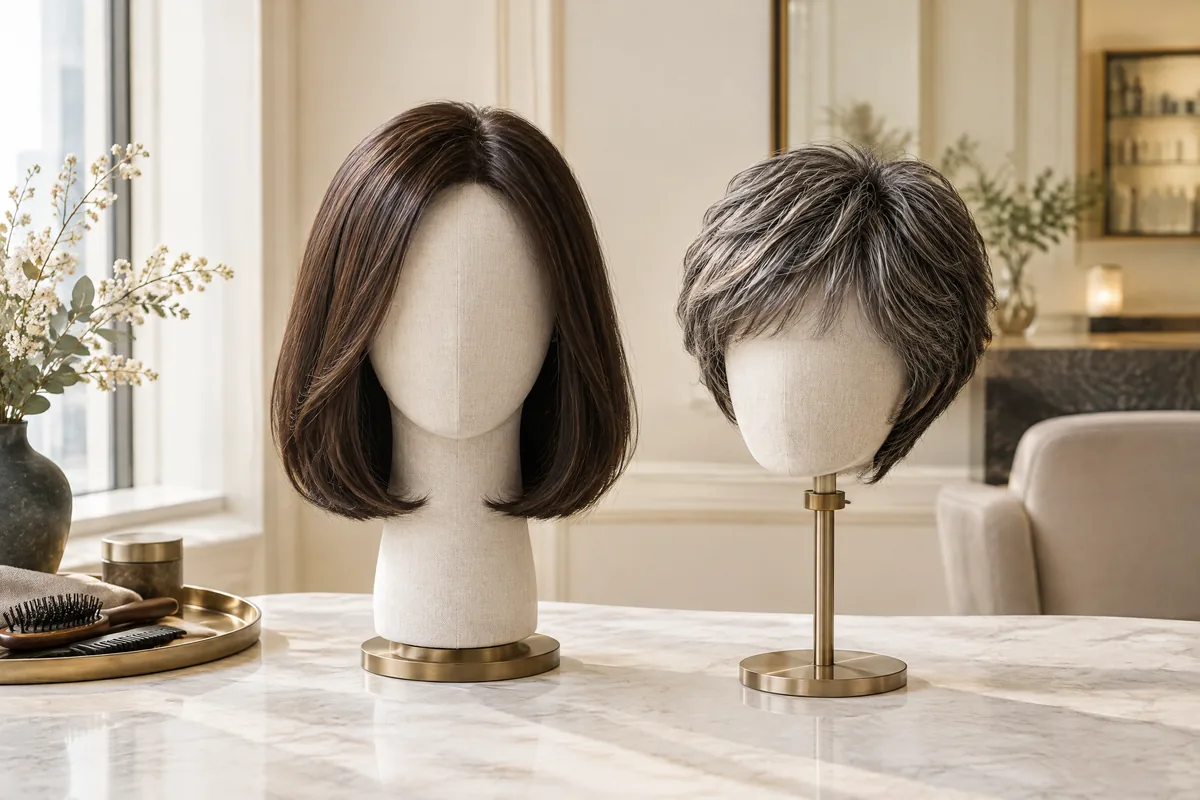
Choosing a first wig is easier when you stop asking which wig is best in general. Start with the occasion, decide the size of change you can live with, and then check whether your real morning routine can support the fibre, length and styling involved. That sequence prevents an attractive option from becoming an awkward daily obligation.
Layer one: name the occasion before the wig
A wig for a one-off dinner has a different job from one worn to work, school or appointments several days a week. Write down the three situations that matter most. Note indoor or outdoor use, expected movement, how long you will wear it, and whether you need to remove it during the day. This is not about predicting every problem; it is about making the brief honest.
For occasional wear, a stronger visual change may be enjoyable because you have time to settle the shape before leaving. For regular wear, repeatability usually matters more: a familiar silhouette, manageable coverage and a fit you can assess without rushing. If privacy matters, ask whether a consultation can be arranged in a setting that feels comfortable. Cancer Research UK notes that privacy and bringing someone along can be relevant considerations when choosing a wig.1
| Occasion | First questions | Sensible priority |
|---|---|---|
| Occasional event | How long will I wear it? Will I move, travel or be photographed? | Predictable fit and a style that needs little last-minute work |
| Regular weekdays | Can I repeat this routine before work? | Comfort, stable shape and easy care instructions |
| Short-term change | How quickly do I need it, and what must be confirmed? | Supply, timing and an uncomplicated fitting conversation |
| Appearance transition | What part of my familiar look should remain? | Proportion, colour direction and a gradual change |
A local enquiry should answer practical questions rather than create pressure. The wig shop Hong Kong page describes browsing and enquiries, a confirmed Kwun Tong location, and the need to check supply and visit arrangements directly. Treat those as questions to confirm for the exact option, not as a promise of walk-in access or immediate stock.
Layer two: decide the degree of change
The second layer is emotional as well as visual. A first wig can preserve your usual outline, make a modest adjustment, or deliberately create a new look. None is more authentic. The useful question is: what change will still feel like you after several hours?
Use a change slider, not a yes-or-no choice
Imagine a five-point slider. At one end, keep your usual length, parting and colour direction. In the middle, change only one feature, such as a softer fringe or a little more movement. At the other end, alter length, density and tone together. A first-time wearer often gets clearer feedback by changing one variable first; if everything changes at once, it is harder to tell what feels wrong.
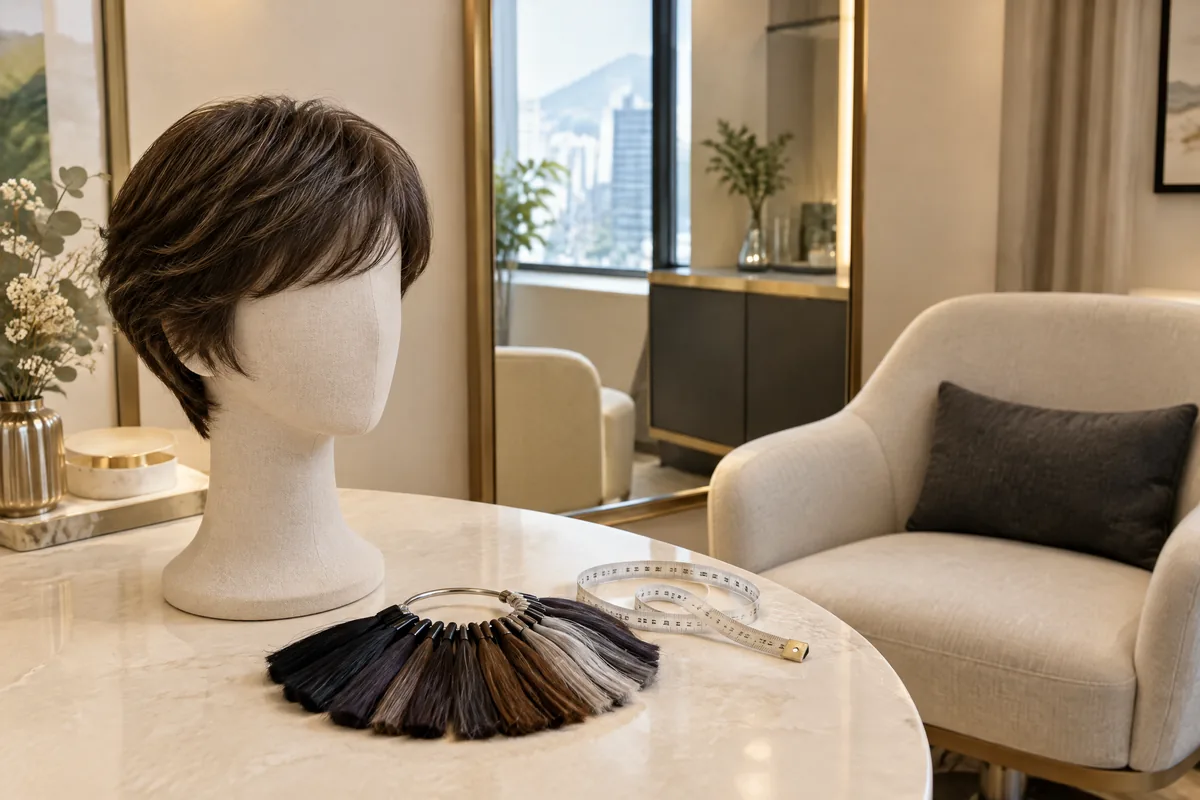
Colour should be discussed in natural light where possible. The American Cancer Society advises using natural light when comparing a hair swatch with a wig and notes that size can vary by brand.2 A screen image can communicate mood, but it cannot confirm the exact shade or fit. Bring a reference photo as a starting point, then judge the actual option on your own face and head.
| Degree of change | What stays familiar | Main trade-off |
|---|---|---|
| Low | Length, tone and parting | Less experimentation, but easier daily recognition |
| Medium | One or two familiar features | A balanced look, with some fitting and styling decisions |
| High | Little may stay the same | More creative freedom, but a larger adjustment in proportion and routine |
Coverage also belongs in this layer. A full wig, topper and partial hairpiece are different product conversations; do not choose coverage simply because a photograph looks natural. Ask what area you actually want to cover and how the cap sits at the hairline, crown and nape.
Layer three: budget your real styling time
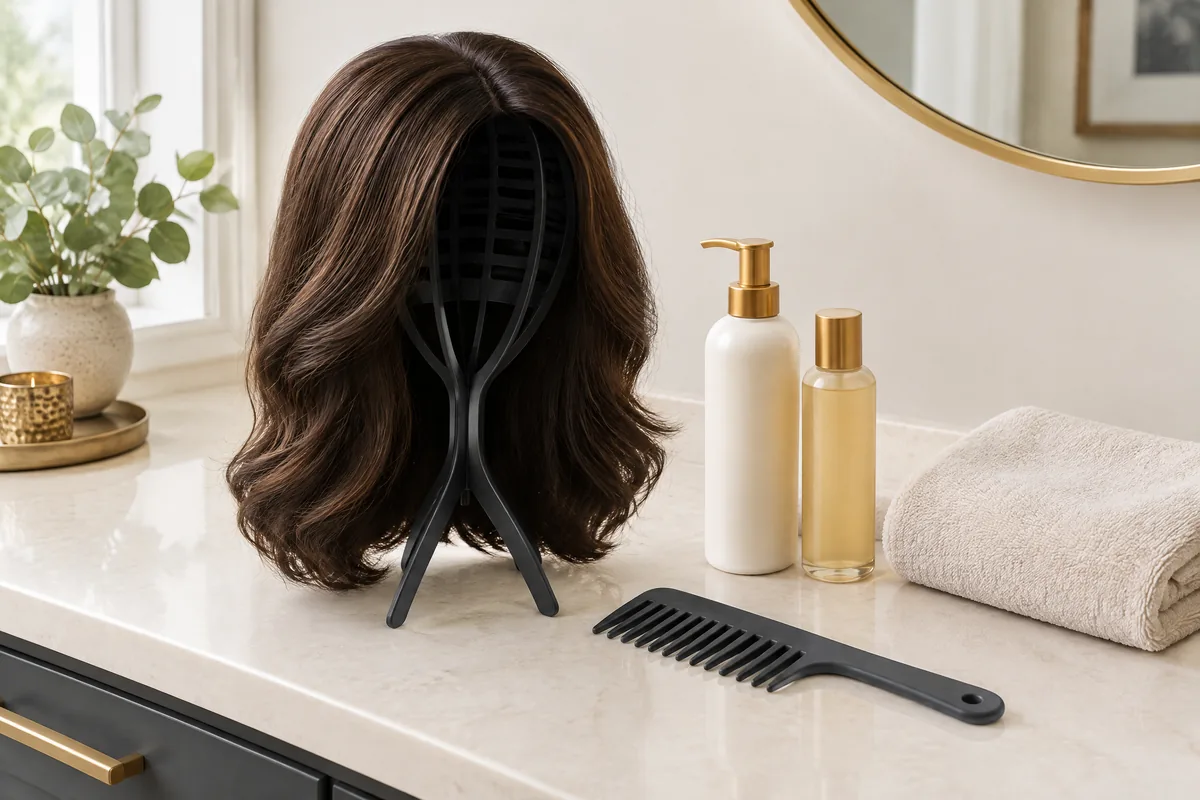
A wig is not only a purchase. It is a small recurring task. Add the mental effort of checking the front, arranging the parting and deciding whether the result still feels balanced. A routine that is technically quick can still feel tiring when repeated under pressure, so leave room for an option that feels forgiving rather than merely impressive. This matters most on workdays, when a small delay can change your whole morning. Estimate the time you can give it on a normal weekday, not on an unusually free morning. Then separate preparation from maintenance: placing it correctly, checking the front, detangling, washing according to the maker’s instructions, and arranging any professional adjustment.
Synthetic and human-hair wigs can have different care and styling demands. Macmillan explains that synthetic wigs are often lighter and easier to look after, while human-hair wigs may need regular cleaning and professional styling; it also stresses following the care instructions supplied with the wig.3 Those are general characteristics, not a guarantee for every construction. A fibre labelled heat-friendly is not permission to use any tool or temperature: follow the exact product instructions.
A simple budget calculation can expose a mismatch: weekly styling minutes × number of wear days, plus occasional care time. For example, if you have 10 minutes on four mornings, your practical weekday allowance is 40 minutes. A longer style that routinely needs more time may still be right for an event, but it deserves a different decision from an everyday option. This is an illustrative calculation, not a performance claim.
Decision rule: if an option only works when you imagine having more time, more patience or more help than you normally have, move it to the occasional-wear category.
Custom or ready-made: match the process to the problem
“Custom” and “ready-made” describe how an option is produced, not a universal ranking of quality. Ready-made means the main design exists before you select it; you judge its stated silhouette, colour, construction and fit. Custom starts with a discussion of preferences and measurements, but it still has defined options and does not mean unlimited changes.
The custom vs ready-made wigs guide explains that the useful comparison is which details are fixed and which can be discussed for the particular option. Ask whether measurement, sample viewing, a return fitting, styling or adjustment applies to your chosen service. Also ask what is not included. A catalogue page is not proof of current supply, and a quoted making period is not the same as a delivery promise.
Choose ready-made when the existing silhouette meets your needs and your priority is a defined option you can assess. Consider custom when fit, proportion or a specific familiar outline deserves a measurement-led conversation and you have time for that process. The correct choice may be different for an event wig and an everyday wig.
Build a fair Hong Kong comparison
Price becomes useful only after the objects being compared are equivalent. Record the wig type, fibre, base description, size, included fitting or styling, supply status and written care terms. A low headline figure may describe a different coverage or exclude a service you expected.
Check the quote line by line
A written quote is easier to compare when each inclusion is visible. Keep the wig itself separate from fitting, cutting, styling, delivery and any later adjustment. If a seller cannot confirm a term yet, label it pending instead of filling the gap with an assumption.
Use a short enquiry that asks for facts in the same order each time:
- What exact wig or configuration is being discussed?
- Is it full coverage, a topper or another piece?
- What fibre and base construction are stated?
- Can the size or head measurement be checked?
- What does the quoted price include and exclude?
- Is current supply confirmed, and what timing applies?
- Is a fitting, adjustment or return visit available?
- Which care instructions apply to this exact item?
The compare wig shops in Hong Kong guide recommends comparing stated construction, quote scope, fitting arrangements, location, care and after-sales terms rather than relying on a shop ranking. That approach is particularly useful when two sellers use similar words for different bases.
Test the map before you commit
Before deciding, run a small, reversible test. Wear a style reference for a few minutes while sitting, standing and turning your head. Notice whether your attention goes to the fit, the hairline, the colour or the styling work. If a physical fitting is possible, bring the person whose opinion helps you feel calm, not someone who will choose for you.
For colour, compare in natural light. For fit, ask how the size is adjusted and what happens if your hair volume changes. For care, request instructions for the exact fibre and construction. Do not infer heat tolerance, durability, return rights or a service period from a generic label. Keep every unconfirmed item in a separate note until the seller answers it.
If hair loss is connected to cancer treatment, a medical team should guide medical decisions and any question about scalp sensitivity or attachment. Macmillan says a wig is an option, not an obligation, and notes that a private fitting can help; its guidance also advises checking with a doctor or nurse about products used on sensitive skin.3 A wig changes appearance; it does not diagnose or treat hair loss. Stop and seek clinical advice for persistent scalp discomfort rather than trying to solve it through a product change alone.
Turn the decision into one clear next step
At the end of the map, you should be able to state one sentence: “I need a [coverage] for [occasion], want a [low/medium/high] change, and can give it [realistic time] on a normal day.” That sentence is more useful than a long list of saved pictures.
Then request a quote or fitting conversation that repeats those priorities. Confirm the option, price scope, supply, timing, fitting and care in writing. If the answer changes your assumptions, revise the map rather than forcing the wig into the original plan. The best first choice is the one you can wear with clarity about what it asks of you.
Questions & answers
Should my first wig match my current hair exactly?
Not necessarily. Matching one familiar feature can make the transition gentler, while a controlled change can also feel natural. Judge the actual colour and fit rather than relying on a screen image.
Is a custom wig always better than a ready-made wig?
No. Custom may help when measurements or a particular outline matter; ready-made may suit a defined style and simpler selection. Compare the exact process, timing and included services.
How much styling time should I allow?
Use your ordinary weekday and count placement, checking and routine care. If the style needs more time than you can repeat comfortably, reserve it for occasional wear.
Can I rely on an online photo for colour and fit?
No. A photo communicates direction, but lighting and screens vary. Compare colour in natural light and ask how the exact cap is sized or fitted.
What if my scalp feels uncomfortable?
Remove the wig if needed and ask a qualified healthcare professional for advice, especially during treatment or with sensitive skin. Follow item-specific care instructions and do not assume an adhesive or liner is suitable.
Put the next step into practice
For a structured introduction to cutting and styling, explore the learning options at Canvas. Hong Kong hair styling courses。
Read more practical notes on hairstyles and preparation for everyday routines. Canvas beauty journal。
Tell the team about your learning goal or styling request. Contact Canvas Academy。
Sources & further reading
- Cancer Research UK — Wigs, hats and scarves
Supports the practical point that privacy and bringing someone along can matter when choosing a wig, without endorsing a seller or product.
- American Cancer Society — Choosing and Wearing a Wig
Supports checking wig sizing by brand and comparing colour in natural light; it also distinguishes common coverage and fibre choices.
- Macmillan Cancer Support — Wigs for cancer treatment
Supports the general differences in care between synthetic and human-hair wigs and the advice to follow supplied instructions and seek clinical guidance for sensitive skin.