Start with the clothes you already wear
A wig changes the visible boundary between head, neck and clothing. That boundary is more useful than a generic rule about oval, round or heart-shaped faces. Put on two or three familiar tops and look at the whole outline: where the hair ends, whether it covers the collar, and how much of your shoulder remains visible.
Begin with a high crew neck, a V-neck and an open shirt. A short cut can leave the neckline clear and make the shoulder line prominent. A medium shape can sit near the collar and create a second horizontal line. A long shape can overlap the shoulder and travel down the front or back of the garment. None is automatically better; each creates a different relationship between hair and fabric.
Use a mirror at front view and a phone photograph at side view. Keep the camera at shoulder height and use the same distance for every option. This is a simple silhouette exercise, not a beauty score. The aim is to notice what you actually see when you turn, sit, carry a bag or wear a jacket.
The best length is usually the one whose outline still feels intentional when your clothes, posture and daily movement are included.
Compare the three length zones
“Short”, “medium” and “long” are useful directions, but they are not universal measurements. A bob is a cut, not one fixed length; a medium style may sit above or below the shoulder; a long style may behave very differently when layered or curled. Check the exact measurements, finish and fibre for the individual piece rather than reading a category name as a specification.
| Length zone | Front-view question | Side-view question | Wardrobe interaction |
|---|---|---|---|
| Short or bob | Does the perimeter frame the jaw, cheek or neck? | Is the nape neat, graduated or fuller? | Leaves collars and earrings visible; can make a high neckline feel crisp. |
| Medium | Do the ends sit near the jaw, shoulder or upper chest? | Does the shape project, hug or skim the shoulder? | Works as a bridge between open necklines and covered collars. |
| Long | Where do the ends land when standing and sitting? | Do they clear the shoulder, catch on fabric or fall behind it? | Can soften a jacket edge but may meet collars, straps and chair backs. |
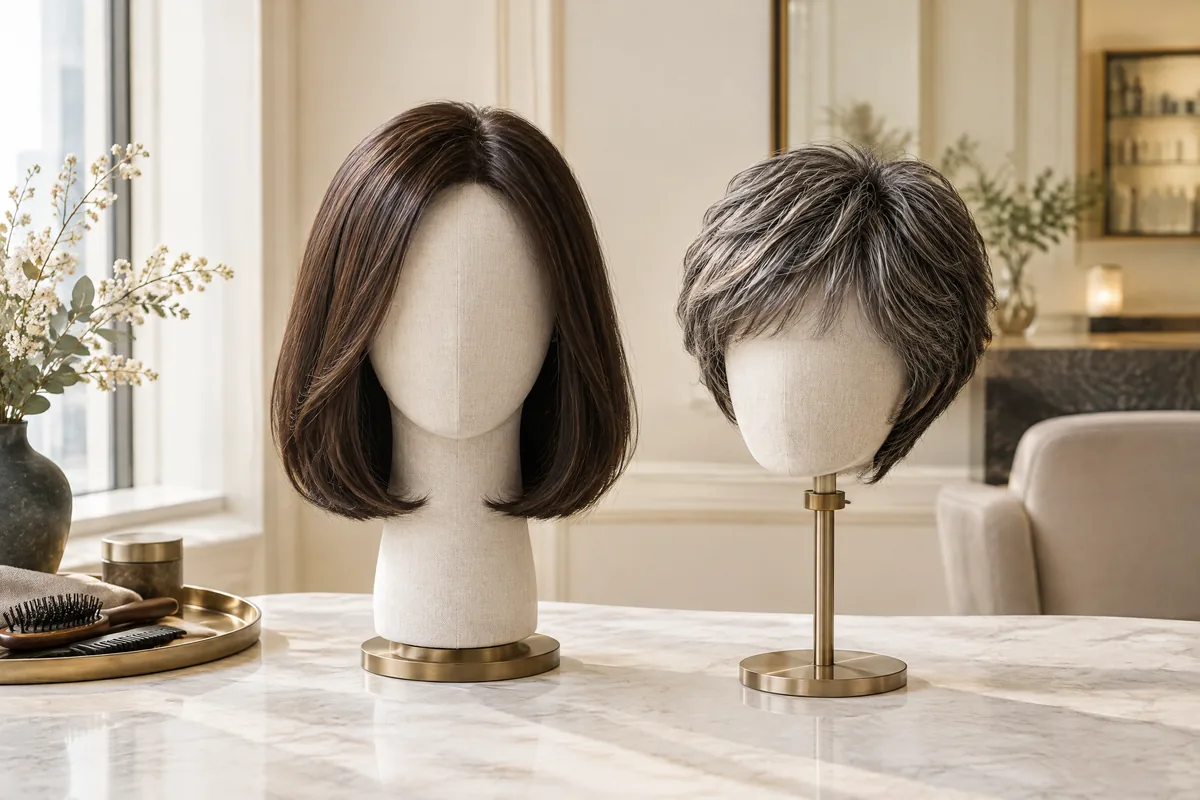
For a practical starting gallery, compare short wigs by their perimeter and side profile rather than by the word “short” alone. A close crop, chin-length bob and longer bob can all read differently with the same blouse.
What the neckline reveals
A high neckline gives you a clean test because it shows whether the hair ends sit above, on or over the collar. With a V-neck, notice whether the hair repeats the opening or creates a separate frame around it. An open shirt tests movement: can the sides tuck behind the collar without losing the shape you like?
Try one structured garment, one soft knit and one jacket. Structured fabric makes a blunt line more obvious. A soft knit lets waves and layers merge with the shoulder. A jacket adds lapels, seams and friction points, so the length that looks balanced in a T-shirt may need more handling in outerwear.
Use side views before deciding
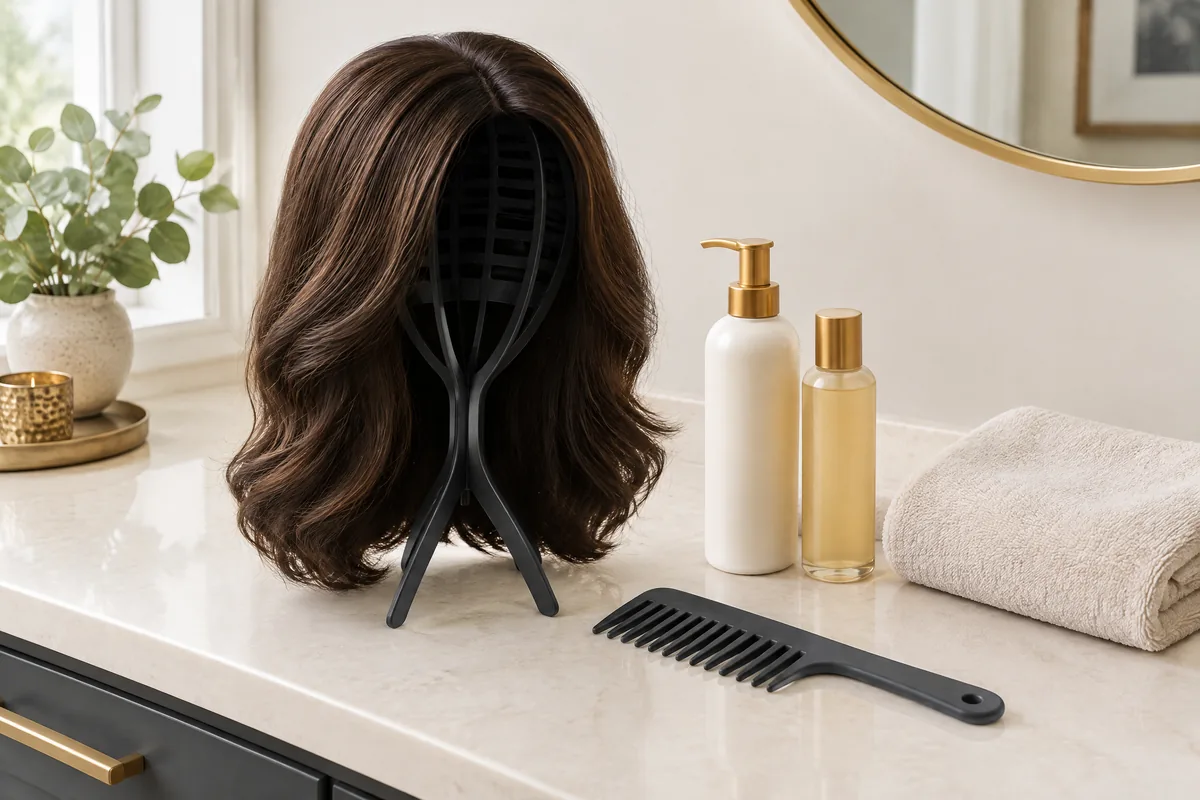
Front photographs encourage face-first thinking. Side views show the practical outline: the nape, crown, ends and the space between hair and shoulder. Ask a friend to take three photographs while you stand naturally, turn halfway and sit down. Keep your expression out of the decision; compare the profile and the clothing boundary.
A short silhouette often gives the neck more visual space. That can suit a crisp collar or a high-neck knit when you like a clear line, but it also means the cut and nape are easy to notice. A medium silhouette can balance visibility and coverage, especially when the ends skim the shoulder. Long hair creates more movement and coverage, while adding contact with straps, collars and seat backs.
Think in “contact points”. Mark the places where hair meets clothing during an ordinary day:
- the nape against a shirt collar;
- the sides against glasses, earrings or a jacket lapel;
- the ends against a shoulder strap or handbag;
- the back against a chair, car seat or office headrest.
A style with more contact points is not wrong. It simply asks for a routine that accommodates it. OWNSTRAND’s long-wig guidance similarly stresses where the ends rest and how hair behaves against clothing during commuting, desk work and errands. Treat that as a useful question to ask about a particular design, not as a promise about every long wig.
Match silhouette to your weekly routine
Length is a time-and-movement decision as much as an appearance decision. Write down three situations that happen most weeks: commuting, work or study, exercise, social events, caring duties, or travelling. Then score each length for handling, clothing contact and the amount of rearranging you are willing to do. A simple score makes trade-offs visible without pretending to predict your experience.
| Daily situation | Short or bob may offer | Medium may offer | Long may require you to check |
|---|---|---|---|
| Collars and jackets | Clearer collar space; perimeter stays visible. | Ends may meet the collar depending on cut. | Whether ends catch, fold or need moving. |
| Bags and straps | Fewer lengths crossing the strap. | Some side and shoulder contact. | Whether hair sits under or over the strap. |
| Desk or car seat | Less hair behind the back. | Ends may rest at the shoulder blades. | Whether the back length is compressed or tangled. |
| Styling expectation | Shape may be designed to hold its outline. | Finish and layers strongly affect the read. | Fibre, curl pattern and care instructions matter. |
For a mid-length reference, medium length wigs are described as a range rather than a universal measurement. Compare the actual end position, straight or textured finish, and whether the style suits your parting and neckline. If you like to tuck or tie hair back, ask about the specific construction instead of assuming every medium length allows it.
Build a low-effort test
Wear each candidate for a short, ordinary trial at home, following the supplier’s fitting and care directions. Walk, sit, put on your usual jacket and remove a shoulder bag. Do not use the trial to make claims about durability or comfort over a full day; use it to identify questions.
Record only observable details: “ends touch collar when I turn left”, “nape stays clear”, or “side volume meets glasses”. This keeps the decision concrete. If the wig shifts, rubs or causes discomfort, stop and ask the fitter or supplier for help. A silhouette preference never overrides physical comfort.
Treat fibre and finish as part of length
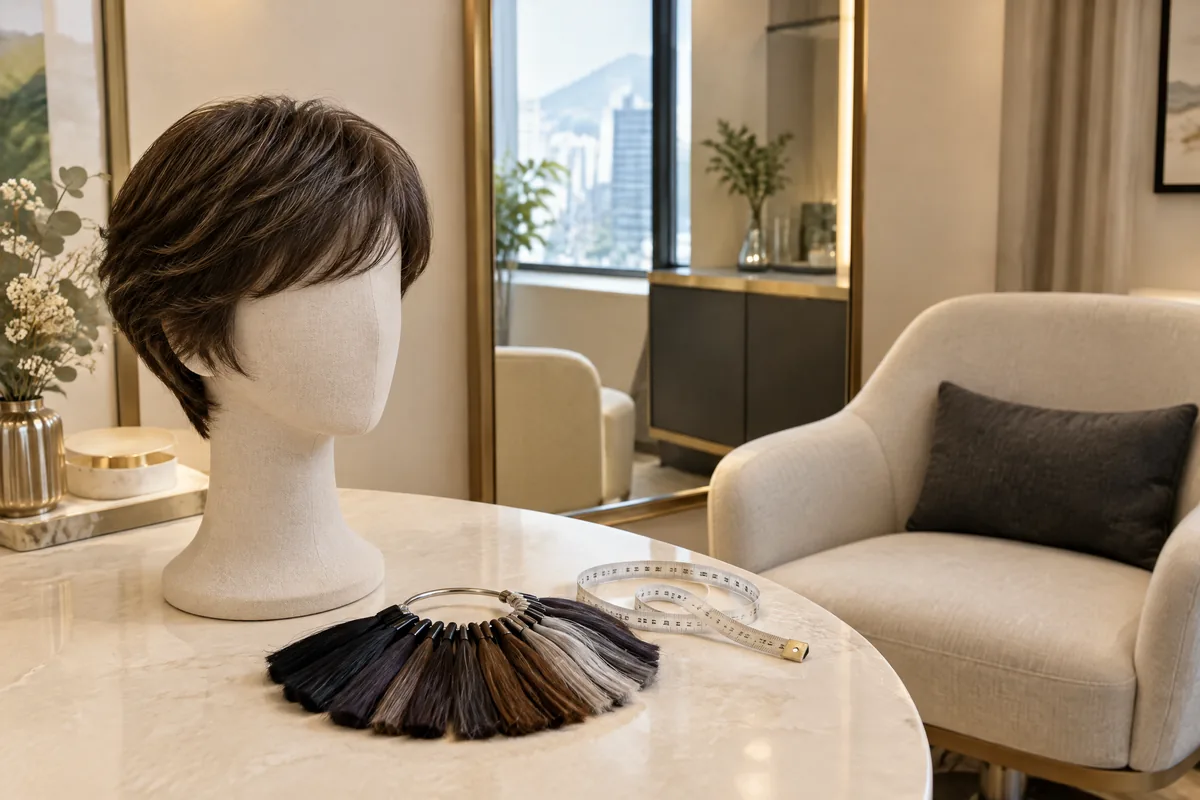
The same length can read differently in straight, wavy or curly finishes. Straight hair shows the perimeter clearly. Waves add movement and may make the visible ends appear less exact. Curls can make a style look more compact, depending on the pattern and arrangement. Compare the finished outline shown for the exact item and ask whether stated measurements are taken before or after styling.
Fibre changes the practical choice too. Human hair and synthetic fibre are not interchangeable, and neither label alone tells you the cap, density, care routine or permitted styling. Follow the product’s own instructions. Never assume a synthetic fibre is heat-safe; use heat only where the manufacturer explicitly permits it for that item. The long-wig guidance at OWNSTRAND makes the same distinction between material labels and item-specific care information.
Cancer Research UK explains that synthetic and human-hair wigs have different cost, styling and care considerations, and advises checking manufacturer information before exposing synthetic fibres to direct heat. It also notes that a wig fitter or specialist nurse can help when a desired option is difficult to find. 1 These are general health-information points, not a specification for any Canvas or OWNSTRAND product.
Colour can alter the outline as well. A single tone may make a blunt edge read as one continuous shape. Subtle tonal variation can make layers more visible. Judge colour after checking the silhouette, because changing both at once makes it harder to know which difference you prefer.
Make fitting a two-angle conversation
Bring three references to a fitting or enquiry: a front photograph of the outline you like, a side photograph showing the desired end position, and a photograph of a neckline you wear often. Describe the result in physical terms: “ends just above the shoulder”, “nape visible with a shirt collar”, or “long enough to cover the upper chest but not the bag strap”. This is clearer than asking for a style name alone.
Ask these questions before treating a catalogue image as a decision:
- What are the front, side, crown and nape measurements for this exact design?
- Is the pictured finish straight, waved or curled, and is the measurement taken before styling?
- Which fibre and cap construction are stated?
- What care and styling limits apply to this item?
- Can I see the shape from the side, or discuss it during a private fitting?
Sizing is also item-specific. Macmillan advises that a wig can feel tight while natural hair is still present and that an adjustable size may be useful as hair changes; it also recommends following the supplier’s care instructions. 2 If you are choosing because of treatment-related hair loss, speak with your clinical team or wig specialist first. A wig is an appearance option, not a diagnosis or treatment.
When scalp comfort changes the decision
If you are having chemotherapy, radiotherapy or another treatment that affects hair or scalp, medical guidance comes first. Do not diagnose a scalp condition from a photograph or use adhesive products to solve pain or irritation without asking your doctor or nurse. Macmillan notes that treatment can make skin sensitive and advises checking with a doctor or nurse about products used to secure a wig. 2
Cancer Research UK says some people find their scalp sensitive during treatment and may find soft fabrics or a soft liner more comfortable. 1 That does not mean a liner will suit everyone: it can alter how a wig moves. Stop if there is pain, broken skin, marked redness or worsening irritation, and seek clinical advice. You can also choose not to wear a wig every day; hats, scarves or a bare head are valid choices.
In Hong Kong’s warm, humid weather, include ventilation and sweat in the conversation, but avoid universal promises. The exact fibre, base, fit and care directions matter. A shorter silhouette may feel simpler around the neck, while a longer one may offer coverage that you personally prefer. Comfort is the deciding condition, not a ranking of lengths.
A final silhouette decision
After the clothing and side-view tests, choose the length that wins on your priorities, not the one that matches a rule. If your wardrobe is mostly high collars and structured jackets, a clear short perimeter may be easiest to integrate. If you move between open shirts and knitwear, a medium shape may provide a flexible middle outline. If you want visible movement or shoulder coverage and accept more contact points, a long style may be worth the extra handling.
For a final comparison, long wigs can be assessed by where the ends land while standing, sitting and wearing a bag. Compare that behaviour with the medium and short options, then confirm the exact fibre, measurements, availability and care instructions before ordering. A category page can guide your questions; it cannot replace the specifications for the individual design.
The useful result is not a verdict about your face. It is a repeatable observation: this outline leaves the collar clear, that one catches the strap, another feels right from the side. When a wig works with your clothes and routine, the silhouette becomes part of your everyday style rather than a separate project.
Questions & answers
Is a short wig automatically better for a round face?
No. This article uses necklines, shoulders and side views rather than a face-shape rule. Compare the actual perimeter, nape and clothing interaction, then choose the outline you prefer.
How can I compare a medium wig with a long wig?
Photograph both from the front and side while wearing the same neckline. Note where the ends land when you stand, sit and carry a bag, then compare fibre, finish and care requirements for the exact designs.
Can I use heat tools on any synthetic wig?
No. Use heat only when the manufacturer explicitly permits it for that specific item and gives directions. Otherwise follow the care label and do not infer heat tolerance from a photograph or category name.
What should I do if a wig irritates my scalp during treatment?
Stop and ask your doctor, nurse or wig specialist for advice, especially before using adhesive products. Soft fabrics or a liner may help some people, but a liner can change fit and is not suitable for everyone.
Do I need to wear a wig every day after hair loss?
No. A wig is optional. Hats, scarves, other head coverings or no covering are valid choices. Choose what feels comfortable and appropriate for your day, with medical advice taking priority when treatment or scalp symptoms are involved.
Put the next step into practice
For a structured introduction to cutting and styling, explore the learning options at Canvas. Hong Kong hair styling courses。
Read more practical notes on hairstyles and preparation for everyday routines. Canvas beauty journal。
Tell the team about your learning goal or styling request. Contact Canvas Academy。
Sources & further reading
- Cancer Research UK: Wigs, hats and scarves
Supports the distinctions between synthetic and human-hair wigs, checking manufacturer heat guidance, fitting support, and using soft fabrics or liners when treatment makes the scalp sensitive.
- Macmillan Cancer Support: Wigs for cancer treatment
Supports advice about adjustable fitting, supplier care instructions, treatment-related skin sensitivity, and consulting a doctor or nurse before using securing products.