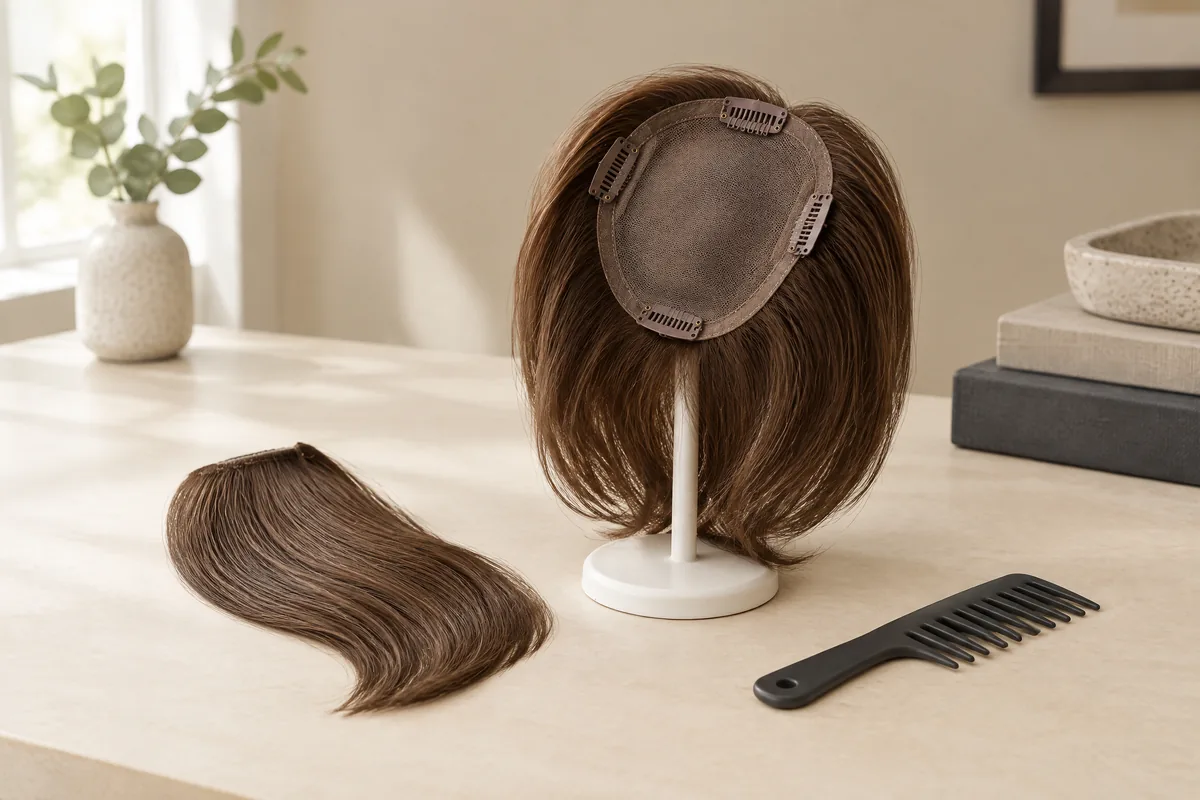
A sample visit works best as a comparison exercise, not a fashion test. Bring daylight references, describe your usual parting and movement, and decide in advance whether a companion will observe, ask questions or share the final say. That small preparation turns one appointment into evidence you can review calmly.
Start with a decision, not a picture
A saved hairstyle image is useful, but it is only one piece of information. It shows an outline chosen by someone else, under someone else’s lighting, with a different face, hair density and styling routine. Use it to point out what matters: a cheekbone-length front, a soft fringe, a low-volume crown or a tidy side part. Do not treat it as a promise of an identical colour or finish.
Write one sentence describing the decision you need to make. For example: “I want a shoulder-skimming shape that can look neat on workdays, but I do not want a very visible part.” This is more useful than “something natural”, because it gives the consultation a practical direction. Keep a second sentence for a compromise you could accept. You may prefer a certain length, yet accept a shorter outline if it sits more securely or needs less daily work.
Before travelling, confirm what can actually be viewed and discussed. A sample is a reference for shape, texture and tone; it is not proof that the exact sample, colour or finished construction is available. A Hong Kong consultation service may discuss style, samples and measurements, but arrangements vary by enquiry.
Build a natural-light reference pack
Colour is easy to misread in a salon, a lift mirror or a phone screen. The American Cancer Society recommends comparing a hair swatch and wig colour in natural light, such as outdoors or near a window 1. That does not make daylight a magic “correct” setting. It simply gives you a repeatable reference before warm indoor bulbs change the impression.
Take two or three photos of your own hair, if you are comfortable doing so: one near a bright window, one outdoors in open shade and one in ordinary indoor light. Avoid a beauty filter, heavy exposure correction and direct midday glare. Keep the camera at a similar distance, and note the date and lighting in your phone album. If matching existing hair matters, a small clean hair swatch can be more informative than a heavily edited portrait; ask a healthcare professional first if your hair or scalp is affected by treatment and handling it would be unsuitable.
At the visit, compare each sample against the same reference. Look at the broad family first—black, brown, ash, warm, grey-blended—before debating a tiny tonal difference. Then move near a window or another neutral light source if available. A sample that looks right only under one bulb deserves a question, not an automatic yes.
| Reference to prepare | What it helps you judge | What it cannot prove |
|---|---|---|
| Window-light photo | Overall tone and contrast | Exact finished colour |
| Open-shade outdoor photo | How the shade reads without harsh glare | How it will look in every room |
| Unedited style image | Length, fringe, outline or volume | Identical texture or density |
| Written colour words | A shared starting vocabulary | A universal colour meaning |
Keep the pack small. Sixteen screenshots can create noise. Three useful images and three decisions you need answered will usually make a clearer conversation.
Record your parting and movement habits
Parting is not a minor detail. It affects where the eye reads the top, how a fringe falls and whether the style feels like you. Note where your hair naturally separates on a normal day: left, right, centre, changing, or not relevant because you usually wear a fringe or cover the crown. Also record what happens after walking, putting on glasses, tying hair back or riding in a humid environment.
A short phone video can help you remember movement, but you do not need to bring a polished presentation. Write observations instead: “I move the part two centimetres left when the crown looks flat” or “I usually tuck both sides behind my ears.” These details tell a fitter what you actually do, rather than what looks attractive for one photograph.
Separate visual priorities from wearing priorities
Use two columns in your notes. Visual priorities might include a soft hairline, a particular side-swept fringe or less shine. Wearing priorities might include lightness, stable ear areas, space for glasses or a part that does not need resetting. If the lists conflict, rank them. A dramatic fringe may look excellent in a still image but require more adjustment than you want each morning.
Bring the accessories you normally use, such as glasses or a familiar headband, if they are safe and comfortable for you. They can change the silhouette and reveal a practical issue early. Do not assume a sample’s construction, fibre or care requirements from its appearance. Any washing, heat or chemical-care question should be answered for the specific piece and its maker’s instructions; the American Cancer Society warns against heat tools unless the wig is heat-resistant 1.
| Note before the appointment | Example wording | Why it matters |
|---|---|---|
| Parting habit | “Usually right side, sometimes centre” | Helps compare top view and direction |
| Movement | “I turn my head often at work” | Focuses the fit conversation on ordinary use |
| Styling effort | “Five minutes, no daily heat” | Prevents choosing a look that needs a bigger routine |
| Accessories | “Wear glasses most days” | Lets you check the outline with real items |
Use a companion as a decision tool
A companion can steady the process, but their role should be explicit. Ask yourself whether you want emotional support, a second pair of eyes, help remembering questions or someone who will challenge an impulsive choice. These are different jobs. A person who says “that is nice” to every sample may be kind, yet not especially useful for comparison.
Before the appointment, agree on two boundaries. First, you retain the final decision about your appearance and comfort. Second, the companion can raise observations without taking over the conversation. A useful prompt is: “Please tell me what changes between samples, not which one you would choose for yourself.” Ask them to photograph notes or record the sample order only if the salon permits it.
If you are deciding during a stressful period, consider a two-stage choice. Use the visit to narrow the field to two options, then take the written comparison home. A companion can ask, “What would make you regret this choice?” That question surfaces trade-offs such as maintenance, visibility of the part, price or the need for a later adjustment. It also lowers the pressure to reward the appointment with an immediate purchase.
When going alone is the better option
Going alone may suit you if other people’s opinions make you second-guess every preference, or if privacy matters more than shared reassurance. You can still prepare a neutral checklist and send a summary to someone later. If you have a medical appointment or treatment decision connected to hair loss, keep that discussion with your healthcare team; a wig consultation is about appearance, fit and product arrangements, not diagnosis or treatment. The American Academy of Dermatology says effective hair-loss treatment begins with finding the cause and seeing an appropriately qualified dermatologist can help 2.
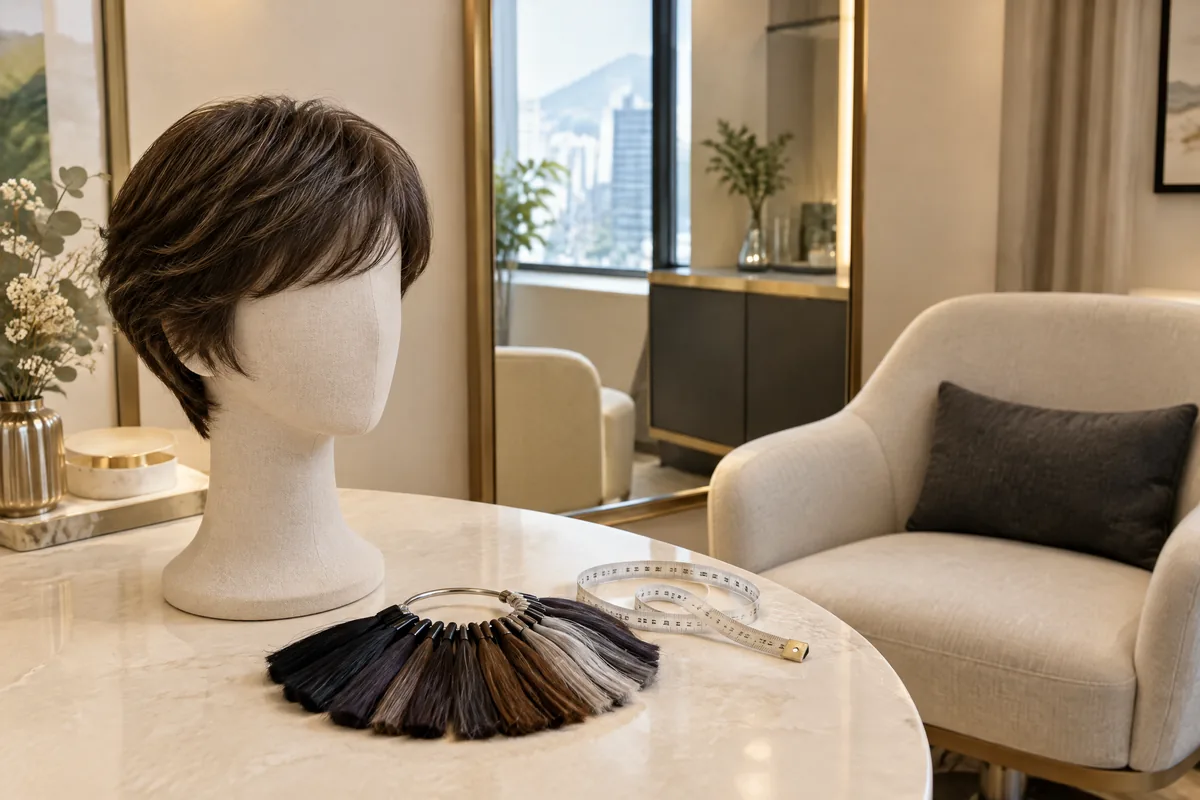
Compare samples in a fixed order
Do not jump from colour to fringe to price and back again. Use the same sequence for every sample. First view the front and side outline from a normal standing distance. Next inspect the top and parting. Then notice how the piece feels when you sit, stand and turn your head gently. Finally discuss the routine needed to keep the shape presentable.
A sample comparison is not a pass-or-fail test. It is a way to turn impressions into questions. “It feels wrong” can become “the crown looks fuller than I want” or “the front moves when I turn.” Specific wording gives the fitter something to assess, without promising that every alteration is possible.
| Checkpoint | Record this observation | Follow-up question |
|---|---|---|
| Front and sides | Outline, face framing and length | Can this proportion be discussed for the chosen piece? |
| Top and parting | Direction, visible base and volume | How would my usual parting be handled? |
| Movement | Secure, loose, tight or simply unfamiliar | Can this be assessed during fitting? |
| Routine | Washing, brushing and styling expectations | Which instructions apply to this exact fibre and base? |
| Decision | Preferred, acceptable, ruled out | What must be confirmed before I proceed? |
For a made-to-measure enquiry, ask which measurements are needed, who should take them and whether home figures are only provisional. Wig sizing can vary by brand, so a general chart or a previous wig label cannot guarantee the fit of a different piece 1.
If you are arranging a visit with a Hong Kong provider, custom wig consultation Hong Kong describes a private Kwun Tong consultation context where style, samples and measurement arrangements can be discussed; confirm availability before travelling.
Leave with a written next step
End the appointment by separating confirmed facts from open questions. Confirm which sample or design reference you are discussing, what measurement process applies, whether a quotation is for your specification and what happens after a custom item is completed. A later fitting may be a separate stage from the first sample visit.
Write down the exact wording of any care advice. “Human hair” is not a universal permission to use every hot tool, product or chemical service. Follow the instructions for the specific item, and ask before changing its colour, cut or texture. If you have sensitive skin, irritation or treatment-related concerns, pause and ask your healthcare professional about suitability rather than trying to solve a medical issue through a cosmetic fitting.
A useful post-visit note has three lines: preferred option, unresolved question and decision date. If no date is necessary, leave it blank. The aim is not to manufacture urgency; it is to prevent a vague memory from becoming an accidental commitment.
For a completed custom piece, a return fitting can be used to assess fit and discuss practical finishing. A local provider’s description of wig fitting Hong Kong distinguishes that completion visit from the earlier sample and consultation stage. Ask what applies to your own order rather than assuming an outside wig receives the same service.
A calmer way to decide
The strongest sample visit is not the one with the most photographs or the biggest group opinion. It is the one where you can explain why an option works, what compromise it requires and what remains unconfirmed. Natural-light references reduce colour confusion. Parting notes make the discussion personal to your routine. A companion adds value when their role is agreed in advance.
If you want to enquire locally, wig shop in Kwun Tong gives the location context for a salon at Unit 2103, 50 Hoi Yuen Road; contact the provider before travelling to confirm arrangements. The brand information is a service description, not an independent product review.
There is no obligation to choose a style simply because it looked good for five minutes. A clear comparison lets you return to the decision with your own priorities intact.
Questions & answers
Should I bring a photograph to a wig sample appointment?
Yes, bring a few unedited references, ideally including a photo in window light or open shade. Use them to explain length, outline, fringe, volume or tone. They are conversation aids, not guarantees of an identical colour, texture or finished style.
Why does natural light matter when comparing wig colours?
Indoor bulbs and phone screens can shift how a shade appears. Natural light gives you a more consistent reference for comparing your own hair, a swatch and a sample. It still cannot predict every room or confirm that a particular shade can be supplied.
What should I say about my usual parting?
Describe where it normally sits, whether it changes, and what you do after movement or styling. Mention whether you wear a fringe, tuck hair behind your ears or prefer the crown to look flatter or fuller. These practical habits are more useful than a general request for a natural look.
Is it helpful to take a companion to a private wig visit?
It can be helpful if you agree their role beforehand. They might take notes, ask a prepared question or describe differences between samples. You should keep the final say about appearance and comfort, and you do not need to bring anyone if another opinion would make the decision harder.
Can a wig consultation diagnose the reason for hair loss or scalp discomfort?
No. A consultation can discuss appearance, fit and product arrangements, but it is not diagnosis or treatment. If hair loss is unexplained, rapid, painful or associated with scalp symptoms, seek advice from an appropriately qualified healthcare professional before relying on cosmetic guidance.
Put the next step into practice
For a structured introduction to cutting and styling, explore the learning options at Canvas. Hong Kong hair styling courses。
Read more practical notes on hairstyles and preparation for everyday routines. Canvas beauty journal。
Tell the team about your learning goal or styling request. Contact Canvas Academy。
Sources & further reading
- Wigs for Hair Loss | American Cancer Society
Supports comparing colour in natural light, taking current-style references, checking fit on the wearer and recognising that sizing varies between brands; it also cautions that heat tools require heat-resistant wigs.
- Hair loss: Diagnosis and treatment | American Academy of Dermatology
Supports the medical boundary that hair-loss care begins with identifying the cause and that wigs can provide cosmetic coverage but do not slow hair loss or regrow hair.