Start with the choice, not the diagnosis
A wig is an appearance option. It does not explain why hair changes, prevent treatment effects, or replace a conversation with your clinical team. For an appearance-focused starting point, chemotherapy wigs lets you compare the service context before making style questions more specific. You may want a familiar outline, a new colour, full coverage, or no wig at all. Each is a valid personal choice.
Choosing early can make the process less rushed. Macmillan notes that selecting a wig before hair falls can help with style and colour matching, while also stressing that there is no pressure to choose straight away 1. The useful question is not “What should someone having chemotherapy wear?” It is “What would make getting dressed feel more like mine?”
Keep medical and style decisions in separate columns. Your oncology team is the right source for treatment timing, expected changes, scalp symptoms, and whether a product touching the skin needs special consideration. A fitter can discuss a cap, measurement, colour and care instructions, but cannot determine clinical suitability.
Decide when to shop
There is no universal best date. Shopping before treatment may let you photograph your current style and compare colour while it is easy to reference. Shopping later may suit someone who would rather decide only when a change actually occurs. Cancer Research UK says you can choose before hair begins to fall or after it has fallen, and photos can help either way 2.
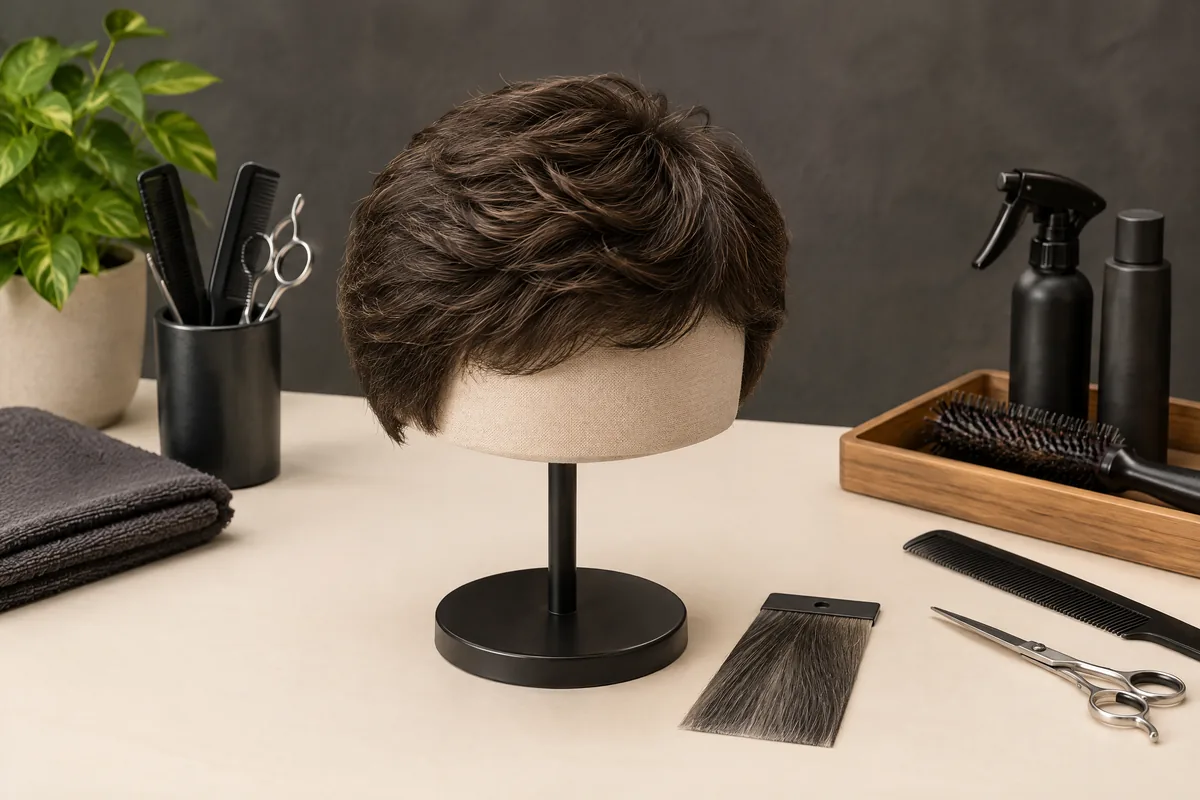
A low-pressure approach is to gather information before committing. Save two or three photographs: one showing your usual front and sides, and one showing a shape you would consider. Note your parting, fringe, volume and preferred length. If you are comfortable, ask whether a small hair sample would help; treat it as a reference, not a guarantee of an identical match.
If you try a wig while you still have hair, remember that the fit may feel different later. Ask whether the cap adjusts and how a refit would be handled. Do not buy solely because a colour looks right on a screen. View samples in useful light, and give yourself permission to leave without ordering.
A simple three-stage appointment
- Describe the look. Say what you want to keep and what you might change: length, movement, parting, tone or volume.
- Check the real fit. Turn your head, look down, wear your glasses if relevant, and notice pressure at the edge, ears, crown and nape.
- Confirm the next step. Ask what is included, what can be adjusted, what care applies to that exact wig, and when you need to decide.
For a private Hong Kong enquiry, wig before chemotherapy can be used as a starting point for appearance questions, samples and appointment arrangements. It is not a prediction about hair loss or a substitute for clinical advice.
Compare appearance and daily effort
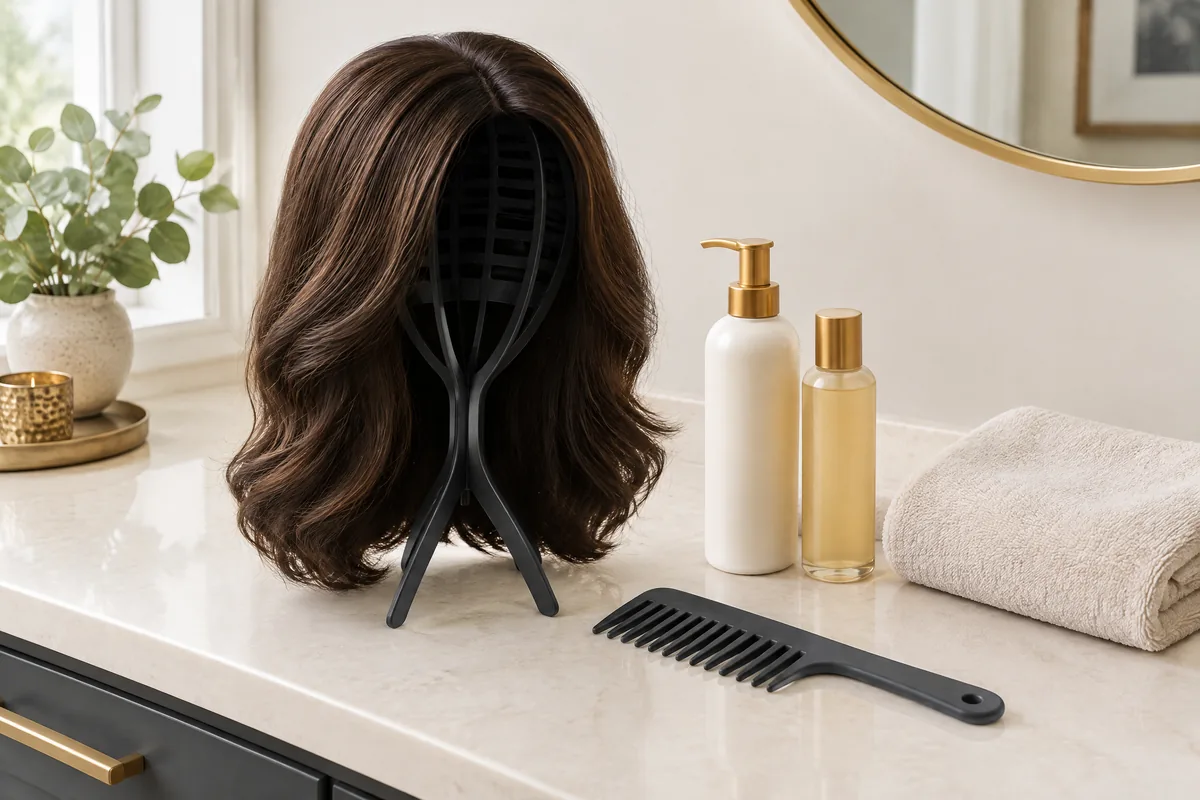
The most attractive option is not always the easiest option for your routine. Compare a style by what it asks of you on an ordinary day, not only by how it looks for five minutes in a mirror. A shorter silhouette may feel simpler to arrange; a longer one may give you the movement you prefer but require more care. Neither is automatically better.
| Decision | What to compare | Why it matters | Question to ask |
|---|---|---|---|
| Shape and length | Familiar outline versus a deliberate change | A recognisable style may feel emotionally easier; a new shape can feel refreshing | Can this exact wig be trimmed or adjusted, and by whom? |
| Colour | Depth, undertone, highlights and grey proportion | Screens and indoor lighting can mislead | Can I view a sample in daylight? |
| Coverage | Full wig, partial coverage, scarf or hat | Different choices change contact, styling and privacy | What do I want covered, and for how much of the day? |
| Routine | Wash, drying, arranging and storage | Care effort may matter more than a label | What are the maker’s instructions for this item? |
Synthetic and human-hair wigs involve different trade-offs, but the fibre alone does not tell you how comfortable a cap will feel. Cancer Research UK explains that many synthetic wigs are ready-styled and often cheaper, while human-hair wigs can cost more and may need more styling or professional care 2. Use those as broad categories only. Confirm the actual product instructions.
Never infer heat tolerance from a glossy finish or the phrase “natural look”. Some synthetic fibres can melt or frizz with direct heat. Human hair is not a licence to use any tool or chemical either. Follow the maker’s instructions for the specific item, and ask before washing, colouring or altering it.
Put scalp comfort before a reassuring label
A “soft” lining or a named cap construction is not a medical safety claim. A seam that seems minor on a display head may sit over your hairline, temple, ear or nape. During a short fitting, place the wig gently and check whether it stays put without being pulled tight. Move naturally rather than holding your head still.
If your scalp feels sensitive, separate points you can observe from claims that need clinical advice. You can observe an edge, seam, fastener, pressure point, warmth or movement. You cannot establish from a fitting that a wig is hypoallergenic, infection-safe, or suitable for a skin condition. Macmillan advises that treatment can make skin sensitive and that a liner may help some people, but it also recommends checking with a doctor or nurse about products used on sensitive skin 1.
A careful comfort check
- Inspect the inside for raised joins, tags, rough edges and fasteners.
- Notice the front hairline, temples, behind the ears, crown and nape.
- Turn your head and look down; note sliding, bunching or repeated adjustment.
- Try the proposed liner separately, then compare briefly with and without it if comfortable.
- Stop if discomfort persists, and contact your healthcare team about skin changes or symptoms.
| Comfort route | Possible advantage | Possible trade-off | What to check |
|---|---|---|---|
| Wig without a liner | One less layer and edge | The cap itself may rub or feel warm | Seams, perimeter, adjusters and pressure points |
| Wig with a soft liner | May change friction or absorb moisture | Adds warmth, thickness, seams or movement | Whether it rolls, bunches or creates pressure |
| Scarf, hat or other headwear | Changes contact from a full wig cap | May offer a different level of coverage or security | Fabric edge, tying pressure and movement |
| Different fit or construction | May redistribute contact | Terminology does not guarantee a particular feel | The actual cap on your head, not its name |
For a focused discussion of cap edges, seams, liners and alternatives, wig for sensitive scalp during chemotherapy offers appearance and comfort questions without promising medical suitability.

Plan for real Hong Kong days
Hong Kong weather can make heat and humidity part of the comfort decision, but no wig is automatically cool. Think about where you will wear it: an air-conditioned office, a short outdoor journey, a clinic visit, or a full day of errands. You might choose to alternate a wig with a scarf or hat instead of expecting one item to work every hour.
Ask how to store the exact wig, how often it should be cleaned, and whether it needs professional styling. Take the instructions home in writing if possible. Keep the choice practical: a beautiful option that you avoid because it feels heavy, warm or high-maintenance is not serving your routine.
Adhesives and tapes deserve extra caution. They are not required for every wig, and sensitive skin may react. Do not experiment with a product on treatment-affected skin without asking your healthcare professional. A secure feeling should never outweigh persistent irritation.
Budget without false precision
Set a total budget rather than comparing only the sticker price. Include a fitting, possible adjustment, care products, a liner or alternative headwear, and any future styling you knowingly want. The calculation below is an example, not a market average or a promise of what any individual wig will cost.
Example only: HK$3,000 wig + HK$300 fitting or alteration allowance + HK$200 care and headwear allowance = HK$3,500 planning budget. Confirm every item and service before paying.
Ask these questions in one conversation:
- Is the quoted price for the exact style, colour and size?
- Is fitting, cutting or styling included, or charged separately?
- What happens if the fit changes after hair loss?
- Which care instructions and products apply?
- What is the cancellation, exchange or alteration policy?
A private consultation may be useful if privacy, measurement or style comparison matters to you. Keep the commercial conversation separate from treatment decisions, and do not treat a catalogue image as a guarantee of stock, colour or comfort.
Make a flexible wearing plan
A wig can be part of your wardrobe without becoming a test you must pass. Try it at home for a short period when you feel well enough. Notice warmth, pressure, movement and the emotional effect of seeing yourself in it. You may like it immediately, need time, or prefer another head covering. All three responses are useful information.
Prepare a small alternatives kit: a soft scarf or hat, the care instructions, and a note of the cap details you liked or disliked. If your scalp becomes uncomfortable, remove the wig rather than tightening it repeatedly. Persistent pain, rash, broken skin or a new concern belongs with your healthcare team, not a fitting appointment.
The aim is not to predict your treatment experience. It is to make appearance choices with fewer last-minute decisions while leaving room for your body, preferences and care team to guide what happens next.
Five questions to take to a fitter
Bring these questions whether you are exploring a ready-to-wear option or a custom discussion:
- Which features can be adjusted if my hair coverage changes?
- Can I see the colour in lighting that helps me judge it accurately?
- Where are the seams, edges and adjusters inside this exact cap?
- What care, heat and cleaning limits apply to this item?
- What alternatives can I consider if I do not want to wear a full wig every day?
A useful answer should be specific to the item, not a broad promise about all chemotherapy wigs. Take time to compare, and ask your oncology team about any medical question that arises.
Medical caution: This article covers appearance planning and general practical questions. It does not diagnose hair or scalp conditions, advise on cancer treatment, or guarantee comfort or safety. Follow your healthcare team’s advice, especially for persistent discomfort, skin changes, adhesives, liners or timing questions.
Questions & answers
Is it necessary to buy a wig before chemotherapy starts?
No. Some people prefer the time to compare a familiar style and colour, while others wait or choose a scarf, hat or no head covering. Ask your care team about treatment questions, and decide at your own pace.
Will a wig bought before treatment still fit after hair loss?
Not necessarily. Hair coverage can change how a cap feels. Ask whether the wig adjusts and whether a refit is possible. A fitter can discuss fit; your healthcare team should handle clinical concerns.
What is the most comfortable wig for a sensitive scalp?
There is no universally comfortable cap. Check actual seams, edges, adjusters, warmth and pressure on your head. A liner or scarf may help some people and bother others. Persistent discomfort or skin changes need medical advice.
Are human-hair wigs better than synthetic wigs during chemotherapy?
Neither fibre is automatically better for every wearer. Synthetic options may be ready-styled and easier to care for, while human hair may offer different styling choices and costs more. Follow the exact maker’s care instructions.
Can I use tape or adhesive to keep a chemotherapy wig secure?
Do not assume an adhesive is suitable for treatment-affected or sensitive skin. Ask your healthcare professional and the wig supplier about the specific product, application and removal. Stop if irritation develops.
Put the next step into practice
For a structured introduction to cutting and styling, explore the learning options at Canvas. Hong Kong hair styling courses。
Read more practical notes on hairstyles and preparation for everyday routines. Canvas beauty journal。
Tell the team about your learning goal or styling request. Contact Canvas Academy。
Sources & further reading
- Macmillan Cancer Support: Wigs for cancer treatment
Supports the optional timing of wig shopping, fitting considerations, alternatives, broad synthetic-versus-human-hair trade-offs, and caution around sensitive skin and liners.
- Cancer Research UK: Wigs, hats and scarves
Supports choosing before or after hair loss, using photographs, considering adjustable fit, comparing fibres, and treating hats and scarves as valid alternatives.