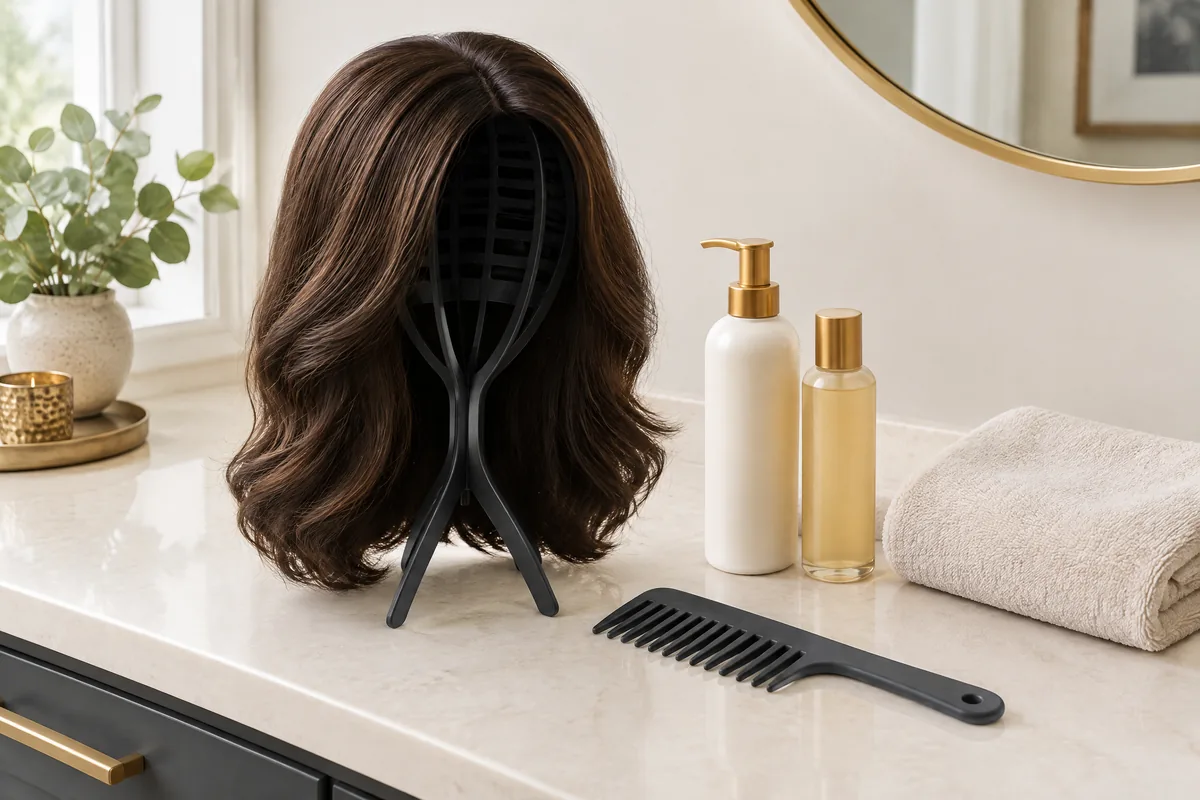
A reliable wig routine is less about a fixed washing number and more about checkpoints: inspect after wear, wash only when the fibre’s instructions allow it, dry without rubbing or unapproved heat, then store it clean, dry, shaded and uncompressed. The label for your exact wig always outranks a general routine.
Start with the wig, not a universal schedule
A calendar helps you remember care, but it should not force a wash. Before each wear, notice whether the wig has picked up perspiration, styling residue, dust or odour, and whether the fibres still move as intended. In Hong Kong’s humid weather, drying may take longer, yet humidity alone is not proof that washing is due. A clean-looking piece can be harmed by unnecessary handling; a visibly coated piece may need attention sooner.
Write the fibre, cap construction and maker’s instructions in one note on your phone. Include whether home washing is allowed, which cleanser is approved, the water method, limits on brushing, and the drying position. A synthetic style labelled heat-friendly is not automatically safe for hot water or every heated tool. Human hair is not automatically compatible with ordinary shampoo or salon processes either. If the label is missing, stop before soaking and ask the seller or maker for product-specific advice.
The useful decision is not “How many wears?” but “What has changed, and what care is permitted?” That prevents a neat-looking calendar from overriding the construction of the wig.
| Checkpoint | What to look for | Next action |
|---|---|---|
| After each wear | Sweat, product film, dust, flattened shape or new tangles | Air and arrange gently; use spot care only if permitted |
| Before washing | Fibre, cap, lace, knots, approved products and water method | Read the exact directions and prepare a clean workspace |
| After rinsing | Supported cap, no twisting, no trapped moisture | Blot or drain as directed; use the specified drying position |
| Before storage | Fully dry where required, cool, detangled without force | Choose a shaded, roomy, low-pressure location |
How to wash a wig without turning cleaning into restyling
When the instructions permit washing, clear a clean basin or work surface first. Put the cleanser, towel and drying support within reach so the wet wig is not carried around by its hair. If brushing is allowed, work in small sections from the ends towards the roots. Hold the hair near the section you are handling so the pull does not travel to the cap, lace or knots. A resistant knot is a stop sign, not an invitation to drag harder.
Let water pass through in the direction the hair falls. Do not scrub, rub, twist or lift the wig by a few strands. The purpose is to release residue with as little friction as possible. Follow the stated water temperature and product amount. Do not substitute a rich conditioner, oil, household cleanser or your own shampoo just because it feels familiar. Product build-up can alter the finish, while an unsuitable formula can make the next detangling session harder.
Rinse exactly as directed and support the cap and lengths.
For a synthetic wig, CancerCare’s public fact sheet describes cool or cold water, gentle soaking and dipping rather than rubbing; it also says to blot rather than wring and to avoid brushing while wet.1
The American Cancer Society similarly advises cold water, a short soak, gentle dipping, thorough rinsing and waiting until the wig is dry before brushing.2
Those are useful general references, not permission to override your wig’s own label.
A low-friction washing sequence
- Identify first. Confirm the fibre, construction and approved care method. Do not infer heat tolerance from appearance.
- Prepare second. Clean the basin and set out only the products and tools the directions permit.
- Detangle where allowed. Start at the ends, pause at resistance and support the hair near the base.
- Clean calmly. Keep the hair aligned with its fall. Avoid scrubbing, twisting and pulling at the cap.
- Rinse and drain. Support the piece, remove residue as directed and never wring it out.
- Dry before deciding anything else. Do not brush, restyle or enclose it while damp unless the instructions expressly allow it.
The sequence matters because wet fibres and loosened knots are less forgiving of force. It also separates cleaning from styling: a wash is not a colour-correction service or an excuse to test a new heat technique.

How often should you wash a wig?
There is no honest interval that fits every wig and wearer. Use actual wear as the trigger, then compare what you notice with the care directions. A person who wears a wig briefly in a clean indoor setting may have different needs from someone who wears it for long days, uses spray, or sweats more. A monthly interval appears in CancerCare’s synthetic-wig fact sheet, but it is guidance for that fact sheet’s audience, not a universal rule for every fibre and construction. 1
A practical calendar can use three levels. On a wear day, remove the wig carefully, let it cool and check the cap and fibres. On a weekly review, look for residue, tangling, pressure marks in the style and whether the storage area remains dry and shaded. On a wash checkpoint, clean only when the evidence and the label agree. If the change is local and spot care is permitted, a full wash may add unnecessary handling. If the piece is damp inside the cap, prioritise ventilated drying before storage.
| Routine moment | A sensible question | Why it helps |
|---|---|---|
| Every wear | Has anything changed since last use? | Finds residue and tangles before they become harder to address |
| Once a week | Is the storage spot clean, shaded and roomy? | Prevents pressure, dust and trapped moisture from becoming routine problems |
| Wash checkpoint | Does the wig need cleaning, and does its label allow it now? | Balances freshness with the friction and drying involved in washing |
| Before an occasion | Is the piece fully dry and is restyling permitted? | Avoids last-minute heat or brushing experiments |
Drying: the quiet checkpoint people skip
Drying is not a minor final step. After rinsing, follow the stated position and support method. Blot excess water if allowed, but do not wring, twist or rub. Arrange strands with fingers only when the directions permit it. Do not brush or comb a wet wig simply to make it look tidy; CancerCare warns that wet synthetic fibres can be stretched by brushing. 1
Keep the piece away from direct sun, open flames, radiators and unapproved hairdryers or heated tools. “Heat-friendly” applies only to the named fibre and the maker’s stated method. It does not turn a standard synthetic wig into a heat-safe one, and human hair still has a base, lace and processing history to consider. When the instructions are silent, do not test a hidden section as an experiment. Ask for clarification.
In a compact home, airflow and protection can seem to compete. Choose a clean, ventilated place where the hair is not touching a hot appliance, a steamy bathroom wall or a sunny window. The outside may feel dry while the cap still holds moisture, so check the inside before enclosing it. If a washing direction says to use a particular stand or position, follow that rather than improvising.
Drying rule: if you cannot confirm that the wig is dry enough for wearing or storage, treat it as not ready. A rushed bag or cupboard creates a different problem from a delayed wash.
Choose storage by purpose, not by accessory name
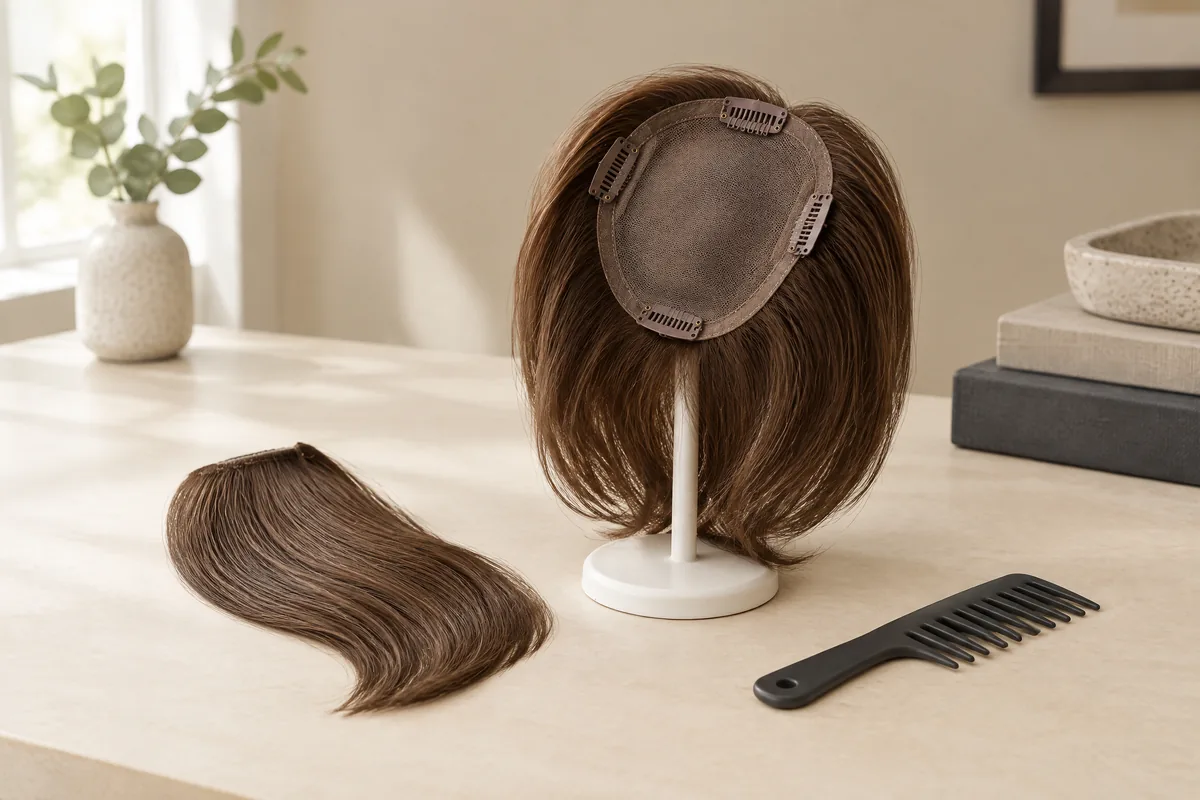
The best place to keep a wig depends on whether it is resting overnight, waiting between occasional wears, travelling, or being stored for longer. A stand can be convenient for a short rest when the cap sits naturally and the hair clears nearby surfaces. It is not a cleaning device, and it is not automatically suitable for drying or every cap shape.
Before using a stand, check three things: does the cap rest without stretching, can the style avoid contact with walls or shelves, and can the setup remain clean and shaded? A folding stand saves room only if it opens securely and does not distort the cap. A roomy box or shelf may be better when no stand fits. A travel bag protects a dry wig from other belongings, but it cannot preserve a style that is squeezed under luggage.
The American Cancer Society recommends a wig stand for short periods such as overnight or a few days. 2 Treat that as a useful short-storage option rather than a command to buy one. The fit of the support and the maker’s directions still decide whether it is appropriate.
A compact-home storage decision
- Overnight or a few days: use a well-fitting stand if the wig is dry and can remain undisturbed.
- No suitable stand: use a clean, shaded, roomy surface or container; never place objects on top.
- Travel: use a protective bag only after the wig is dry and arranged without force.
- Longer pause: protect from dust and pressure while allowing the cap and fibre to rest without sharp folding.
- Any uncertainty: ask the maker about the fibre, cap shape and intended storage period.
Storage should reduce the next wear’s work. Arrange the fibres gently, keep the cap from sharp creases, and avoid a crowded drawer where other items press on the crown. If the wig has been worn in humid weather, give the inside time to ventilate before closing a box or bag.
Human hair and synthetic care: the useful trade-off
Human hair often offers more options for restyling, while synthetic fibres may hold a designed silhouette with less day-to-day intervention. Neither is a universal winner. The trade-off is between flexibility and the discipline of following the exact care conditions. The American Cancer Society describes synthetic wigs as generally less maintenance and human-hair wigs as requiring more maintenance, while noting that personal preference matters. 2
For human hair, do not treat “real hair” as a licence for colouring, bleaching, perming or heat styling. The hair and the base can respond differently, and a familiar salon routine may not suit the finished piece. For synthetic hair, first establish whether it is standard or specifically labelled heat-friendly. Preserve the intended shape rather than assuming every wash should be followed by a reset.
For a fuller material comparison, read human hair vs synthetic wig care as a companion to the label supplied with your own wig. It frames fibre choice as one part of care alongside cap construction, comfort, styling preference and the routine you can follow consistently.
A routine that survives busy Hong Kong days
A workable routine is small enough to repeat. Keep a clean towel, approved comb or brush, and the care note together. At the end of a wear, remove the wig by the cap rather than tugging the hair. Let it cool, check for residue and give the inside air if needed. Once a week, inspect the storage area and the style. When a wash checkpoint arrives, block out enough drying time instead of washing immediately before an event.
For the washing method and frequency factors, see how to wash a wig and follow the exact product directions for your piece.
If you need to decide between a stand, shelf or bag, how to store a wig explains the purpose and trade-offs of each option. These links are practical companions, not substitutes for the label.
If the wig is being worn during chemotherapy, or if the scalp is sore, unusually sensitive or irritated, put comfort and medical advice first. A wig is an appearance choice, not a treatment for hair loss or a scalp condition. Do not diagnose a symptom from a care problem. Pause use and speak with an appropriate healthcare professional when the scalp or treatment plan raises a concern.
The simplest calendar is therefore a set of decisions: inspect after wear, wash when need and instructions align, dry without force, and store without pressure. That method is more dependable than counting wears because it respects what can differ between two wigs that look almost identical.
Questions & answers
Can I wash a wig after every wear?
Usually, do not make every wear an automatic wash. Check for residue, perspiration, dust or odour, then follow the exact fibre and construction instructions. Extra washing adds handling and drying, so use permitted spot care when appropriate.
Can I use my normal shampoo on a wig?
Do not assume it is suitable. Use only a product the wig’s instructions permit. Human hair and synthetic fibres can have different requirements, and the cap, lace and finish matter as well.
Can I brush a wig while it is wet?
Generally avoid it unless the maker expressly says otherwise. Wet fibres and loosened knots can be stretched by brushing. Blot or drain as directed, allow the wig to reach the required dry condition, then detangle with the approved tool.
Is a wig stand necessary for storage?
No. A well-fitting stand can help for a short rest, but a clean, shaded and roomy surface or container may be better if a stand stretches the cap or compresses the style. Choose by fit and purpose.
Can a heat-friendly synthetic wig take any heat?
No. Heat-friendly is a product-specific label, not a general permission. Check the exact method and limits. If the fibre is standard synthetic or the directions are unclear, keep heated tools away and ask the maker.
Put the next step into practice
For a structured introduction to cutting and styling, explore the learning options at Canvas. Hong Kong hair styling courses。
Read more practical notes on hairstyles and preparation for everyday routines. Canvas beauty journal。
Tell the team about your learning goal or styling request. Contact Canvas Academy。
Sources & further reading
- Synthetic Wig Care and Resources
Provides public guidance for synthetic wigs on cool-water washing, gentle soaking, cold rinsing, blotting instead of wringing, avoiding wet brushing, air drying and avoiding heat; it also gives a monthly example that is not universal.
- Choosing and Wearing a Wig
Explains practical differences between synthetic and human-hair wigs and gives general care advice on wig-specific products, cold-water washing, gentle dipping, air drying, short-term wig-stand storage and heat precautions.