Decide how much of your own hair stays in the style
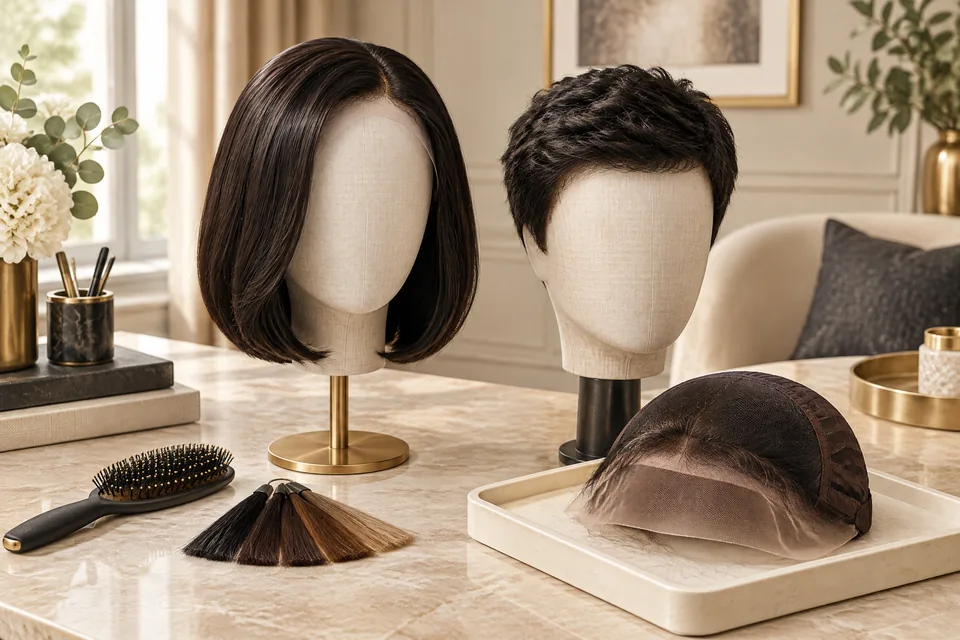
A topper can make sense when the crown or part needs coverage but you want to keep your own sides and lengths visible. That means you are dressing two things together: the piece and the hair around it. A full wig changes the task. Your own hair generally sits beneath the cap, while the wig supplies the visible shape. The American Cancer Society describes this basic coverage distinction.1
OWNSTRAND's hair topper vs wig guide explains coverage and surrounding-hair considerations. Take that distinction into your mirror: mark what you want covered, then identify what remains visible. A small piece is only a practical choice if its base, attachment and blend can work with that particular arrangement; size alone does not make the dressing routine simpler.
Count tasks, not minutes or individual clip clicks
For this comparison, one task means a distinct action with a different purpose: preparation, positioning, securing or checking, for example. Closing several clips belongs to one securing task. Repositioning a piece after a failed check repeats an existing task rather than creating a new category. This keeps the comparison readable while making room for the adjustments real dressing can involve.
The examples assume each piece has already been fitted, its instructions are understood, and it is ready for normal wear. They are not instructions for every product. The topper uses maker-approved clips; the full wig is non-bonded and uses its designated securing method. The full-wig wearer also chooses a liner. Neither routine includes adhesive application or removal.
| Purpose | Clip-in topper example | Full wig with liner example |
|---|---|---|
| Prepare | Inspect piece; prepare visible own hair: 2 tasks | Inspect piece; flatten own hair; fit liner: 3 tasks |
| Put on | Position; secure: 2 tasks | Position; secure: 2 tasks |
| Finish | Blend; check movement: 2 tasks | Arrange visible style; check movement: 2 tasks |
| Take off | Release; store: 2 tasks | Release; remove liner and loosen hair; store: 3 tasks |
| Total | 8 distinct tasks | 10 distinct tasks; 8 if no liner is used |
Hypothetical sequence one: a topper over a familiar bob
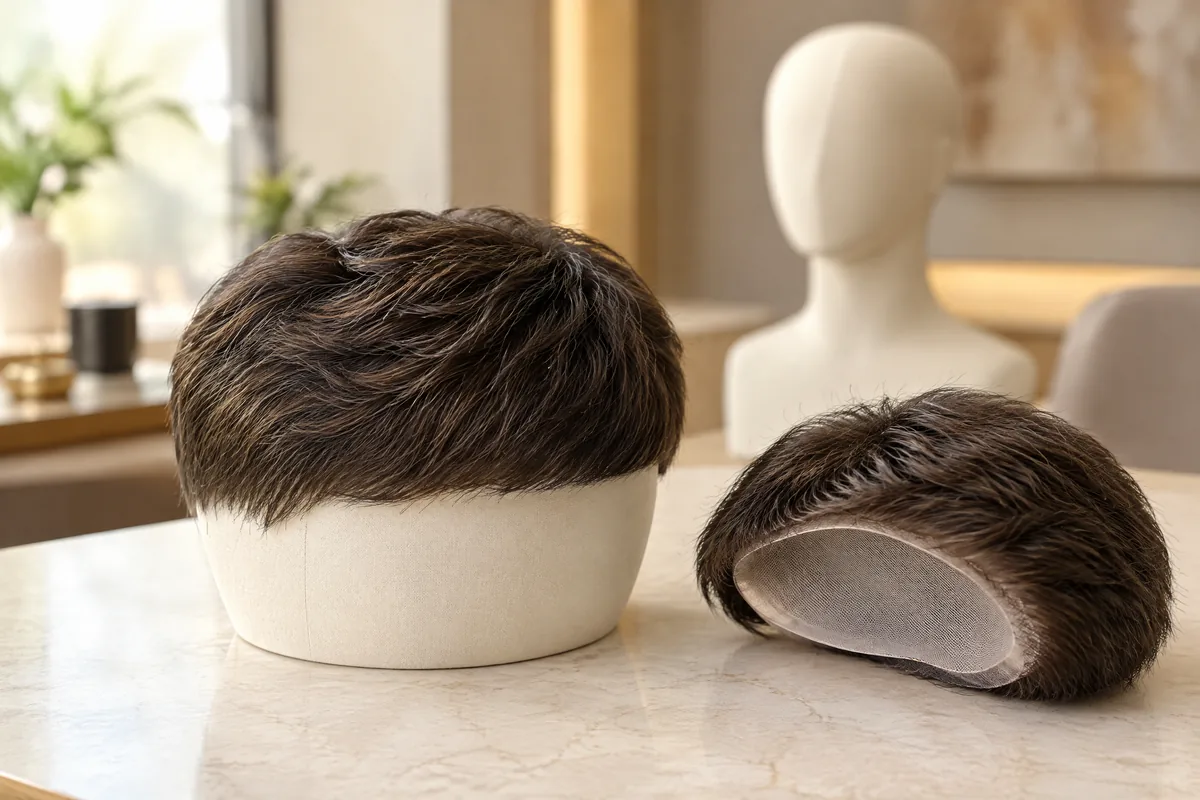
This wearer wants local crown coverage and plans to leave her fringe, sides and ends visible. The topper has an appropriate base and suitable surrounding hair for its clips. Its length and texture have been chosen to work with her bob. She is not trying to stretch a small base across a larger area or secure it to hair that cannot support the attachment.
Morning: six tasks before leaving home
Inspect the piece. On a clean surface, check its orientation, clips and base. Separate tangles using the maker's method. If a clip is damaged or the underside needs cleaning, deal with that before dressing rather than hiding a problem once it is on.
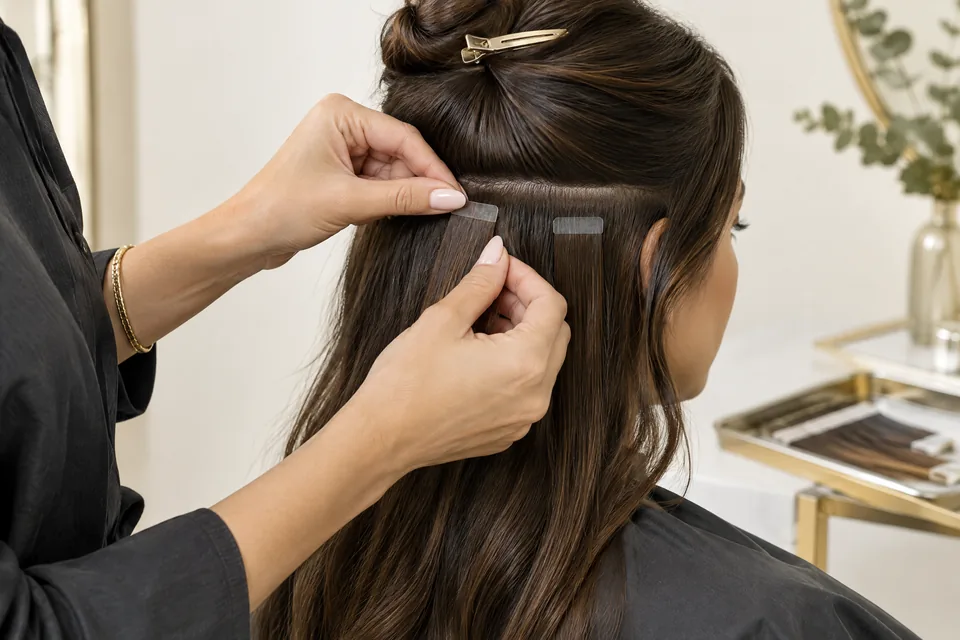
Prepare your own hair. Arrange the part and side sections for the finished bob. Keep attachment areas accessible, rather than flattening everything beneath a liner. Remove knots that would complicate the blend. Do not create tight anchor sections simply to make a clip grip.
Position the topper. With clips open, lower it into the planned position. Check its part and front transition against your hairstyle before securing. Moving it forward changes coverage and fringe shape, so placement should meet the coverage need, not merely conceal an awkward edge.
Secure the clips. Support the base and close them using the supplied technique, without dragging the piece across your scalp. Check for awkwardly caught hair. If placement pulls, reopen and reassess it rather than accepting tension as evidence that the topper is securely attached.
Blend the visible hair. Arrange topper lengths beside your own sides and ends with a fibre-appropriate tool. Check whether one layer kicks outward while the other falls straight. Persistent mismatched lengths or texture may need a styling discussion rather than more daily brushing.
Check ordinary movement. Turn your head, look down, and put on your glasses. Use a second mirror for the back transition. Include your usual ear tuck. If it exposes an edge, choose a workable arrangement rather than constantly covering it with your hand.
Evening: two tasks that complete the routine
Release the attachment. Open every clip before lifting the piece away. Support it near the base, not by tugging its lengths. If something catches, stop and find the closed clip or trapped strand. Settle your own hair afterwards, including sections arranged for attachment.
Prepare and store the piece. Check its underside and lengths, addressing tangles or cleaning needs according to its instructions. Use an appropriate support and storage space. This task belongs in the comparison: leaving a piece tangled on the table transfers work into the next morning.
Hypothetical sequence two: a full wig over longer hair
The second wearer wants a short, complete silhouette and does not plan to blend her own lengths into it. Her full wig has been fitted with her usual hair preparation and chosen liner. She uses the product's approved non-bonded attachment. A liner is optional. Check the manufacturer's chart for the chosen model; the American Cancer Society notes that sizing can vary between brands.1
Morning: seven tasks before leaving home
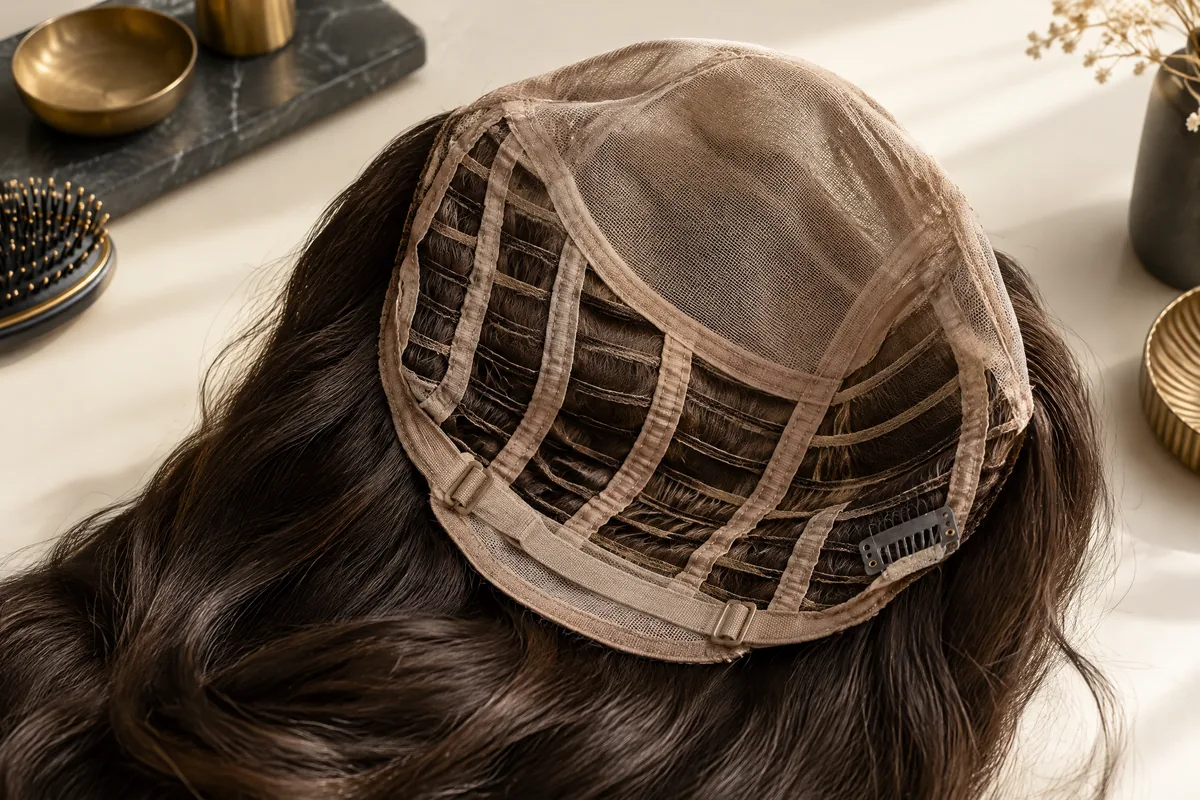
Inspect the wig. Identify front and back, check the cap and securing features, and arrange the style using the maker's method. Support the cap while doing this. A neatly stored piece may need little adjustment, but do not ignore damage just because it looks tidy.
Flatten your own hair loosely. Distribute longer hair as agreed during fitting, avoiding a thick bundle at the crown or nape. The aim is manageable cap shape, not tightness. The American Academy of Dermatology recommends loose preparation beneath coverings and warns that painful hairstyles are too tight.2
Fit the chosen liner. Place it over prepared hair and tuck stray lengths inside. Check that edges and seams do not create a ridge or rubbing point beneath the cap. If it disrupts fit, reconsider liner and preparation together rather than tightening the wig further.
Position the wig. Follow the manufacturer's method and align front and sides. Where there are ear tabs, check that they sit evenly and the cap is not over your ears. The American Cancer Society emphasises supplied fitting directions; follow the exact design's intended position.1
Secure the design. Use its designated fastening or adjustment method, whether tabs, straps or other features. Do not invent a substitute from a category description. Check that prepared hair stays contained and that securing has not shifted the front or pushed the cap upward.
Arrange the visible style. Settle fringe, part and side volume. Check the front transition and overall shape, rather than mixing visible lengths. Heat is not an automatic fix: the American Cancer Society advises against heat tools unless the wig is heat resistant. Manufacturer limits still apply.1
Check movement and accessories. Turn, look down and replace glasses. Inspect front, sides and nape with mirrors. If the cap rises or moves, revisit fit and preparation. Repeated tightening is a reason to ask about the fit, not to keep increasing pressure.
Evening: three tasks after wear
Release and remove the wig. Undo its fastenings before lifting it off, supporting the cap rather than pulling fringe or lengths. Pause if it catches on your hair. Follow the piece's non-bonded removal directions; these are not interchangeable with removing a taped or glued system.
Remove the liner and loosen your hair. Release the prepared sections and check for uncomfortable pressure. This is the extra evening task absent from the topper example. Omitting a liner removes this and its morning counterpart, but does not eliminate own-hair preparation.
Prepare and store the wig. Check tangles and care needs before using the recommended support. The American Cancer Society suggests a stand for overnight or short-term storage.1 Longer storage and washing should follow maker instructions, rather than being treated as identical for every fibre.
Which repeated task would you rather do?
Suppose the bob wearer already enjoys arranging her own sides and fringe. Her topper's blending task may fit comfortably into that existing habit. If she often changes her part or wears her hair tucked back, however, she should rehearse those choices: a blend that only works with loose hair may conflict with the routine she actually wants.
The longer-haired wearer avoids matching visible natural lengths to the wig, but gains a containment task underneath. She might prefer that exchange if her own texture and the topper require separate daily styling. If she dislikes preparing long hair or handling a liner, a full wig is not automatically the easier answer. The specific preparation matters more than the category name.
When browsing women's wigs, compare the complete shape and the stated cap details against this second sequence. A short style can change visible styling work, but it does not tell you how much hair preparation or fastening you need.
Washing, drying and professional alterations sit outside these ordinary dressing counts. They still matter to ownership. Keep them in a separate care plan so that a piece requiring less morning arrangement does not appear maintenance-free. Ask which tasks are occasional, which happen after each wear, and which depend on the exact fibre rather than assuming all synthetic or human-hair pieces behave alike.
Narrow an online shortlist by handling needs
Begin with one routine preference you can explain: keeping your own ends visible, avoiding multiple small fasteners, reducing daily texture blending, or containing longer hair beneath full coverage. Then filter by coverage and manageable shape. Save the listing name with a sentence about the work you are willing to repeat, not only the hairstyle you like.
| Daily preference | Keep on the shortlist | Pause or reject when |
|---|---|---|
| Keep a familiar bob visible | A topper whose base and lengths can work with that bob | Coverage misses the intended area or the blend needs a style you dislike |
| Avoid mixing visible textures | A full wig with a manageable complete silhouette | Your usual hair preparation creates uneven cap fit |
| Limit fine finger movements | A design with an attachment you can comfortably operate | Securing or releasing requires handling you cannot repeat comfortably |
| Wear glasses and tuck hair back | A piece that works during those checks | Tabs, edges or blending depend on leaving accessories off |
| Avoid daily heat styling | A style that can be arranged with its approved non-heat method | The desired finish relies on heat the fibre does not permit |
OWNSTRAND's buy wigs online Hong Kong route lets you browse and enquire about exact listings. Send your routine preference alongside the style reference: for example, that you want crown coverage while keeping your bob visible, or full coverage over longer hair. Its catalogue calls for quotation and availability enquiries; a saved listing is not a stock reservation.
Separate selection from purchase arrangements. Once a candidate fits your handling needs, ask for the applicable price, supply and delivery details, plus written return or exchange terms before payment. Do not build your decision around trying several pieces and returning them later unless the retailer expressly allows that arrangement for those items. A good shortlist should already reflect the routine you want.
Rehearse the whole day, including taking it off
For an agreed fitting or demonstration, take your normal glasses and describe your own-hair preparation. OWNSTRAND's private sample-viewing and custom human-hair discussion is in Kwun Tong, at Unit 2103, 利寶時中心, 50 Hoi Yuen Road. Arrange the visit and clarify what can be assessed there; a sample discussion is not a promise that every catalogue candidate can be tried.
Use these practical questions during a dressing demonstration:
- Can I reach and release each fastening without pulling the piece?
- Does the intended part or ear tuck preserve the coverage I want?
- Can I see the nape or back transition with my home mirror arrangement?
- Which adjustment failed because of preparation, and which because of the piece?
- Where will the piece and any liner go when I take them off?
Leave with a routine you can describe in actions, rather than a promised number of minutes. The strongest choice is the piece that covers the intended area and lets you repeat preparation, attachment, finishing and removal comfortably. If both sequences are manageable, appearance can decide the final preference. If one repeatedly needs rescue work, change the design or routine before treating it as your everyday option.
Questions & answers
Can I turn a full wig into a topper to simplify dressing?
Do not cut away a cap yourself. That changes support, edges and attachment. Discuss a purpose-made partial piece using the exact coverage and visible hairstyle you want.
Should I buy a shorter wig if I have limited storage space?
Check the recommended support and shelf height first. Short hair still needs suitable cap storage. Include protected space for the piece, any liner and its approved care tools.
Can a side part be changed every morning?
Only if that base or cap permits it. Some designs have a set part or limited parting area. Ask to see the alternatives rather than forcing a new part.
Should I cut my own hair before choosing between the two?
Not simply to fit an untested piece. A haircut changes topper blending and full-wig preparation differently. Discuss the proposed change before measurements or fitting.
What should I take to a dressing demonstration if I use reading glasses?
Bring the frames you normally wear and a photograph of your ordinary hairstyle. Take both pairs if you alternate frames; their arms may sit differently near the sides.
Put the next step into practice
Build a clearer understanding of hair shape and everyday styling through learning at Canvas. Hair styling courses in Hong Kong。
Explore more practical styling and selection notes. Canvas hair and beauty journal。
Tell the team which hair styling techniques you would like to learn. Contact Canvas Academy。
Sources & further reading
- Wigs for Hair Loss — American Cancer Society
Practical guidance on coverage types, brand-specific sizing, fitting, heat-tool precautions and short-term wig storage.
- Hairstyles that pull can lead to hair loss — American Academy of Dermatology
Explains why repeated tight pulling matters and recommends loose hair preparation beneath a covering rather than painful tension.