What a temple slope record should show
Temple slope is the direction the side of the front outline takes as it approaches your temple. It need not be horizontal, and the two sides need not be mirror images. The useful question is whether the intended outline stays where it belongs during ordinary expression and reading, without an edge opening or uncomfortable pressure.
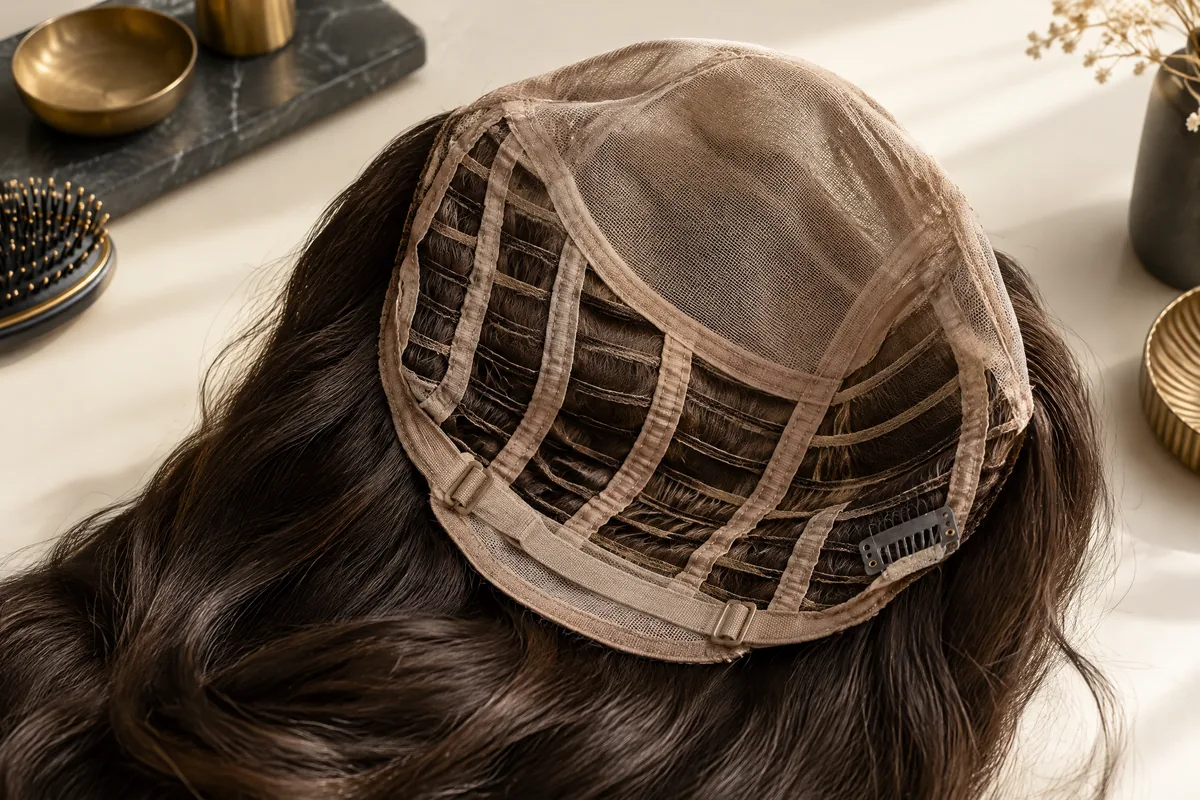
Separate three observations in your notes: where the base edge sits, whether it rests against the head, and how the hair above it looks. A dark sweep of hair can suggest a low temple even when the base is correctly placed. Conversely, a neatly styled front can disguise a raised corner until you lower your head.
When discussing a custom men's hair system with OWNSTRAND, describe the temple outline and coverage you want, not just a preferred hairstyle. Its confirmed handmade bespoke work concerns human-hair wig enquiries; the design and construction available for a particular men's piece require discussion. Ask which outline details can be made or adjusted before agreeing to the specification.
Make the starting position repeatable
Use the completed piece in its intended wearing arrangement, following its fitting instructions. Keep your own hair underneath distributed as it would be for daily wear. The American Cancer Society notes that wig sizing can vary between brands and advises following the directions supplied with the item. A size label therefore cannot replace checking the actual piece. 1
Sit in a steady chair with the camera facing you at eye level. Use even light that shows both temples; avoid a bright window behind your head. Keep the same camera distance and lens setting for every set. Switch off portrait blur and beauty filters because an apparently smooth outline is unhelpful when you need to see a fine edge.
Take a front view and a clear view of each temple in every position. Label left and right from the wearer's perspective: a selfie preview may reverse them. Photograph the edge with the hair gently moved aside, then photograph the normal hairstyle. This preserves both construction evidence and the appearance you actually want to wear.
Record whether glasses, a liner or another confirmed accessory is present. Macmillan notes that a wig liner can sometimes make a wig move more. If you compare wearing it with and without a liner, treat those as separate sets rather than mixing their images. Keep the intended configuration for the final comparison. 2
Mark alignment and gaps without altering the piece
Keep untouched originals in one folder and annotate duplicates. On each duplicate, mark the centre-front base edge as C, the left temple corner as L and the right corner as R. These letters refer to the base, not the tips of the hair. If the base is hidden, write “not visible” rather than guessing its location.
Trace the visible temple edge from the front towards the side. Add a separate mark for the desired outline agreed with the fitter, so an intended slope does not get mistaken for movement. Record how each corner relates to the nearby ear and existing side hair. Those visible references are more useful than forcing symmetry against a phone-screen grid.
For a full wig with ear tabs, check their placement according to its instructions. The American Cancer Society's full-wig guidance places the tabs evenly, slightly in front of the ears, with the wig clear of the ears themselves. A partial piece may have no ear tabs, so do not impose that construction on it. 1
| Record on the photo copy | What it means | Useful wording in your notes |
|---|---|---|
| C, L and R | Visible base locations | Right corner appears higher relative to the ear than in neutral view |
| Edge trace | Actual temple boundary | Trace follows the base, not the brushed hair |
| Intended outline | Agreed appearance reference | Gentle backward slope wanted; no request for a straight line |
| G beside an opening | Visible gap beneath the edge | Gap appears at left corner while reading |
| Separate sensation note | Pressure or looseness you feel | Tight here; no visible gap in this image |
Do not put ink, pins or household tape on the cap to create these markers. Do not slide a ruler underneath an edge or pull it away to measure a gap: that changes what you are observing. A photograph also cannot establish an accurate millimetre gap without a controlled scale, so descriptive observations are preferable to false precision.
Repeat three ordinary positions before changing anything
Start with a relaxed face and your head upright. Look ahead without lifting your chin to improve the outline. This neutral set is the baseline for every later comparison. Record any existing opening now, including an edge that is visible but rests flat. Visibility and a gap are different observations and may need different responses.
Raised eyebrows: distinguish expression from displacement
Raise your eyebrows gently, as you might during conversation, without tipping your head back. Capture the same views and then relax. Notice whether the skin moves beneath a stationary edge, the base corner moves with it, or an opening appears. Compare again after relaxing; a corner that fails to return deserves a different note from one that briefly changes during expression.
This position is not a demand that the forehead remain motionless. Write “opening appears when eyebrows rise” rather than “cap too small”, because an observation does not establish its cause. Avoid repeatedly lifting the corner with your fingers between photographs. Let the fitter assess the outline, placement and wearing arrangement without an artificially stretched edge.
Downward reading: capture the moment before recovery
Lower your head comfortably to read a phone or a printed paragraph at your usual height. Keep the camera fixed rather than asking the photographer to follow you down. Take the temple views before looking up again. Record whether the front shifts, a side corner lifts, or the hair simply falls forward while the base remains stable.
Then return to neutral and photograph it again. Add a short note about the sequence: “left opening during reading; still visible after returning upright”, for example. A brief video can preserve that transition, but retain clear still photographs too. If the piece feels painful or insecure, stop the movement check and ask for assistance rather than pushing through it.
Separate a sloping fit from a dense-looking front
Review base movement first, with the hair held clear in the same gentle way. If C stays near its starting point but one temple corner lifts, ask for that local area to be assessed. If C and both corners shift together, ask about overall placement or stability. These patterns guide the conversation; they do not prove which construction change is needed.
Next release the hair and compare the normal hairstyle. A front density concern means the hair looks too full or forms a heavy boundary while the base remains in the agreed position. The American Cancer Society notes that a stylist may trim bangs or thin a wig for a more natural appearance. That work changes hair, not the location of the base. 1
A base that rests flat can still create an unwanted visual slope. For instance, a strongly forward-directed side section may make the right temple look lower in the styled photograph, while the clear-edge images show no displacement. Try a reversible change in hair direction first. If the apparent imbalance disappears, discuss styling before removing hair or altering the outline.
Keep the language equally specific when enquiring about a hair system: “the right base corner opens when I read” is different from “the front looks too thick in normal styling”. The category does not identify a fastening method. Confirm how the exact piece is intended to be worn instead of requesting stronger attachment as an automatic solution.
Two fitting scenarios and the trade-offs they reveal
Consider a hypothetical completed piece that looks balanced upright. In the reading set, its left temple opens while the centre-front stays in place; after looking up, the corner remains raised. Adding a fuller fringe might hide the opening in one view, but the original evidence still calls for a placement and local-fit assessment before a cosmetic cut.
In a second hypothetical example, both temples remain flat in every position, yet the front looks unusually solid when combed forward. The fitter redirects the hair and repeats the styled photographs, with no base change. If the wearer prefers this result, there is no reason to remove density immediately. If fullness remains unwanted, a limited professional trim can be discussed separately.
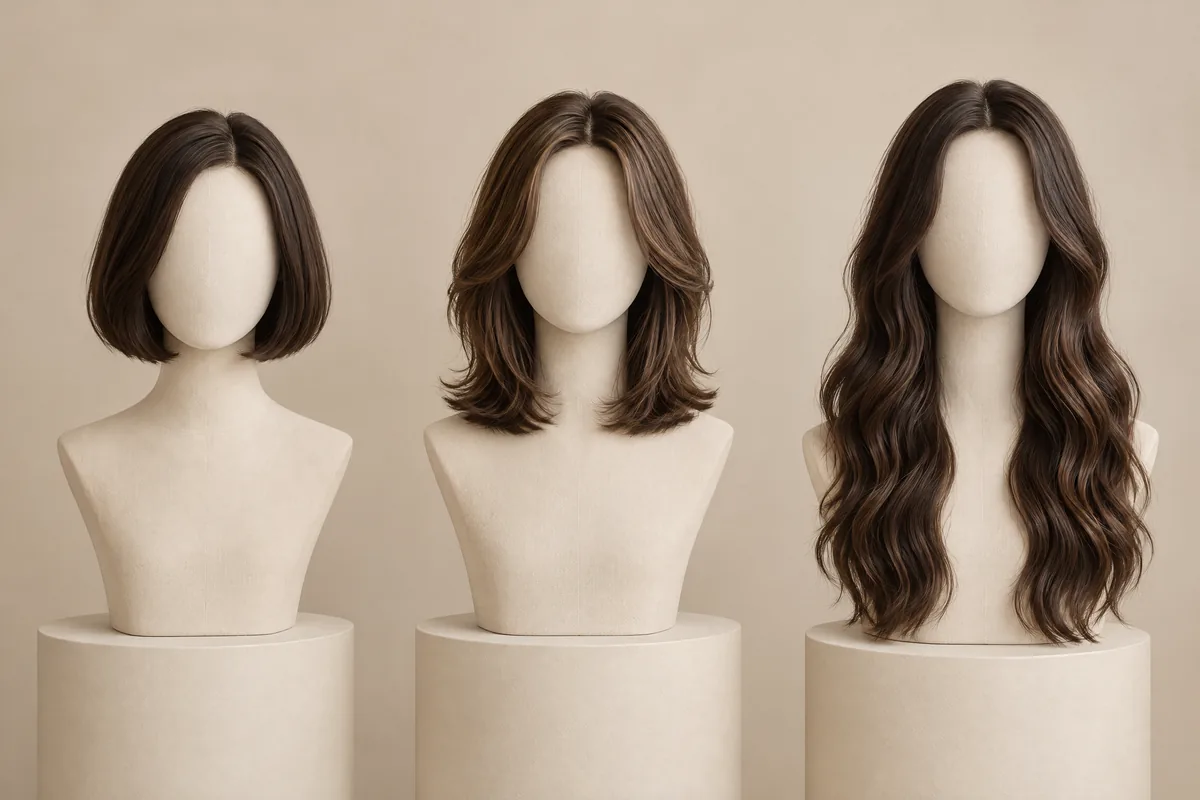
A softer side-swept front gives more coverage over an edge, but it also changes the hairstyle you must recreate. An exposed front makes temple alignment easier to inspect, yet may reveal construction that a fringe would cover. Choose the style you will actually maintain, not a display finish that hides the issue only while you sit still.
Tightening a permitted adjustment may reduce movement but also create pressure elsewhere. Moving a removable piece may improve one temple while changing crown coverage or the opposite side. Ask to repeat all three views after either change. For a bonded piece, leave repositioning and removal to the appropriate professional rather than experimenting during a home photo check.
Macmillan advises that wigs can be cut and styled by a hairdresser or wig consultant. A cut is a less reversible choice than changing direction or presentation: removed hair does not grow back on the piece. Agree the area and intended effect first, and keep enough length for the everyday style you want. 2
Keep a completed-piece change log, not just an after photo
Name your first set B00 and retain its neutral, eyebrow and reading images, labelled N, E and D. Use left and right labels consistently. Record the piece identifier, wearing arrangement, accessory setup and hairstyle alongside it. Do not overwrite B00 after improvement; it documents the actual concern and makes later comparisons meaningful.
The following filled example is illustrative, not a customer result. It shows how a completed-piece log can distinguish repositioning from styling and preserve a decision to defer cutting. Replace every observation with your own. An entry saying that no change was made is valuable when it prevents several unrecorded interventions from being treated as one adjustment.
| Stage and saved evidence | Observation or agreed action | Result to record before moving on |
|---|---|---|
| B00: N, E, D; clear edge and normal hair | Left corner opens during reading in this example | Baseline originals retained; source of opening not yet established |
| P01: matching N, E, D after professional placement review | Only placement changed; hairstyle retained | Opening no longer visible in the repeated example set; comfort noted separately |
| S02: matching styled views and edge views | Only front hair direction changed | Fuller-looking front appears softer; base locations unchanged |
| C03: decision note attached to S02 | Density reduction deferred | No hair removed; preferred direction saved for home styling |
Make an entry immediately after each action, naming the person who performed it by role if you prefer. Include what was agreed, what actually changed and whether you felt new pressure. If washing or blow-drying occurs between sets, label it: a wet baseline and a dry finish are not a clean comparison of one fit adjustment.
If thinning or a cut is agreed later, add a new stage rather than replacing the styling entry. Describe the area worked on and preserve pre-cut photographs. Use heat only according to the fibre manufacturer's instructions for the specific piece; professional blow-drying at collection does not establish a universal temperature allowance for your own tools.
Bring the record to the completion visit
OWNSTRAND's custom wig fitting Hong Kong information describes returning after its custom wig is complete to try it on, discuss fit adjustments and, where arranged, have it washed, cut and blow-dried. Ask how that completion route applies to your ordered men's piece. It is not confirmation that every system base can be altered or that outside pieces are serviced.
Before travelling, confirm the visit arrangements at its only confirmed location: Unit 2103, 利寶時中心, 50 Hoi Yuen Road, Kwun Tong. Area information elsewhere does not mean another branch. Bring your original style reference, the B00 images and your current wearing accessories, so the discussion concerns the completed item rather than a hairstyle photograph alone.
Keep the conversation focused with these requests:
- Show the neutral baseline beside the position where the concern appears.
- Ask whether the base is moving before discussing front density.
- Agree one feasible change, its trade-off and any cost before work starts.
- Repeat N, E and D, then save the new set without deleting the old one.
- Record unresolved concerns and the next agreed step before collection.
Before taking the piece home, ask to practise the permitted placement and the preferred hair direction. Save one clear front photograph and both side views of the agreed finish. Those references help you distinguish a different home styling result from renewed edge movement, while the full change log remains available if a further professional assessment is needed.
Questions & answers
Should I have my usual haircut before the completion appointment?
Tell the fitter if a haircut is planned, especially where the piece blends with your side hair. Avoid changing that reference unexpectedly. Ask which surrounding length should be present for the final check, then record any haircut between photo sets.
Can a video call replace checking the completed piece in person?
A video call can show the movement pattern and help prepare questions. It cannot reliably convey pressure, inspect a concealed base or establish which alteration is feasible. Ask the supplier whether an in-person assessment is needed before any irreversible work.
What if my phone makes one temple look much larger?
Repeat the front photograph with your face centred and the camera farther away, keeping the same lens setting. Check both side views before concluding that the outline is uneven. Do not use a close, angled selfie as the sole basis for an alteration.
Should I add tape temporarily to improve the fitting photographs?
No. Use only the wearing method specified for the item. An improvised attachment changes the condition being assessed and can conceal movement. If another approved fastening is proposed, ask the professional to demonstrate it and document it as a separate configuration.
How much of my photo record should I send in advance?
Start with the baseline front view, both temple views and the clearest image of the concern, labelled by position and side. Add a concise sensation note. Ask which further files are useful and share identifying photographs only through a channel you are comfortable using.
Put the next step into practice
Build a clearer understanding of hair shape and everyday styling through learning at Canvas. Hair styling courses in Hong Kong。
Explore more practical styling and selection notes. Canvas hair and beauty journal。
Tell the team which hair styling techniques you would like to learn. Contact Canvas Academy。
Sources & further reading
- Wigs for Hair Loss — American Cancer Society
Explains brand-specific sizing, full-wig placement, professional trimming and heat precautions. Its full-wig details should not be automatically applied to a partial hairpiece.
- Wigs for cancer treatment — Macmillan Cancer Support
Provides practical wearing and styling advice, including the possibility that a liner increases movement. Useful when comparing fitting photographs with a consistent accessory setup.