Start with two realistic attachment scenarios
Picture a working week with an MTR commute, an evening workout, a late dinner and a weekend away. The attachment decision has to survive those ordinary changes, not merely look convenient at a fitting. Keep the hairstyle broadly similar in both scenarios so that you are comparing the routine rather than a short, simple cut against a high-maintenance style.
Scenario A is a piece designed for wearer-managed removal, with compatible fasteners and enough appropriate attachment hair where required. In this example, the wearer removes it each evening. Scenario B is a bonded piece whose documented wearing plan allows the proposed extended wear, including sleep, and whose wearer chooses a trained provider to handle release, underside cleaning and reattachment.
These are planning examples, not a seven-day bond guarantee or a prescribed washing schedule. The Sunday maintenance slot below represents an agreed appointment in this example; another system may need a different interval. OWNSTRAND's guide to removable vs bonded hair system for men explains the attachment distinction, but reading a comparison does not establish that bonded installation is available from the brand.
Record four kinds of work, not just minutes
A useful log distinguishes active work from elapsed time. Positioning a hairpiece is active work. Waiting for an off-head wash to dry is elapsed time. Travelling to maintenance consumes a calendar slot even though someone else handles the piece. A route that feels quick at home can still be awkward if it depends on a weekday appointment you cannot attend.
Use four separate totals: hands-on care, waiting or drying, professional appointment time including travel, and interruptions that were not planned. Record actual timings only after a permitted routine has been demonstrated or tried. Before that, leave the minutes blank and identify the tasks. Invented precision makes a diary look useful while hiding the part you most need to understand.
Add a brief access note each day: scalp fully accessible, underside visible, or access limited while attached. Access matters because washing the visible hair is a different job from cleaning the surface underneath. The log should show when each job can happen, who handles it and whether the piece will be unavailable afterwards. That is more informative than simply ticking “washed”.
Draw the week side by side
The calendar below includes one busy evening and one maintenance event to expose scheduling pressure. It does not mean every piece needs cleaning on Wednesday or a salon visit on Sunday. Move those entries to match the actual care plan, and keep separate records for an ordinary week and a maintenance week if they differ.
| Day and situation | Scenario A: nightly removable | Scenario B: provider-supported bonded | What to record |
|---|---|---|---|
| Monday: normal workday | Position and fasten; take off at home; store as directed | Groom visible hair; leave attachment undisturbed under the agreed plan | Morning effort and evening scalp access |
| Tuesday: evening workout | Remove later; assess scalp, hair and cleaning needs | Follow permitted activity care; note comfort or attachment changes | Extra care triggered by the activity |
| Wednesday: possible care window | If cleaning is due, clean off-head and allow the specified drying time | Perform only permitted attached care; note any underside work that must wait | Active cleaning versus drying or deferred work |
| Thursday: late finish | Complete take-off and storage despite tiredness | Complete ordinary grooming and observation | Tasks most likely to be skipped |
| Friday: social evening | Check placement before leaving; remove afterwards | Check appearance and report any changed attachment | Extra checking, not a security guarantee |
| Saturday: travel preparation | Pack suitable storage and permitted care supplies | Carry care information and provider contact details | Packing burden and access to help |
| Sunday: example review slot | Review the diary; seek fitting help if placement remains difficult | Attend the agreed maintenance slot for provider-led work | Door-to-door time, cost and next appointment |
Follow Scenario A from wear to storage
Daily handling: independence has a repeated cost
For the removable example, the main recurring task is recreating the agreed placement. Note whether you can identify the front position, see the fastening points and finish the intended style using your normal mirror setup. If you repeatedly restart, record the difficulty as well as the time. A demonstration may help more than buying additional styling products.
Evening removal creates an opportunity to see the scalp and underside, but also requires careful handling and somewhere suitable to put the piece. A crowded bathroom shelf is not a complete storage plan. The American Cancer Society recommends a wig stand for short-term storage and wig-formulated care products; the exact support and products still need to match your piece's instructions.1
Thursday tests whether the routine remains manageable when you are tired. Imagine arriving home after a late shift and still needing to remove the piece, care for your own hair and put everything away. A route that is convenient on Saturday morning may be a poor match for repeated late nights. This is a scheduling judgment, not evidence that removable systems are inferior.
Cleaning access: available does not mean daily washing
Taking the piece off makes separate scalp care and underside inspection possible. It does not mean the hairpiece should be washed every evening. Give scalp cleaning, fibre cleaning and fastener inspection their own entries. One may be due while another is not. Keep the fibre's washing and drying requirements distinct from your usual natural-hair routine.
On a permitted cleaning day, reserve both the active care window and the period before the piece is ready to wear again. Do not promise yourself a quick breakfast wash before an early meeting unless the documented drying routine fits. If owning only one piece leaves a gap, plan an acceptable off-piece appearance rather than assuming you can accelerate drying with heat.
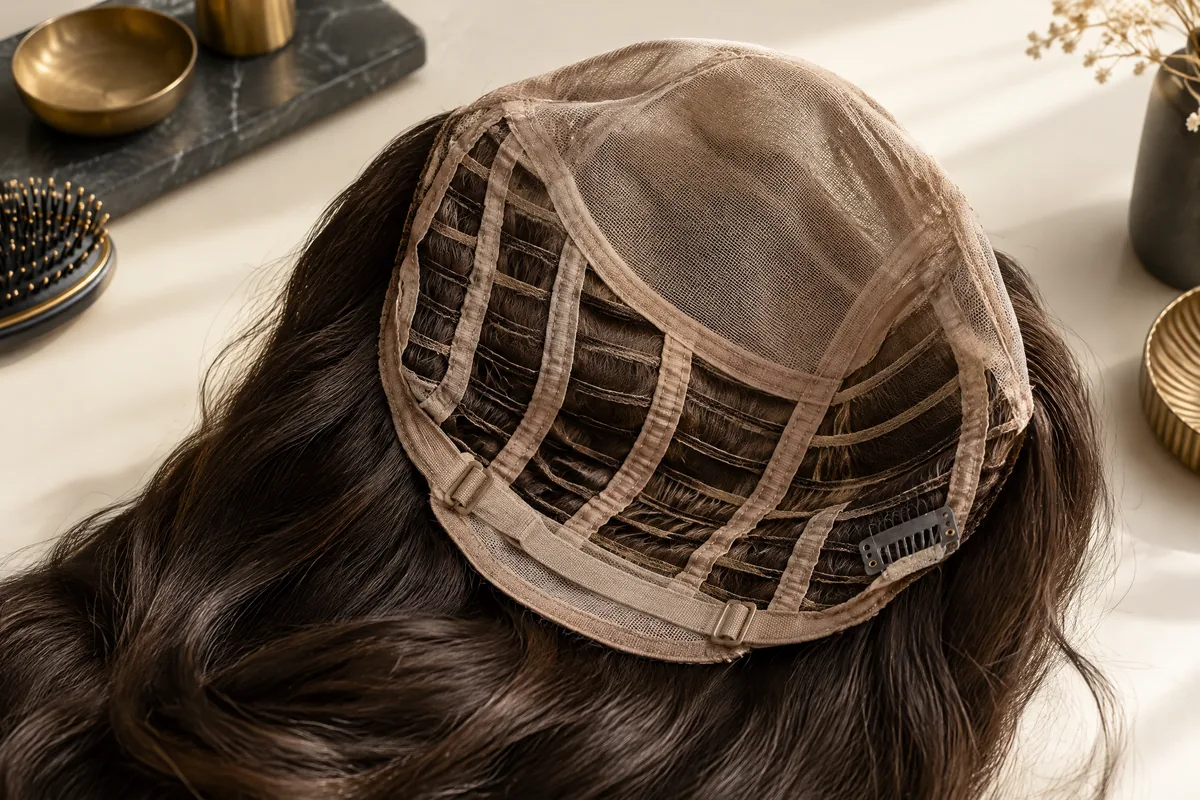
Persistent positioning difficulty, a damaged fastener or a changing blend with your own hair belongs in the help column. Independence should mean handling demonstrated routine tasks confidently, not repairing the base or cutting the hairpiece through trial and error. A removable arrangement can still need professional appointments; they simply serve different purposes from the bonded example's scheduled release and refitting.
Follow Scenario B beyond the easy morning
In the bonded example, Monday's morning routine does not include taking the system off and replacing it. That may suit a wearer who dislikes daily alignment. However, the piece remains in place only under its agreed wearing plan. Daily hair grooming and noticing changes still matter. “I did not refit it” is a useful log entry, but it is not equivalent to “no care needed”.
After Tuesday's workout, record observations rather than predicting attachment life from sweat or weather. Note unusual discomfort, visible movement or a change from the fit demonstrated by the provider. Follow the agreed response plan if these occur. Do not attempt a quick reinforcement, substitute a bonding product or pull at an edge to discover how strongly it is attached.
Attached grooming does not provide the same access as an off-head cleaning session. In this support model, full underside work and release are assigned to the trained provider. That makes their availability part of the product routine. A wearer who cannot reach the provider at useful times needs a different support arrangement, even if ordinary mornings feel straightforward.
Sunday therefore carries more than a salon chair slot. Record the journey, waiting, the agreed service and the time until you are ready for your next activity. Ask what happens if maintenance cannot be completed as planned. Moving work into an appointment may be a worthwhile trade, but only if your diary can accommodate both routine visits and occasional changes.
Decide what you can handle and what needs help
Responsibility is best assigned task by task. The division below describes these two examples, not a claim that all bonded wearers must outsource everything. A wearer trained for a specific system may have a different arrangement. For a beginner comparing workloads, however, assigning unfamiliar release and attachment work to a trained provider produces a clearer, more realistic plan.
| Task | Wearer-managed work in these examples | Help to arrange |
|---|---|---|
| Everyday appearance check | Look at front, sides and crown; note changes | Fitter if the usual position or blend cannot be reproduced |
| Removable take-off and placement | Follow the demonstrated method on a compatible piece | Fitter for persistent handling problems or damaged fasteners |
| Fibre washing and styling | Only the permitted routine for the actual material | Wig-care professional for unfamiliar restyling or repair |
| Bonded release and underside residue care | Record the need and contact the provider | Trained attachment provider in Scenario B |
| Bonded reattachment | Attend the agreed appointment; describe changes | Trained attachment provider in Scenario B |
| Recurring rash or significant irritation | Record onset and products involved; avoid improvising | Clinician for skin assessment, provider for safe attachment handling |
A new rash is not a challenge to solve with a stronger fastening product. The American Academy of Dermatology explains that contact dermatitis can follow irritation or an allergic reaction to something touching the skin, and an allergic rash may appear hours or days later. Record when discomfort started and seek appropriate assessment; a workload diary cannot identify the cause.2
Test the workload against your actual Hong Kong week
Consider an office worker who finishes predictably but wants to remove his hairpiece at home. Scenario A may suit his priorities even if it requires more daily handling. Now consider someone with irregular morning starts who strongly prefers avoiding daily placement. Scenario B may suit that preference, but not if maintenance appointments clash with shifts and there is no workable alternative.
Travel creates a different comparison. A removable wearer needs suitable packing and a realistic private care space. A bonded wearer using provider-led maintenance needs to know how a changed appointment affects the trip and who can help away from home. Neither route wins simply because the first evening is easy; the practical winner is the one with an executable backup plan.
Material can alter the workload independently of attachment. The American Cancer Society describes synthetic wigs as generally lower-maintenance than human-hair wigs and warns against heat tools unless a wig is heat resistant. Use that as general fibre context, not permission for a particular tool or temperature. A short synthetic style and a styled human-hair piece are not a fair attachment-only comparison.1
For your final review, keep four questions beside the log. Answer them with the actual places, available time and people in your week. A vague intention to find help later is not the same as a support arrangement you can use when work or travel intervenes.
- Can I repeat the daily tasks when tired, not only when practising?
- Is there a suitable place and sufficient time for cleaning, drying and storage?
- Can I attend the help appointments this arrangement actually needs?
- What will I wear, and whom will I contact, if the piece is temporarily unavailable?
Turn the diary into a concrete fitting conversation
Bring the awkward days, not only your preferred photograph. For enquiries about non-surgical hair replacement Hong Kong, describe the appearance and coverage you want, then show where your routine becomes difficult. For example: “I finish late twice a week and want nightly removal” communicates a more useful requirement than simply asking for the lowest-maintenance option.
When discussing a hair system with OWNSTRAND, the confirmed custom human-hair process includes private sample viewing, head measurement and a return fitting with washing, cutting and blow-drying. Its sole salon is Unit 2103, 利寶時中心, 50 Hoi Yuen Road, Kwun Tong, Hong Kong. Those arrangements do not establish bonded installation or maintenance; ask what is offered for the specific enquiry.
Finish with a division of work you can explain plainly: what happens at home, what waits for drying, what requires an appointment and what happens if plans change. Choose removable when its repeated handling fits your life; choose a supported bonded arrangement when its care and appointment commitments fit better. The sound decision is not the route with fewer visible steps, but the one whose whole workload you can carry.
Questions & answers
Should I time the first fitting as part of my normal week?
Keep it in a separate setup record. Initial explanation and practice can take a different amount of effort from familiar daily care. Include recurring appointments in the weekly comparison, while labelling one-off setup work clearly.
Can a friend handle tasks I find difficult?
Only assign them tasks that the specific piece permits and that they have been shown how to handle. General confidence with natural hair does not establish competence with a hairpiece base, fasteners or bonded attachment.
Does buying a second piece remove the drying problem?
It may provide another appearance option during downtime, but adds purchase, fitting, storage and care responsibilities. The spare also needs a suitable wearing arrangement. Compare that extra work rather than treating a second piece as an automatic solution.
How should I compare running costs?
Separate permitted care supplies, professional services and travel from the purchase price. Ask what each quoted appointment includes and how extra work is charged. Use the provider's quotation, not an assumed standard monthly maintenance fee.
What if my workload changes after a haircut?
Record the change and arrange a review if placement or blending becomes harder. Do not compensate by tightening fasteners or modifying the base yourself. The diary should reflect your present hair and routine, rather than preserving an outdated comparison.
Put the next step into practice
Build a clearer understanding of hair shape and everyday styling through learning at Canvas. Hair styling courses in Hong Kong。
Explore more practical styling and selection notes. Canvas hair and beauty journal。
Tell the team which hair styling techniques you would like to learn. Contact Canvas Academy。
Sources & further reading
- American Cancer Society — Wigs for Hair Loss
Explains wig materials, fitting, short-term storage and care, including greater maintenance for human hair and heat restrictions. Useful for separating fibre-care tasks from attachment tasks.
- American Academy of Dermatology — Contact dermatitis overview
Explains irritant and allergic skin reactions, including delayed allergic rashes, and the dermatologist's role in finding causes. Useful when recording new discomfort during wear.