Give the comparison one clear question
Three appealing samples can leave you less certain than one. A tidy bob may win on outline, a longer style on movement, and another on the visible parting. Asking which is simply ‘best’ bundles those differences together. A more useful question is: which crown length, parting area and fit observations help describe the wig you want to wear?
Begin with one stated fibre category: human hair, synthetic fibre or a declared blend. Macmillan describes different care and styling demands for these categories, including synthetic styles that retain their set shape and human-hair wigs that may need regular styling. Mixing categories makes it harder to separate a cut preference from the upkeep that comes with it. 1
For an OWNSTRAND custom wig consultation Hong Kong enquiry, describe the length and shape you hope to compare and ask which relevant human-hair samples may be viewed. The service includes discussion of style and measurements, but sample arrangements vary. Three columns are an organising tool, not a promise that three suitable samples or a try-on will be available.
Holding fibre constant does not make the candidates identical. Their cuts, density, base arrangements and previous styling may still differ. Note those differences instead of forcing a laboratory-style conclusion. If one sample is a blend or its fibre is unconfirmed, keep it outside the main grid until its category is clear; it can remain a separate reference.
Build a grid that keeps observations separate
Give the actual samples simple identifiers, such as A, B and C, and add any supplier reference beside each letter. Do not rely on ‘the brown bob’ when several pieces look similar. Fill only what you can observe or have explained to you. ‘Not checked’ is more useful than a confident-looking entry based on a photograph.
The grid below is deliberately blank: its cells tell you what to record, not what any sample achieved. Crown length, part panel and fit impression have their own rows because they answer different questions. If you only view a piece on a stand, keep the fit row marked ‘not tried’; an attractive silhouette cannot fill that gap.
| Observation row | Candidate A | Candidate B | Candidate C |
|---|---|---|---|
| Sample identity and stated fibre | Record reference and category | Record reference and category | Record reference and category |
| Crown strand length | Marked start point, endpoint and unit | Same method | Same method |
| Part panel | Visible area; permitted part direction | Visible area; permitted part direction | Visible area; permitted part direction |
| Fit impression, if tried | Position, pressure or movement noticed | Same checks | Same checks |
| Viewing conditions | Stand or try-on; light; styling state | Record conditions | Record conditions |
| Colour status | Provisional or compared together | Provisional or compared together | Provisional or compared together |
| Follow-up question | One unresolved detail | One unresolved detail | One unresolved detail |
Keep descriptions literal before adding preferences. ‘Ends sit above the collar’ describes a feature; ‘too short for me’ expresses your reaction. Both matter, but writing them separately makes the consultation clearer. You may dislike a sample's fringe while still finding its crown length useful. That is a reason to retain a detail, not necessarily the whole candidate.
Measure crown length without mistaking it for height
Strand length is not the finished outline
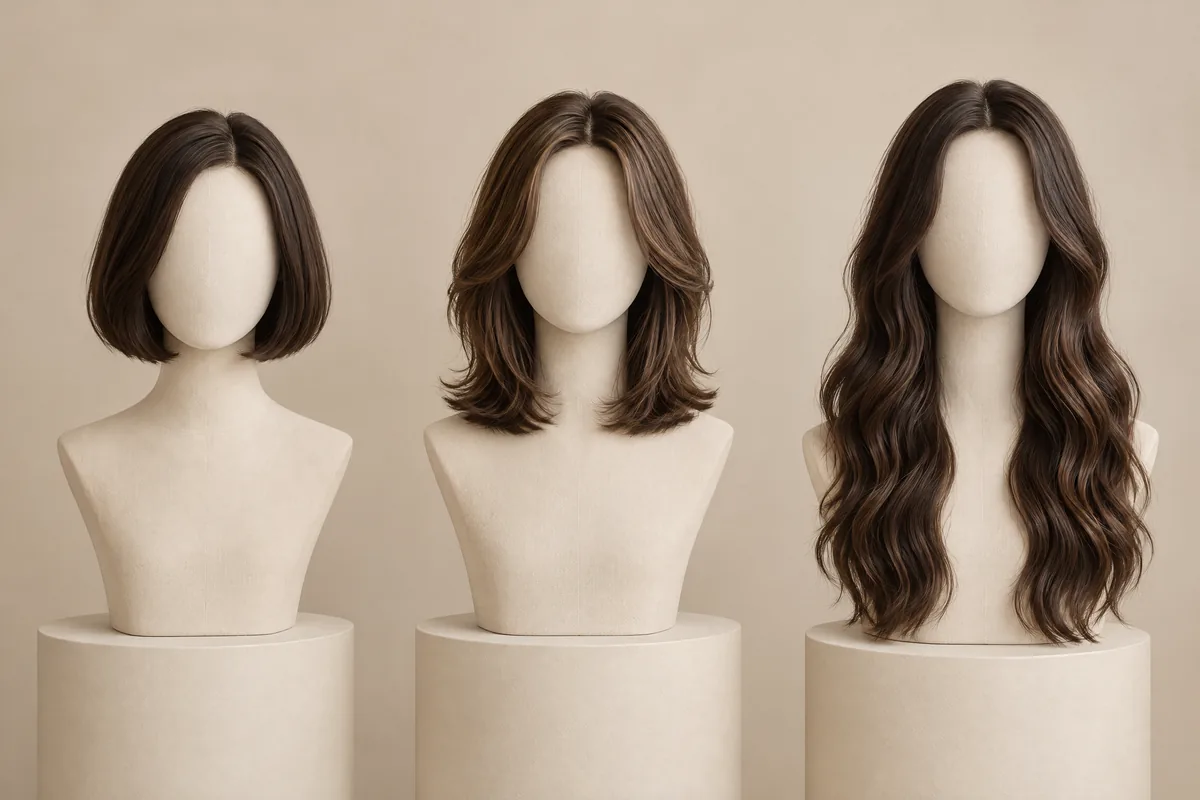
Crown strand length means the length of hair from an identified crown point to that strand's end. Agree the start point and measuring method with the person handling the sample, and use the same unit throughout. It is not the distance from the top of a display stand to the bottom of the wig, nor the height of the hairstyle.
A long crown layer can lie close to the head, while shorter layers can be arranged with lift. That difference is why a photograph of a taller silhouette does not establish greater strand length. Record the measured or stated length separately from ‘flat crown’ or ‘lifted crown’. If a measurement cannot be taken, label the visual impression as approximate rather than inventing centimetres.
Read the length alongside the cut
Ask where the crown hair ends within the style: near the cheek, around the jaw, or towards the shoulder. Those landmarks explain what the length contributes. Also note whether the hair has been curled, tucked or blow-dried into a bend. Do not stretch or restyle a display piece yourself to make the comparison look neater; ask how it can be handled.
Imagine that two human-hair samples have similar stated crown lengths, but one has a fuller fringe and inward-turning ends. If that one appears shorter around the face, the sensible next question concerns its layers and finish, not whether the length figure is wrong. A shorter outline may be attractive, yet demand a different styling routine from the straighter sample you prefer.
Examine the part panel in your intended hairstyle
Here, ‘part panel’ means the area where you can inspect the sample's parting and the base beneath it, as described by its supplier. Record where that area begins and ends, whether the part is fixed or can be moved, and which directions are permitted. Do not infer construction from a pale strip in a promotional image or from the fibre category alone.
Look at the part in the hairstyle you expect to wear. A narrow, defined area might answer your needs for a fixed side part; a more extensive parting area might matter if you want to change direction. Ask to see any permitted alternative rather than pulling hair aside yourself. A wider visible area is not automatically the better choice when you rarely expose it.
Keep scalp-like appearance and styling permission as separate notes. A panel can look convincing in its displayed position without allowing every part direction. Likewise, supplier names need their own explanation: Swiss mesh is not automatically lace-front or monofilament construction. The useful comparison is what this particular piece shows and permits, not a label borrowed from another catalogue.
Record fit impressions only when a try-on happens
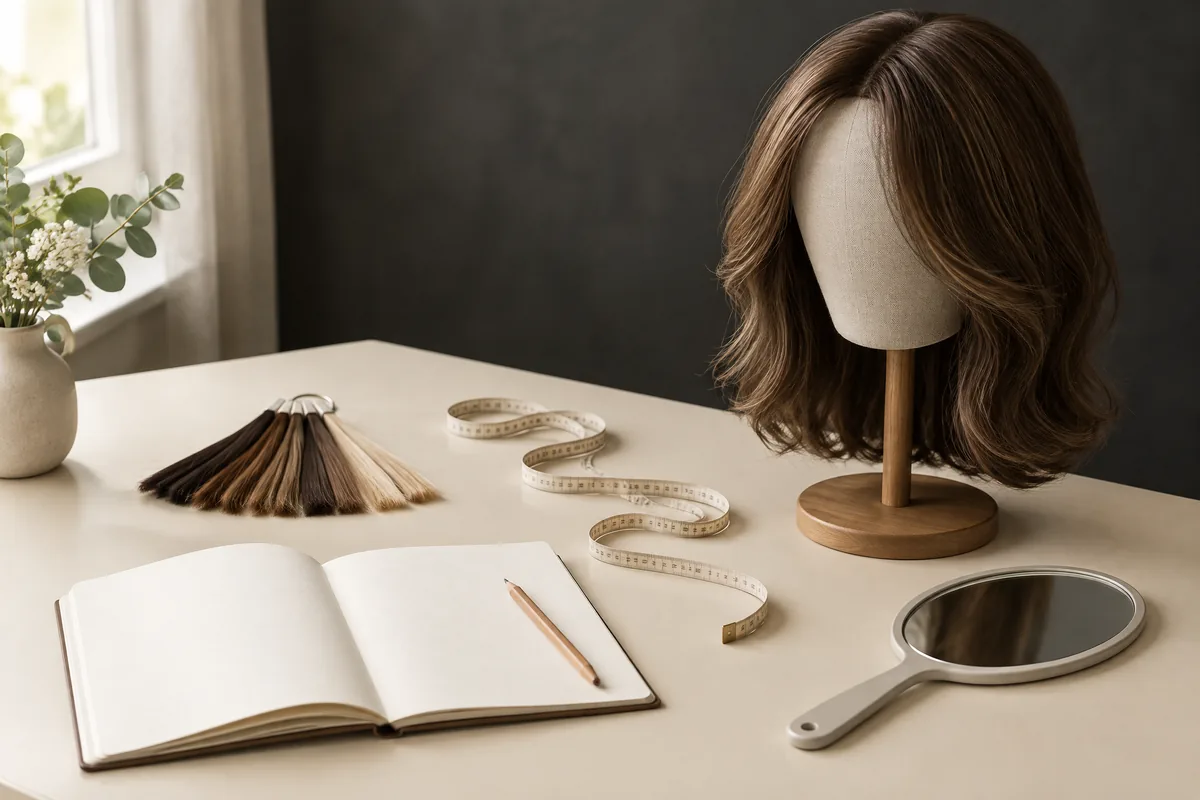
A display sample may have a different size from your eventual custom piece. The American Cancer Society notes that wig size charts can vary between brands, so an ‘average’ label is not a universal measurement standard. For a custom enquiry, ask how measurements will be taken and checked rather than transferring a sample's size label directly to your order. 3
If a try-on is arranged, ask how to position the sample correctly and which adjustments are appropriate. Then describe specific observations: contact near the temples, space at the nape, movement during a gentle head turn, or interaction with your glasses. Keep any liner or grip arrangement consistent where practical, and record differences when it cannot be kept the same.
Avoid turning a brief impression into an all-day comfort claim. ‘Pressure near the right temple during this try-on’ is actionable; ‘uncomfortable wig’ is too broad. Equally, a secure moment in the chair does not prove suitability for a windy commute. The row records what happened under the actual conditions, not a prediction of every situation in which you might wear it.
If a sample moves but its parting area looks right, keep both observations. Ask whether the movement relates to sample sizing, placement or another feature before deciding what to carry forward. Do not solve a fit concern by requesting a tighter custom piece on your own. Give the location and sensation to the fitter so the relevant measurements can be discussed.
Leave colour undecided when the lights differ
Colour comparisons need shared conditions. X-Rite explains metamerism: two colours can appear to match under one light source and differ when the light changes. That principle does not diagnose any particular wig pair, but it explains why a warm-looking sample under one lamp and a cooler-looking sample near a window cannot be ranked fairly from those impressions alone. 2
Bring the candidates into the same viewing conditions if that can be arranged. For matching a hair reference or swatch, the American Cancer Society recommends natural light, outdoors or near a window. Compare the same area of each sample and your reference together. Daylight is a useful check, not a promise that a shade will look identical in every room. 3
Consider a hypothetical comparison in which A was seen under warm indoor light and B beside a window. The correct colour entry is ‘different lighting; decision deferred’, not ‘A is redder’. You can still record crown length and parting details. Once both are viewed together, note the colour relationship under that shared light and, where practical, under another light relevant to your daily routine.
Use photographs to remember shape and sample identity, with permission, rather than as final shade approval. Write the light conditions beside them and keep colour notes provisional when you only have separate images. A change in lighting should reopen the colour question; it need not erase an otherwise useful observation about the fringe, part panel or crown length.
Turn mixed preferences into clear trade-offs
Read down the rows before choosing a whole column. You might prefer A's crown length and B's parting direction while leaving C's fit unresolved. That combination is not indecision: it is a more precise description of what matters. Separate essential requirements from preferences you could compromise on, especially when they point towards different samples.
| If this is your priority | Keep this observation prominent | Trade-off or next decision |
|---|---|---|
| A familiar face-framing shape | Crown endpoints and layer outline | More length may need a different cut or finish |
| A fixed side part | The panel in that exact position | Extra parting flexibility may be unnecessary |
| Changing the part direction | Supplier-confirmed permitted directions | Ask what construction supports the change |
| Wearing glasses comfortably | Actual contact during an arranged try-on | Sample size may not represent the finished fit |
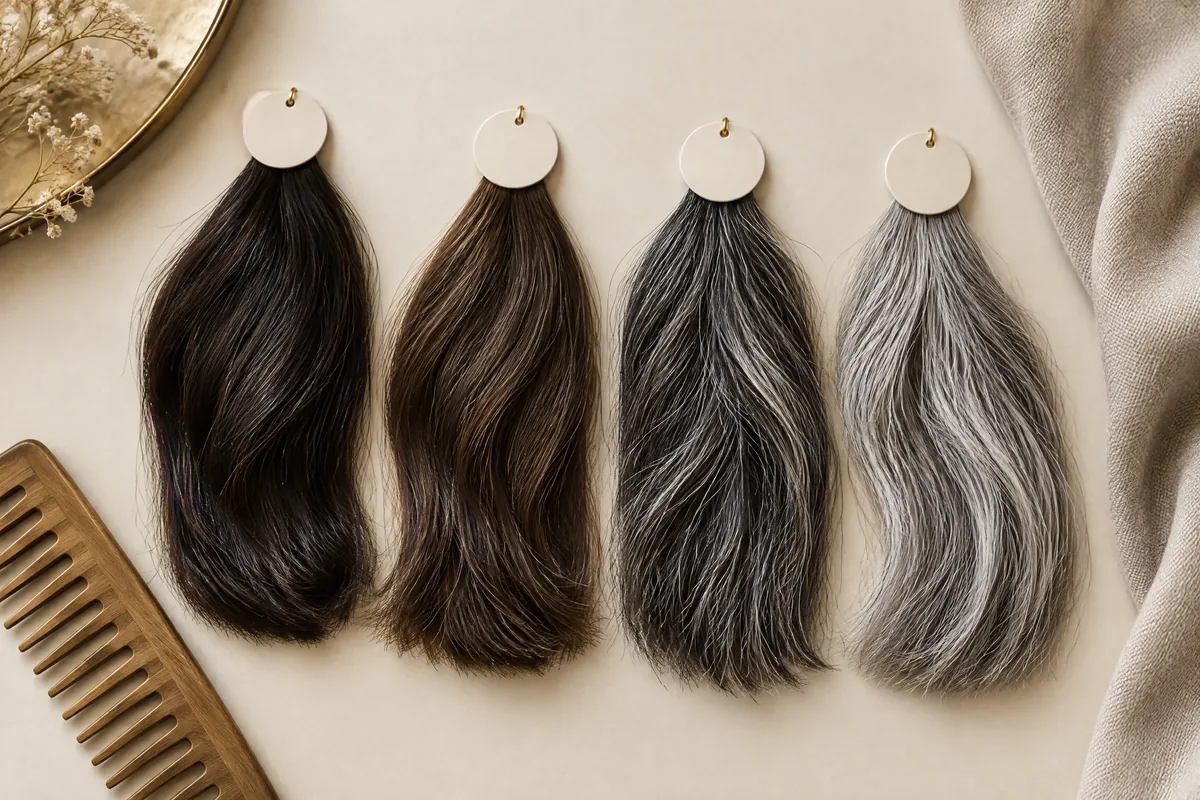
| Matching a dark or grey blend | Comparisons made under shared light | Shade approval waits when conditions differ |
Suppose, purely as a decision example, that you like the length shown by A but want to change the part as demonstrated on B. Ask whether those features can be combined in the proposed custom option and what would change. If they cannot, decide which matters more in daily wear. Do not silently treat separate attractive details as a build specification the maker has accepted.
Before dismissing a candidate, identify whether the objection concerns the piece or its presentation. A heavily styled crown may hide a usable length; a beautifully arranged display may conceal a parting limitation. Ask the unresolved question and keep the answer with the grid. There is little benefit in numerical scores when the candidates have not been viewed or tried under comparable conditions.
Keep the display sample separate from the completed piece
For a custom human hair wig Hong Kong discussion, OWNSTRAND describes handmade work involving head measurements and a return fitting with washing, cutting and blow-drying. A sample helps explain your intended look, while the completed piece needs its own assessment. Carry useful details forward as requests to discuss, not as a claim that every sample feature will be reproduced.
Create a short written brief beside the grid. Distinguish the chosen direction from details still awaiting agreement. ‘Prefer A's crown length; request B's side-part direction; colour undecided’ is clearer than ‘make one like A and B’. Ask which requests are achievable for the named option and which dimensions or arrangements require separate confirmation before proceeding.
A sample can contribute one useful detail without becoming the model for every aspect of your order. Naming that detail avoids turning a display piece into an accidental promise about the whole custom result. Keep these four types of record apart:
- Sample observation: what was visible or felt during an authorised try-on.
- Personal preference: the feature you want to keep, reduce or avoid.
- Agreed specification: what the maker has confirmed for the custom piece.
- Completion check: what you assess on the actual finished wig.
At the completion visit, return to those same rows. Check crown length after the agreed finish, the part in your intended direction, and the fit using the instructed wearing arrangement. Discuss a mismatch specifically rather than relying on a memory of the display. Ask for the particular fibre manufacturer's care and heat instructions before trying to recreate its styling at home. 1
Arrive with a workable shortlist, not a rushed verdict
When considering a wig shop Hong Kong visit, OWNSTRAND's physical location is Unit 2103, 50 Hoi Yuen Road, Kwun Tong, Hong Kong, in 利寶時中心. Its area pages do not represent additional branches. Ask about the viewing arrangements for your shortlist before travelling, especially if the comparison depends on a particular sample or an actual try-on.
Bring the blank grid, one clear hairstyle reference and a short note about your usual part and glasses, if relevant. Tell the consultant which question each sample would answer. If only two suitable references can be viewed, use two columns; if none can be tried, retain the visual notes and arrange the fit discussion separately. Filling every cell is not the objective.
Leave with one preferred direction, one possible alternative and a short list of unresolved details. A useful outcome might be a settled crown length but a colour decision postponed until shared-light viewing. That is more practical than choosing the most flattering display immediately, then discovering that its cut, parting arrangement or sample size was answering a different question from yours.
Questions & answers
Can I use the grid for a wig and a smaller topper?
Keep separate grids because they cover different areas and depend on different wearing arrangements. You can compare a shared feature, such as a parting appearance, but a full-wig fit impression should not be used to judge a topper's attachment or coverage.
Should I ask for the sample's product reference in writing?
Yes, if a reference is available. Attach it to your A, B or C label so later questions identify the correct piece. If there is no product code, ask for an agreed description; your own shorthand should not become an ambiguous order description.
What if the supplier gives length in inches and my notes use centimetres?
Preserve the original stated value and unit. You can add a converted value, labelled as a conversion, but first establish that both figures describe the same crown start point and strand endpoint. Changing units cannot resolve different measuring methods.
Can I include a friend's opinion without losing my own preference?
Add a separate comment field and ask them to identify a specific feature rather than vote for a winner. Keep your wearing priorities in the main notes. Their preference for a fuller style need not outweigh your desire for a quieter outline.
Does completing the comparison grid reserve a sample or place an order?
No. The grid is your decision record. Ask the supplier separately about quotation, supply and the steps required to proceed. Viewing a reference or sending notes to OWNSTRAND does not by itself confirm an order or reserve the displayed piece.
Put the next step into practice
Build a clearer understanding of hair shape and everyday styling through learning at Canvas. Hair styling courses in Hong Kong。
Explore more practical styling and selection notes. Canvas hair and beauty journal。
Tell the team which hair styling techniques you would like to learn. Contact Canvas Academy。
Sources & further reading
- Macmillan Cancer Support — Wigs for cancer treatment
Explains human-hair, synthetic and blended wig categories and their differing care needs, helping you keep material choices separate from hairstyle preferences.
- X-Rite — What is Metamerism?
Explains why two colours may match under one light and differ under another, a useful reason to compare shade references under shared lighting.
- American Cancer Society — Wigs for Hair Loss
Offers general selection guidance on brand-dependent wig sizing and comparing hair references or swatches in natural light.