Why the doorway is a useful checkpoint
A walk from an MTR exit to an office can leave several different concerns under the same description: ‘My wig feels hot.’ The nape band may be damp, the ends may be caught against a collar, and your face may still feel warm from walking. These observations point to different adjustments. Keeping them separate prevents a rushed purchase or an unnecessary styling change.
The Hong Kong Observatory explains that water evaporation is faster in drier air, and that evaporation produces cooling. It also explains that relative humidity depends on temperature. A cooler room therefore does not, by temperature alone, tell you how dry its air is. Nor does that room's air tell you whether the inside of your cap has dried.1
Airflow describes air movement; a light cap describes weight or construction; a cool feeling is your own response. None can substitute for the others. OWNSTRAND's guide to a wig for hot humid weather discusses fit, coverage, fibre and weight together. The useful question is which combination makes your actual day manageable, rather than which label sounds most refreshing.
Choose an ordinary transition to observe: arriving at work, entering a shopping centre after errands, or returning home. Avoid deliberately extending a hot walk to test a wig. A normal route already gives you enough to notice. The aim is a workable routine, not proving that one cap performs better under every possible condition.
Build a log that separates wetness, appearance and warmth
Use a short phone note with the same headings each time. Start before departure with the wig dry and arranged as you intend to wear it. Record the style, whether you are wearing a liner, and where hair touches your neck. That starting point matters: hair already tangled before leaving should not become a supposed effect of the commute.
On arrival, note what you can actually observe. Dampness means moisture in a named cap area, not simply a clammy sensation. If you cannot inspect the cap privately, write ‘not checked’ rather than ‘dry’. For fibres, describe visible clumping, displaced waves or tangled ends. For warmth, choose plain words such as comfortable, warm or distractingly warm.
| Log field | What to record | Useful example wording |
|---|---|---|
| Setting and activity | Route, walking effort, rain, indoor seat position | Brisk walk; sheltered from rain; seated away from vent |
| Damp cap areas | Front band, temples, crown and nape separately | Nape damp; front not checked |
| Fibre change | Compare fringe, crown and ends with departure | Fringe unchanged; ends clustered at collar |
| Perceived warmth | Your feeling, separate from wetness | Warm on entry; comfortable after sitting |
| Changes made | Liner, fit adjustment, hair placement or removal | Hair moved off neck; no product added |
| Later observation | Repeat the same three main fields | Cap still damp; shape unchanged; warmth reduced |
Repeat the observation after you have settled indoors. You might choose arrival and ten minutes later as convenient checkpoints; these are suggested note-taking times, not a cooling standard. Keep to the same interval when practical. If a meeting interrupts you, note the actual delay instead of treating a later entry as directly comparable.
Write the change you made before the later observation. Moving hair off your neck, removing a liner or sitting under a vent can all change the experience you are trying to understand. ‘Comfort improved after moving seats’ is useful information. ‘This fibre is cooler’ goes beyond what that single observation can tell you.

Compare two fibre choices for the same working day
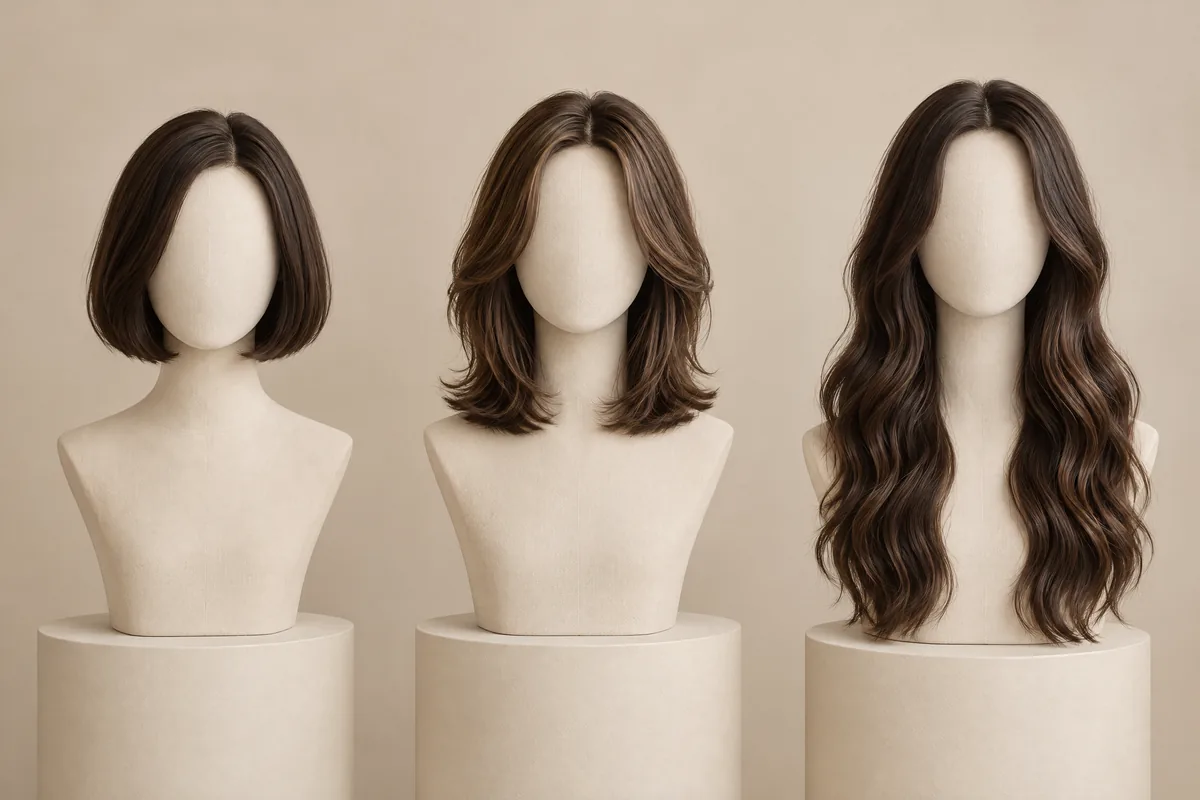
Consider two hypothetical jaw-length wigs: Choice A is a conventional synthetic style with a pre-set shape; Choice B is a human-hair style that you normally finish smooth. Neither represents a particular product or a reported trial. Keeping the length similar helps focus the comparison, but different density, cap coverage and fit still prevent it from being a pure fibre test.
Macmillan describes conventional synthetic wigs as having their style heat-set into the fibres, while human-hair wigs may need regular cleaning and professional styling. Those are useful maintenance differences, not evidence of how cool either choice will feel on you. Your decision should include the work needed to regain the appearance you want after wearing and washing.2
| Decision point | Choice A: conventional synthetic bob | Choice B: human-hair bob |
|---|---|---|
| Desired everyday finish | A familiar pre-set outline | A finish you can vary within maker guidance |
| Arrival observation | Has the fringe shifted or have ends tangled? | Has the smooth finish changed or have strands clustered? |
| Care commitment | Follow its synthetic washing and drying directions | Allow for the specified cleaning and restyling routine |
| Heat decision | No heated tool unless explicitly permitted | Use only the maker's approved tools and limits |
| Comfort comparison | Record cap wetness and warmth independently | Record the same fields; do not presume a cooler fibre |
| Stronger reason to choose | You value a repeatable shape with less restyling | You value finish flexibility and accept its upkeep |
Choice A: prioritising a repeatable outline
A pre-set synthetic shape can suit someone who wants a neat outline before an early meeting and does not want to build a blow-drying routine. That does not make it immune to tangling or changes in hair placement. In the log, distinguish ‘fringe moved by wind’ from ‘ends caught under the shoulder strap’ before deciding what needs attention.
The OWNSTRAND collection of synthetic wigs includes named styles with individual cap, size and fibre specifications, such as Amore Bay. Listings invite enquiries for quotations and availability. Save the exact style and shade you like, then compare its care sheet with the routine you can maintain; a broad synthetic category does not establish heat tolerance.
A sensible trade-off is accepting a relatively fixed everyday shape in exchange for less routine restyling. If you want to alter that shape frequently with tools, the original fibre instructions become decisive. Cancer Research UK warns that direct heat can melt synthetic fibres or make them frizz, and advises checking the manufacturer's information before heat exposure.3
Choice B: accepting more finishing work
A human-hair choice may appeal if you enjoy a particular smooth finish or want more styling flexibility. Judge it after the same transition rather than assuming flexibility means comfort. Log whether the fringe still frames your face, whether the ends have separated as you prefer, and what finishing work you actually need later.
The trade-off is the time and care you are willing to give that finish. Macmillan notes that human-hair wigs may require professional cleaning and styling. Ask which tasks belong at home and which need a salon, particularly for processed hair. Being human hair is not permission to copy every colouring, brushing or heat routine used on growing hair.2
Make your first indoor adjustment small
At your destination, find a comfortable place to pause before changing anything. Record your arrival impression, move away from the entrance if it is busy, and let yourself settle after the walk. If you then move hair off your neck or change seats, record that one adjustment. This makes the later note easier to interpret.
Avoid tightening the cap simply because the band feels wet. Dampness and slipping are different observations. If the wig has shifted, check its normal position and adjustment instructions in privacy. A tighter setting is not a drying method, and adding pressure can create another concern without resolving the first one.
If you use a liner, give it a separate note rather than grouping it with the cap. Macmillan observes that a liner can affect how a wig moves, so adding one changes more than moisture handling. Compare its fit and your comfort together. Do not introduce a new liner and a new cap setting in the same comparison.2
Keep a modest arrival kit rather than carrying several products you may not need:
- A phone note with the log headings already saved.
- A clean, soft cloth for gentle blotting where the maker permits it.
- The wig's care instructions, including brushing and drying directions.
- A clean spare liner if you use one and can change it privately.
- A compact, suitable support if you have somewhere to remove the wig.
Do not use an office hand dryer to speed up the process. The same caution applies to hot styling tools borrowed in a washroom. A damp band does not identify a safe heat setting. Keep drying and styling decisions tied to the exact fibre and cap instructions, even when you are in a hurry.3
Prepare a ventilated rest position before you need it
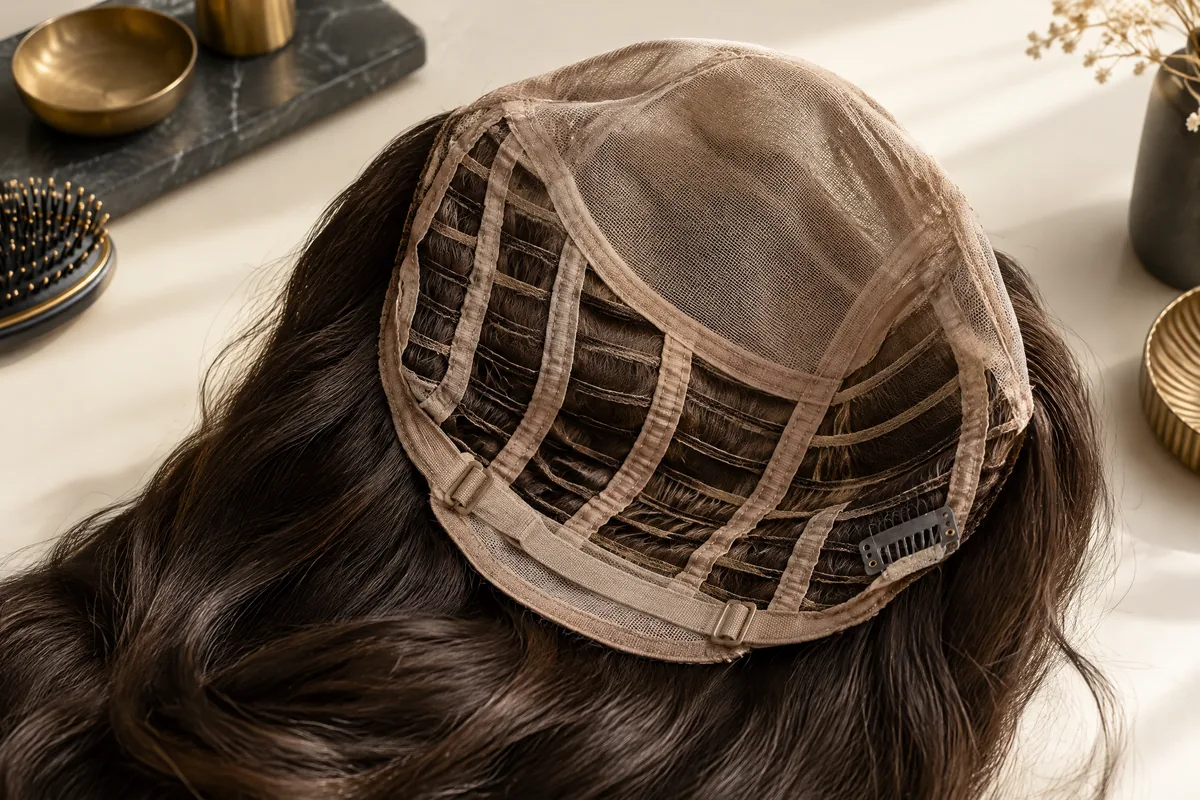
A useful rest position supports the wig without compressing wet areas and gives you space to inspect the inside. At home, choose a stable, clean stand that suits the cap, with the base supported and the hair hanging freely. An open support can leave more of the interior exposed than laying the cap flat on a towel.
Place that stand on a clean shelf or counter away from direct sun, cooking heat and the bathroom's damp surfaces. Leave room around the hair so the ends are not pressed against a wall. This is a practical arrangement for airing and inspection, not a promise that the cap will dry within a particular number of minutes.
If the care instructions permit blotting, remove excess moisture gently rather than rubbing the fibres or twisting the cap. Then let the specified drying method do its work. Macmillan describes leaving conventional synthetic wigs to dry after washing; the principle is to allow the appropriate drying period, not accelerate it with unapproved heat.2
An office may not offer a private, clean place to remove the wig. Plan around that reality. A foldable stand is useful only if you have a suitable surface and somewhere you feel comfortable using it. Where removal is impractical, record ‘cap not inspected’ and save the full check for home. Do not improvise on a communal washroom ledge.
If you need to pack the wig for travel, follow its storage directions and avoid treating a closed bag as a drying position. A removable liner can be kept separate while you manage it according to its own instructions. Before wearing again, inspect the band and interior as well as the hair; a dry-looking fringe is not a check of the cap.
Read a pattern, not a single uncomfortable arrival
Imagine a hypothetical office arrival: the nape is damp, the fringe looks unchanged, and warmth becomes comfortable after sitting away from the doorway. The later note still records a damp nape. This suggests that feeling less warm and having a dry cap were not the same event. The next practical question concerns drying and rest opportunities, not replacing an otherwise acceptable hairstyle.
Now imagine a shopping-centre stop where your warmth is comfortable but the ends are tangled against a high collar. That log points towards hair placement and the required detangling routine. A shorter neckline, a different collar or moving a bag strap may be worth trying. Buying a lighter cap would not directly address what you observed at the ends.
A third example is a brief walk followed by persistent pressure at the temples, with no cap inspection available. Do not label that ‘humidity damage’. Record pressure as its own fit concern and stop the comparison if wearing becomes uncomfortable. A fit adjustment made according to the instructions, or a fitting discussion, is more relevant than guessing about fibre performance.
Across several ordinary wears, look for repeated combinations: dampness in the same location, the same visible change at the ends, or warmth that remains distracting indoors. Keep route, hairstyle and accessories reasonably similar when comparing an adjustment. Your notes can guide a personal preference, but they cannot produce a universal ranking of cap ventilation or fibres.
Turn your notes into a specific fitting conversation
Bring a short description rather than a conclusion such as ‘all synthetic hair is too hot’. For example: ‘The nape band is repeatedly damp after my walk, while the fringe stays neat. I need an option that fits securely and can rest on a stand after work.’ That gives a fitter something practical to discuss without asking for guaranteed coolness.
For local selection, OWNSTRAND's wigs Hong Kong information describes private sample viewing and head measurement for handmade custom human-hair enquiries, followed by fitting, washing, cutting and blow-drying after completion. Its sole salon is Unit 2103, 50 Hoi Yuen Road, Kwun Tong, Hong Kong, 利寶時中心. Ask about visit arrangements and the particular option you want to discuss.
Take the care sheet, a style reference and your brief wear notes to that conversation. Ask where the cap has continuous coverage, how the nape should sit, and how the chosen fibre should be dried. Decide which compromise you can live with: more finishing work, a more fixed shape, less hair at the neck, or a planned private rest break.
Questions & answers
Should I include the weather-app humidity percentage in my wear log?
You can add it as background, with the time and location, but do not treat it as the humidity inside your cap or office. The route, walking effort and any rain are often more useful context for interpreting your own observations.
Can an arrival photo show whether my cap is damp?
A photo can document fringe position and visible changes at the ends. It cannot reliably show moisture inside the cap. Use consistent lighting for appearance photos and record cap dampness separately when you can inspect it privately.
Should I wash my wig after every humid commute?
Not automatically. Follow the maker's washing instructions and consider the cap's condition, rather than using the outdoor humidity as a wash schedule. Keep liner care separate, and ask the supplier if repeated dampness leaves you unsure about maintenance.
How can I compare two wigs if I only own one?
Use your existing log to identify what the second choice needs to improve, then compare its specifications and care requirements. Sample viewing may help with shape and construction, but a short indoor viewing cannot establish how it will feel throughout your commute.
Do I need a second wig for an indoor rest break?
Only if changing wigs fits your preferences, space and budget. A private break without a wig may be enough for some routines; others cannot remove it at work. Decide where and when a change would genuinely be useful before buying a spare.
Put the next step into practice
Build a clearer understanding of hair shape and everyday styling through learning at Canvas. Hair styling courses in Hong Kong。
Explore more practical styling and selection notes. Canvas hair and beauty journal。
Tell the team which hair styling techniques you would like to learn. Contact Canvas Academy。
Sources & further reading
- Let's Talk about Relative Humidity — Hong Kong Observatory
Explains how relative humidity depends on temperature and why water evaporates faster in drier air, helping distinguish room conditions from cap dampness.
- Wigs for cancer treatment — Macmillan Cancer Support
Offers general synthetic and human-hair care comparisons, including pre-set styles, maintenance demands, drying and the possible effect of liners on fit.
- Wigs, hats and scarves — Cancer Research UK
Explains why synthetic fibres need manufacturer-specific heat guidance and why wig care instructions should guide everyday handling.