Map the roughness before adding water
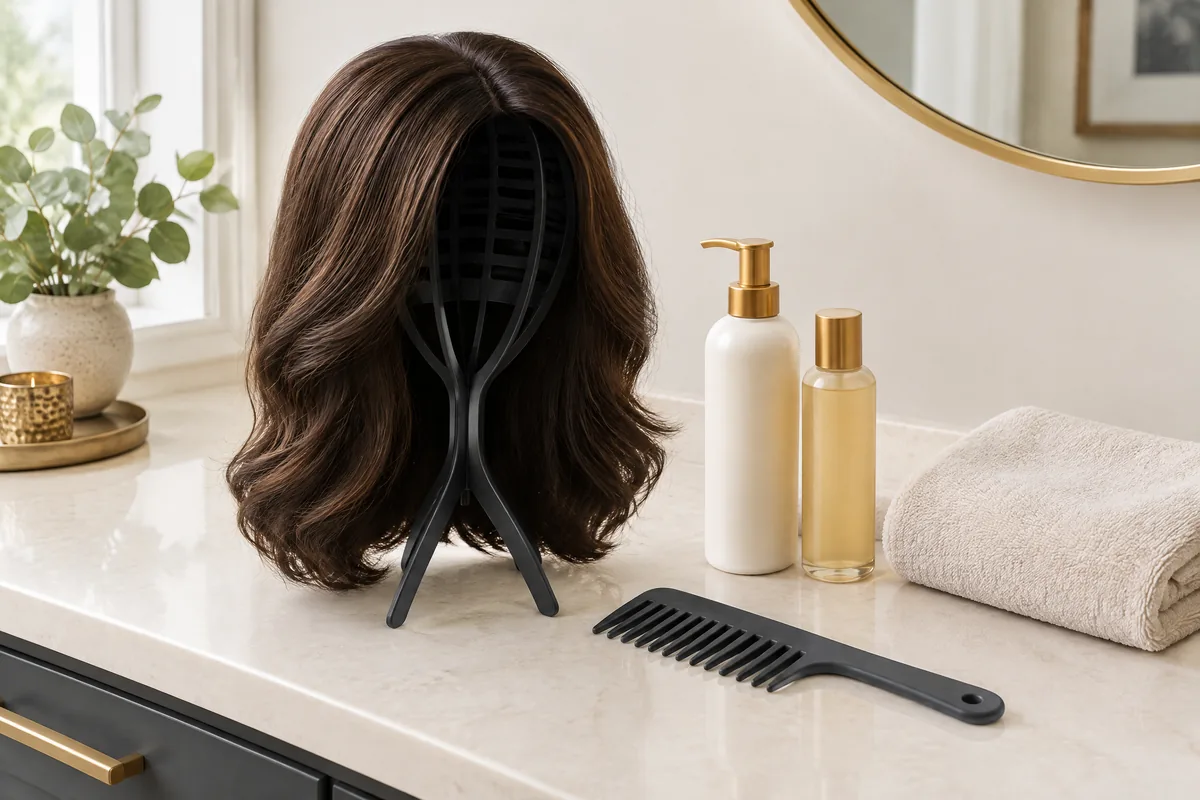
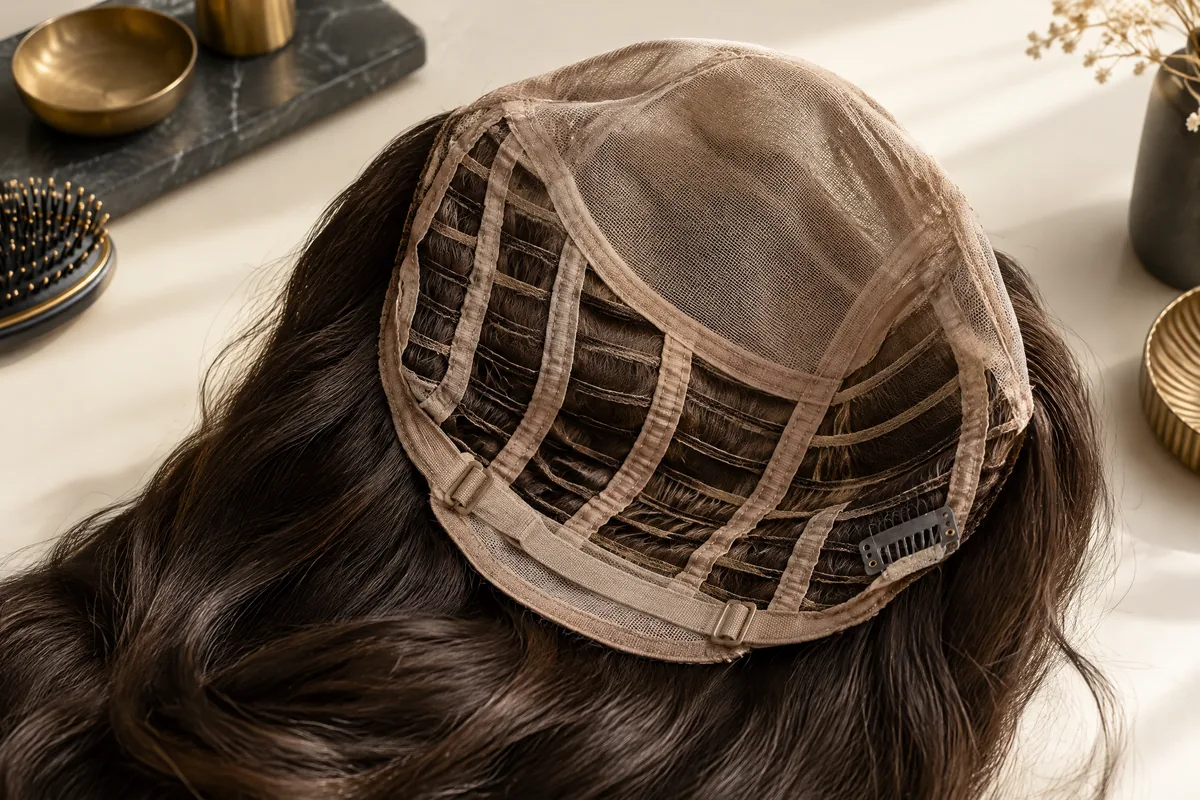
Take the wig off and support it as its care instructions recommend. Look at the underside of the nape, the section that rests on your shoulders, and the final lengths. Choose an upper section that feels smoother as a comparison. Photograph the back and underside in the same light, rather than relying on how the front looks in a mirror.
Describe each area without repeatedly running a comb through it. Useful notes include separate strands catching together, a sticky coating, a bent section, or ends that no longer fall into the familiar outline. These observations can coexist. A rough patch is not a diagnosis, and a photograph alone cannot establish whether the fibre is dirty, distorted or worn.
For a shoulder-length style, the troublesome section may sit above the tips because it brushes a collar. A longer style may have several contact areas, including a chair back. Ellen Wille specifically describes friction against clothes, chairs and the neck as a cause of tangling and rough, frizzy ends in its heat-friendly synthetic guidance. That explanation belongs to the fibre covered by that guidance. 2
Use this map to decide what information you need, not to assign a permanent label to the wig. A clean-looking crown does not rule out residue underneath; equally, a tangled nape does not mean the whole piece needs washing immediately. The useful question is which areas changed and what happened before you noticed them.
| Area to inspect | Detail to record | What it helps you compare |
|---|---|---|
| Underside of nape | Catching strands, compact tangles, collar contact | Local contact versus widespread change |
| Shoulder contact zone | Rough band, one-sided tangles, bag strap position | Where the worn style meets clothing |
| Ends | Clumping, bent tips, changed curl outline | Tip texture versus overall silhouette |
| Smoother upper section | Separation, feel, fall of hair | A comparison within the same wig |
Separate friction, residue and shape changes
When the contact pattern matters more than washing
Imagine a commute in a high-collared jacket, followed by hours against an office chair. If the underside catches while the crown remains unchanged, contact is a useful lead to record. It does not prove the cause, but it gives you something practical to change at the next wear: collar height or how the hair falls against the chair.
Do not test that lead by brushing harder. Ellen Wille's heat-friendly guidance recommends gentle detangling from the ends upwards with its stated products and tools. Its heat-maintenance advice is a separate step for the identified fibre, not permission to use an iron on an ordinary synthetic wig. A promising-looking online demonstration may be demonstrating a different material from yours. 2
When coating and a changed outline need separate notes
If several sections feel tacky after styling spray, or strands cling together beyond the nape, write down the product name and where it was applied. That makes residue a question worth investigating through the permitted cleaning routine. It is still only a clue: touch cannot identify the substance, and local friction may be present at the same time.
A flattened wave or a bend after storage is a different observation from tackiness. Record the silhouette beside the texture, rather than calling every change frizz. Ellen Wille explains that its heat-friendly fibre can retain a heat-set style through washing. Cleaning therefore should not be treated as a way to undo every deliberate or unwanted shape change. 2
Set one modest aim for the next care session. You might want to remove the known styling product, release a loose tangle using an approved method, or find out whether the dry outline has changed. Keeping those aims separate makes it easier to recognise partial improvement and prevents a second wash being mistaken for the obvious next step.
Turn the care card into a usable decision
Keep the style name, manufacturer and fibre description with your notes. Then copy the actual instructions for water, cleanser, detangling tools, drying and heat. A bottle labelled for wigs does not establish compatibility with every fibre or base. If the card and a general guide disagree, ask the maker which instructions belong to your exact model before proceeding.
Jon Renau's standard synthetic guidance prohibits heated styling and blow-drying. A routine advertised for heat-friendly fibres must not be transferred to the standard fibre covered by those instructions. The distinction matters most when roughness persists: reaching for a hot tool because washing disappointed you can turn an unresolved care question into an avoidable styling mistake. 1
OWNSTRAND's synthetic wigs collection gives useful length references: Amore Bay lists a 2.8-inch nape, while Amore Arden lists an 11.8-inch nape. Those measurements help you picture different contact zones, not compare durability. Both listings require a quotation and availability enquiry; neither description establishes that heat is permitted or that the style is in stock.
Before handling a rough section, keep this short checklist beside the wig:
- Identify the exact fibre and style, not just the broad category.
- Use the named or expressly compatible cleanser and detangling tool.
- Check whether detangling is instructed before washing, during care or after drying.
- Keep heat out of the routine unless the model's instructions explicitly permit it.
- Stop when fibres resist instead of increasing force.
Choose cleaning for a cleaning reason
A known product deposit, noticeable soiling or the maker's washing schedule can justify cleaning even when friction is also involved. Record that reason first. You are then judging whether the intended cleaning helped, rather than asking shampoo to solve every visual change. If the only new observation is a local rough patch, consult the handling instructions before automatically adding another wash.
For the standard synthetic routine it covers, Jon Renau instructs gentle detangling before washing, cool running water and synthetic wig shampoo. It says to keep the hair travelling in the same direction, avoid rubbing because it may cause tangling, and rinse thoroughly until the water runs clear. Treat that as a manufacturer example, not a substitute for another model's card. 1
Prepare the drying space before starting. Have the permitted stand, towel and products within reach so you do not leave wet hair folded while searching for equipment. Record exactly what you use, including any leave-in product. If you introduce a new spray and a different brush together, it becomes harder to interpret why the next dry result changed.
Jon Renau directs gentle towel patting and natural air drying on a plastic or wire wig stand, with no blow dryer. Follow your own model's directions for wet handling and wait until it is completely dry before making the main comparison. A wet section pressed flat against a towel is not a fair match for your earlier dry photograph. 1

Record what remains after complete air drying
Return to the same four areas with the same lighting and support. First compare appearance; then, only as permitted, assess gentle separation with the appropriate tool. Write what changed in plain language: less tacky, fewer loose tangles, same rough ends, or a curl still sitting differently. Avoid a single verdict such as fixed, which conceals what actually improved.
An optional personal scale can make later entries easier: free separation, occasional catching, or resistance that makes you stop. These are descriptive labels, not measured damage grades. Use the same gentle method each time and do not keep testing a resistant section. Your record is meant to reduce handling, not become another source of repeated combing.
| Care-log field | Before handling | After complete air drying | Next-wear note |
|---|---|---|---|
| Nape | Where catching starts | Easier, unchanged, or more resistant | Collar and chair contact |
| Shoulder zone | Side or band affected | Separation and visible outline | Clothing or bag position |
| Ends | Texture and curl direction | Roughness and shape separately | Whether the same area catches |
| Products and method | Names, tool, reason for care | What was actually done | Keep or change one permitted step |
| Comparison photo | Same angle and lighting | Matching dry photograph | Compare after normal wear |
A useful entry might read: nape less sticky after the prescribed wash, ends still rough, back wave unchanged. That supports a limited conclusion: the cleaning appears to have addressed one complaint. It does not show that fibres have returned to their original condition. Keep the remaining problem visible instead of erasing it with the word refreshed.
Use the result to choose a different next step
Consider a hypothetical long wig that feels coated at the back but also catches at the ends. After permitted washing and complete drying, the coated feel is reduced, yet the same ends resist gentle separation. Repeating the wash immediately would ask the same treatment to answer a different question. Keep the cleaning result, pause resistant handling and ask about the remaining roughness.
Now consider a shorter style that tangles only where it touches a jacket collar. Its approved detangling routine releases the loose knot, but the problem returns during the next similar wear. A useful next comparison is a lower collar while keeping the care products unchanged. This tests a practical contact change without claiming that clothing was the sole cause.
Finally, suppose a heat-friendly wig has a changed wave but no obvious coating. The dry shape after washing still differs from your earlier photograph. Check the precise restyling or maintenance instructions rather than using more shampoo. If that work feels beyond what you can control, ask the maker or an appropriate wig professional whether assessment is available before arranging any intervention.
Reduce contact without sacrificing the style blindly
Observe your usual outfits with the wig on. A cropped cut may avoid shoulder contact but still touch a high collar; longer layers may sit under a bag strap. Try a smoother or lower collar and keep straps away from the hair where practical. These adjustments are small comparisons you can record, not guarantees that the wig will stop tangling.
Do not pull the whole style into a tight updo merely to protect the ends. The result may expose areas you prefer covered or put tension on the attachment or cap. Any clipped or tied arrangement should stay within the model's wearing guidance. The trade-off is between the outline you enjoy and the contact pattern you can realistically reduce.
Allow drying to finish and follow the storage instructions before putting the wig away. Keep a note when you change the stand, travel packing or placement of the lengths. If a new bend appears later, that history gives you a concrete question about storage, rather than another reason to assume the fibre needs a wash.
Decide when to seek help or replace the piece
Pause when the permitted tool keeps catching, the cap or front edge is being pulled, or the dry outline no longer meets your needs. Send the maker a photo of the affected zone, the style name and the short care log. Ask which handling is allowed and whether an assessment is offered; do not assume a retailer provides repair or that an intervention can restore worn fibre.
If replacement becomes the more practical choice, use your contact notes to shortlist lengths and care routines you can maintain. OWNSTRAND's buy wigs online Hong Kong shop offers filters and style enquiries. Keep the exact listing name, preferred colour and care questions together, then request the quotation, availability and ordering arrangements for that option rather than treating a catalogue image as ready-to-send stock.
Budget for the identified route, not a general expectation about synthetic hair. OWNSTRAND's wig prices in Hong Kong guide separates its named handmade custom human-hair references from manufacturer catalogue quotations. Those custom references are not a synthetic replacement price list. Ask separately about the selected piece and any assessment or finishing you want, with the service scope stated clearly.
For an in-person OWNSTRAND enquiry, arrange the visit before travelling to its sole location: Unit 2103, 利寶時中心, 50 Hoi Yuen Road, Kwun Tong. Bring your ordinary collar or describe your commute, alongside the care record. The goal is a manageable appearance and routine, whether that means keeping the wig with a known limitation or choosing another style.
Questions & answers
Can I replace wig shampoo with washing-up liquid?
Do not substitute it unless the manufacturer explicitly permits that product. A household cleaner is not automatically compatible with the fibre, colour or base. If the recommended cleanser is unavailable, ask for an approved alternative rather than improvising a stronger cleaning mixture.
Does a soft-feeling fibre mean it is heat-friendly?
No. Softness, shine and colour are not heat-permission labels. Use the exact product identification and its written styling instructions. If those details are missing, keep heated tools away while you obtain the correct information.
Should I loosen the cap to stop nape tangles?
Do not change the fit solely to address fibre roughness. Fit and tangling are separate questions. If the cap feels too tight or shifts, seek the model's adjustment guidance; moving the cap may also change the hairline and where the lengths meet clothing.
Can I razor off the rough tips at home?
Avoid that shortcut. Jon Renau warns that razor cutting can shred synthetic ends and lead to fraying. Ask someone familiar with the specific fibre about an appropriate cut, its effect on the silhouette and whether shortening would suit your wearing preferences. [1]
What should I save if the packaging has been thrown away?
Keep the purchase reference, manufacturer, exact style, fibre wording, colour code and a copy of the care sheet. Ask the seller to help identify missing details from the original order. A photograph of the hairstyle alone may not distinguish similar models or different fibres.
Put the next step into practice
Build a clearer understanding of hair shape and everyday styling through learning at Canvas. Hair styling courses in Hong Kong。
Explore more practical styling and selection notes. Canvas hair and beauty journal。
Tell the team which hair styling techniques you would like to learn. Contact Canvas Academy。
Sources & further reading
- Jon Renau — Synthetic Hair Care and Styling Tips
Manufacturer guidance for standard synthetic care, including gentle washing, air drying, heat restrictions and a warning against razor cutting.
- Ellen Wille — Heat Friendly Synthetic FAQs
Explains friction-related tangling and style memory in the maker's heat-friendly fibre, with handling and maintenance guidance distinct from standard synthetic care.