Measure the hanging space before unpacking shampoo
A hotel bathroom can have an impressive basin and nowhere useful to dry a long piece. The problem is not just finding somewhere to put the cap. You need an uninterrupted drop for the longest ends, plus room around the hair so it does not rest against a wall, towel or suitcase.
At home, put your wig on its intended drying support and measure from the support’s top to the lowest hanging tip. Take that measurement with you. In the room, compare it with the available drop beside a stable surface. A stand that fits neatly on the desk may still leave the ends lying across the desktop.
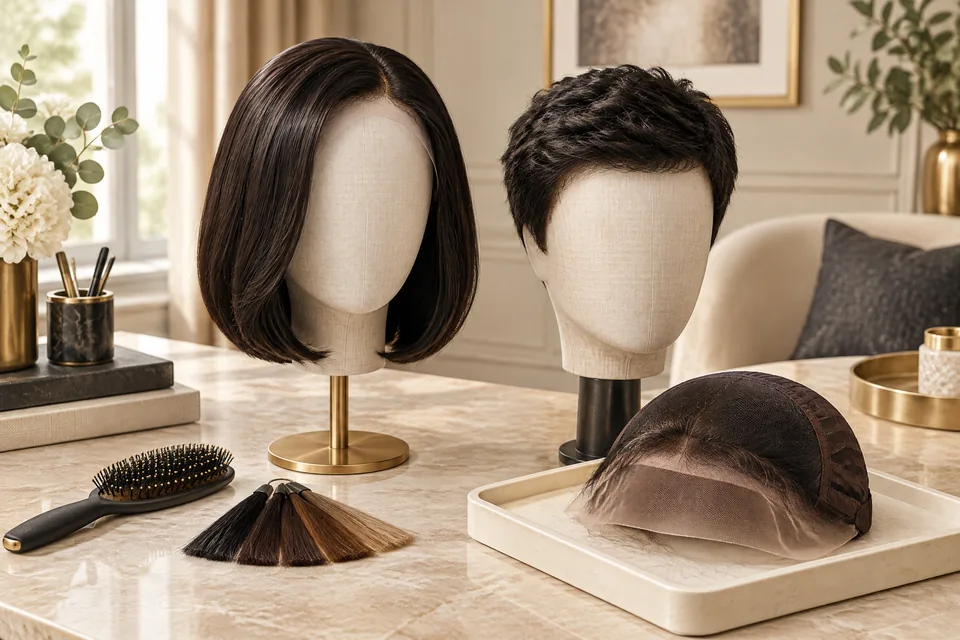
If you are choosing a travel style, OWNSTRAND’s long wigs collection includes named synthetic and human-hair options, such as Amore Brandi and Brielle. Those different fibres make the care instructions relevant before departure. Consider the actual hanging length, not only how long the hairstyle looks when worn or photographed.
Make the space test while the wig is dry. Open the suitcase, pull out the desk chair and check that a companion can still walk past. A spot that works only while every object stays perfectly still is a fragile choice for an occupied room. Move luggage first rather than trying to work around it later.
Choose a portable support that leaves the ends clear
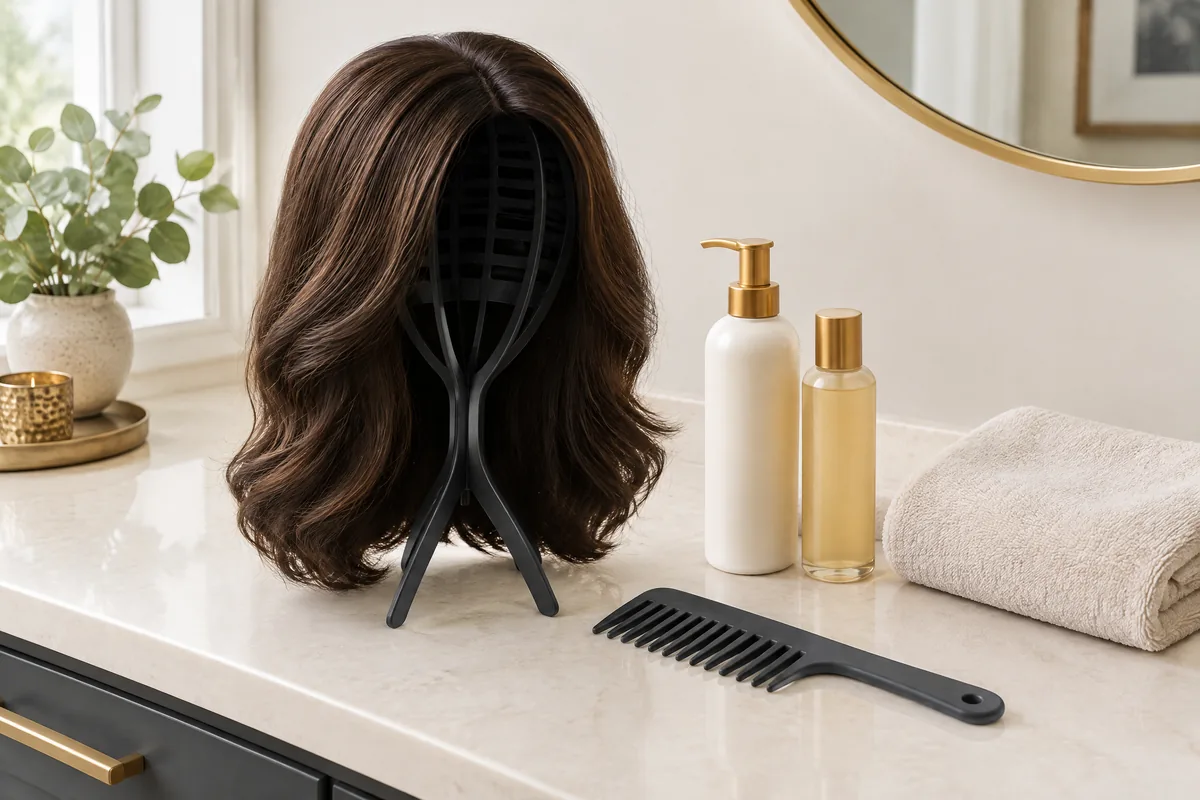
Pack a purpose-built support approved for your piece’s drying method. A folding, open stand can save luggage space and leave the cap accessible, but compactness is not enough. Assemble it completely and check that its joints stay locked. If it rocks on the chosen surface before washing, do not trust it with a wet wig.
Use a hanging support only when the maker permits that method and the attachment suits the cap. Do not pinch delicate front material with an ordinary trouser clip or suspend the wig by its hair. A suction hook, towel rail or improvised bottle may seem convenient, but none automatically provides the stability or cap support your piece needs.
| Possible position | Test before washing | Decision |
|---|---|---|
| Clear desk edge with an open stand | Stand is fully supported; ends hang clear of drawers and chair | Suitable if the support passes its stability check |
| Bathroom shelf | Clear drop, no shower spray, no towels touching hair | Use only if the room stays dry and the shelf is secure |
| Wardrobe hook | Maker allows hanging; cap attachment is appropriate; clothing stays clear | Conditional, not a default drying place |
| Towel-covered chair | Hair would rest on fabric or bunch in the seat | Reject for this hanging setup |
| Window ledge or heated rail | Sunlight, heat or an unstable narrow surface | Reject |
For a small room, position the stand near a clear edge without leaving its base overhanging. Put any drip-catching towel below the ends, never wrapped around them. Leave visible clearance even after the towel is folded. If that cannot be achieved, a larger support area matters more than preserving your original furniture arrangement.
Let the fibre decide the care method
A travel itinerary is not a wash schedule. Look at the maker’s instructions alongside actual wear, residue and the condition of the cap. Macmillan advises washing as directed by the wig specialist and notes that different wig types need different care. Several sweaty outings and a brief indoor dinner do not create identical maintenance needs.2
Conventional synthetic hair: avoid wet brushing and heat shortcuts
CancerCare advises cool-water washing for synthetic wigs, towel blotting without twisting or wringing, and gentle finger separation during drying. It warns against combing or brushing while wet because fibres can stretch. For a long piece, that means preparing for careful handling rather than expecting to brush through a wet knot after the rinse.1
Many conventional synthetic styles retain their set shape after washing, as Macmillan explains. That can reduce restyling work, but it is not proof that a particular wig will be dry by breakfast. Follow its own care label, including any restrictions on products and tools. A ready-set style still needs a usable drying location.2
Human hair and blends: reserve time for the permitted finish
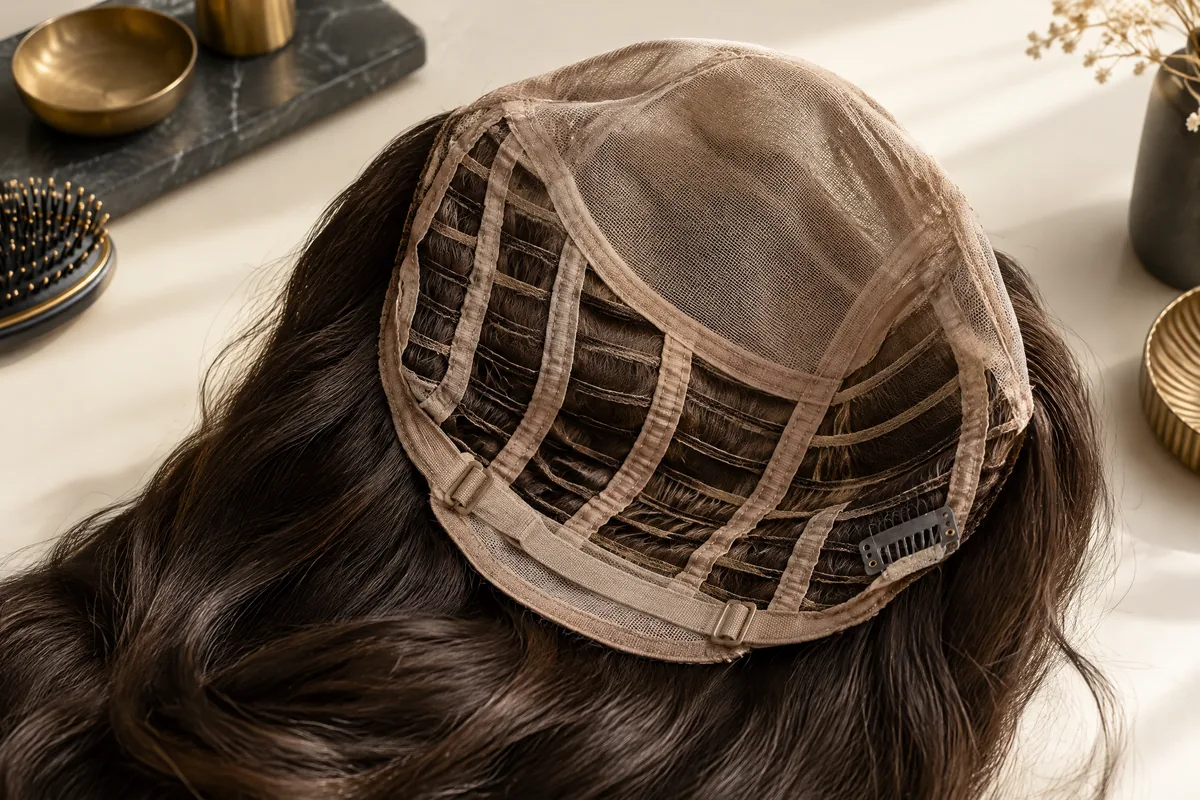
Some human-hair wigs can be shampooed and styled at home on a designed wig block; others may need professional cleaning and styling. Macmillan recommends supplier advice on that distinction. Before travelling, find out whether your usual finish depends on a secure block, particular tools or a salon service that will not be available in the hotel.2
When comparing human hair wigs, keep the care requirements beside the style name. OWNSTRAND distinguishes the hair description from construction, fit and styling limits. For travel, a piece you can maintain with your packed equipment may suit you better than one whose preferred finish needs tools you have deliberately left at home.
Blends deserve their own instructions rather than a compromise between two routines. Macmillan notes that synthetic components can stretch and frizz with hairdryer or straightener use. Likewise, a heat-friendly label does not approve every dryer setting or drying technique. Use only the exact tools, conditions and temperatures permitted for that product.2
Prepare the whole drying route before the rinse
Place the assembled support, clean blotting towel and approved care products within reach before water touches the wig. Decide where you will carry the wet piece and clear that route. Trying to build a stand one-handed while holding long wet hair over the carpet creates a problem that a few minutes of preparation can avoid.
Use the maker’s detangling method before washing, with particular attention to the nape and ends. Choose a clean basin and follow the specified cleanser, water temperature and rinsing method. Complimentary hotel shampoo is not automatically suitable simply because it is labelled gentle. Bring the product you know is approved instead of improvising after arrival.
After rinsing, handle the piece as directed and blot rather than twist where that method is permitted. CancerCare specifically recommends blotting synthetic wigs and avoiding wringing. A towel is useful for removing excess water during this step; it should not become a permanent drying bed with the long lengths compressed underneath the cap.1 Before starting, have these essentials ready:
- The exact piece’s care instructions, saved where you can read them offline.
- A tested support with all parts and attachments packed together.
- Approved cleanser and any prescribed after-wash product.
- A clean towel for blotting, plus a separate drip catcher if needed.
- A clear route from basin to support, away from luggage and electrical equipment.
- A fallback you can wear if drying or finishing takes longer than expected.

Separate the lengths without pulling the style apart
For a synthetic piece whose instructions permit it, use your fingers gently to separate and arrange strands while drying, rather than brushing wet hair. CancerCare gives this distinction explicitly. Aim to release obvious overlapping bundles, not to force the wig into a new shape or pull stubborn knots through with a comb.1
Keep the left and right lengths from gathering into one heavy bundle against the support. Let the ends fall naturally and check their lowest position after settling the cap. With waves or curls, preserve the intended grouping instead of stretching everything straight to gain clearance. Raise or reposition the support rather than tensioning the hair.
Recheck after a companion showers or someone moves a chair. A towel hung nearby can now touch the tips; a backpack can occupy the formerly clear drop. Agree that the drying corner stays undisturbed and tell housekeeping if you do not want the setup moved. Privacy is useful, but not if it means shutting the piece into a cramped wardrobe.
Choose a place away from direct sunlight and heat sources. CancerCare warns against direct-sun drying for synthetic wigs and cautions against exposing these fibres to high heat. Do not move the stand onto a sunny window ledge, under a hot lamp or beside a heated towel rail to meet a departure deadline.1
Use a dry-before-checkout inspection, not a countdown
An evening wash followed by an early airport transfer leaves little opportunity to change plans. Treat checkout as a packing deadline, not evidence of dryness. Plan a first check while there is still time to leave the wig supported, then a final check before its travel case closes. No single number of hours covers every piece and room.
With clean, dry hands, inspect accessible cap areas and gently separate an outer layer to assess the inner lengths without tugging. Look and feel for residual dampness rather than trusting the glossy surface. Do not pull delicate material off its support just to inspect it; use the access allowed by the support and the maker’s handling instructions.
| Checkpoint | What to inspect | If it has not passed |
|---|---|---|
| Inside the cap | Nape, ear tabs, seams and thicker areas for dampness | Keep supported and allow more time |
| Inner lengths | Hair beneath the dry-looking outer surface | Gently separate permitted sections; do not pack |
| Lowest ends | Tips that may have touched a towel or collected together | Restore clearance and reassess |
| Finished style | Whether permitted detangling or setting is still needed | Finish only when its instructions allow |
| Travel case | Lining is dry; no damp towel is included | Dry the case or use another appropriate dry container |
For synthetic wigs, CancerCare places brushing and usual styling after complete drying. Keep that separate from the moisture check: neat-looking hair is not the same as a dry cap. Pack only after both the piece and its container pass inspection, using the maker’s storage method and leaving room for the lengths rather than forcing them under shoes.1
When the hotel has no safe drying space
For a non-essential wash, postponement is the simplest alternative. Arrive with the wig already cleaned and fully dry, then maintain it during the trip as its instructions allow. A spare piece adds packing volume, but it gives you something to wear while the main wig is unavailable. The trade-off is luggage space versus dependence on one drying setup.
If cleaning is necessary and the room fails the space test, arrange suitable professional care only after checking who can handle your exact fibre and construction. Ask about cleaning, drying, finishing and collection timing together. An ordinary laundry service is not an automatic substitute for wig care, and a promised collection time does not explain the method being used.
Consider a traveller reaching the hotel late on Friday before a Saturday morning transfer. The only shelf sits over a damp towel rail, and the longest ends reach the towels. The better decision is not to start an optional wash. Keep the piece dry, use the approved maintenance routine and schedule cleaning after reaching a usable location.
In a different room, a stable desk has sufficient drop and the traveller is staying several nights. They can wash earlier in the stay, leave the support undisturbed and inspect progress before departure day. This plan offers more flexibility, but it still cannot promise a drying time. Space and available time must both pass; one cannot replace the other.
If a piece is already wet when you discover the problem, do not solve it with a hot dryer or a sealed suitcase. Keep it on a permitted support while seeking a safer location or supplier advice. Changing your packing or departure arrangements is inconvenient, but a temporary breathable bag is not a replacement for completing the drying process.
Make the travel routine part of choosing your next wig
Before you buy wigs online Hong Kong, save the exact listing name and describe your usual travel constraints: early checkouts, shared rooms or limited luggage. OWNSTRAND’s shop provides catalogue browsing and style-specific enquiries. Ask for the care instructions, a suitable portable support, quotation and availability; delivery arrangements need their own discussion.
If seeing a custom human-hair direction in person would help, OWNSTRAND offers private sample-viewing discussions at its Kwun Tong premises: Unit 2103, 50 Hoi Yuen Road, Kwun Tong, Hong Kong, 利寶時中心. Arrange the visit beforehand. Its area shopping guides do not mean there is a branch in each district or that every catalogue style is there to try.
A useful final comparison is practical: can you support the full length, wash it with the products you carry, and complete the permitted finish before packing? You do not need to give up a long look simply because you travel. Choose the piece and the care plan together, with an alternative ready when the hotel layout does not cooperate.
Questions & answers
Should I pack the portable stand in my cabin bag?
If it is essential to your care plan, keeping its parts together in an accessible bag can be helpful. Check the airline’s baggage rules, especially for a stand with metal components or tools. Test assembly at home so a missing connector does not emerge at the hotel.
Can I cover the stand to keep the wig private?
Avoid draping a towel or clothing over a drying piece. Choose a discreet location that still leaves the hair clear and accessible. If a shared room cannot provide both privacy and a suitable setup, use your fallback rather than covering the wet wig.
Will opening the hotel window guarantee faster drying?
No. Outdoor humidity, rain, sunlight and room conditions vary. An open window is not a reliable drying-time promise and may bring new problems to the location. Follow the piece’s instructions and assess dryness directly instead of relying on the window being open.
What if I leave my wig stand at home?
Ask the supplier what substitute, if any, is suitable for the exact cap and fibre. Do not assume a drinking glass, lamp or clothes hanger is safe. If no approved, stable alternative can accommodate the full length, postpone an optional wash.
Should I wash a long wig just because the trip has ended?
Not automatically. Review its condition and the maker’s recommended routine after unpacking. Check for tangles, residue and cap moisture, then decide whether cleaning is needed. Travel dates alone are not a reason to apply the same wash interval to synthetic, human-hair and blended pieces.
Put the next step into practice
Build a clearer understanding of hair shape and everyday styling through learning at Canvas. Hair styling courses in Hong Kong。
Explore more practical styling and selection notes. Canvas hair and beauty journal。
Tell the team which hair styling techniques you would like to learn. Contact Canvas Academy。
Sources & further reading
- CancerCare — Synthetic Wig Care and Resources
Explains cool-water synthetic care, blotting without wringing, gentle finger separation, avoiding wet brushing and waiting until completely dry before styling.
- Macmillan Cancer Support — Wigs for cancer treatment
Describes care differences between synthetic, human-hair and blended wigs, including supplier guidance, specialist supports and heat precautions.