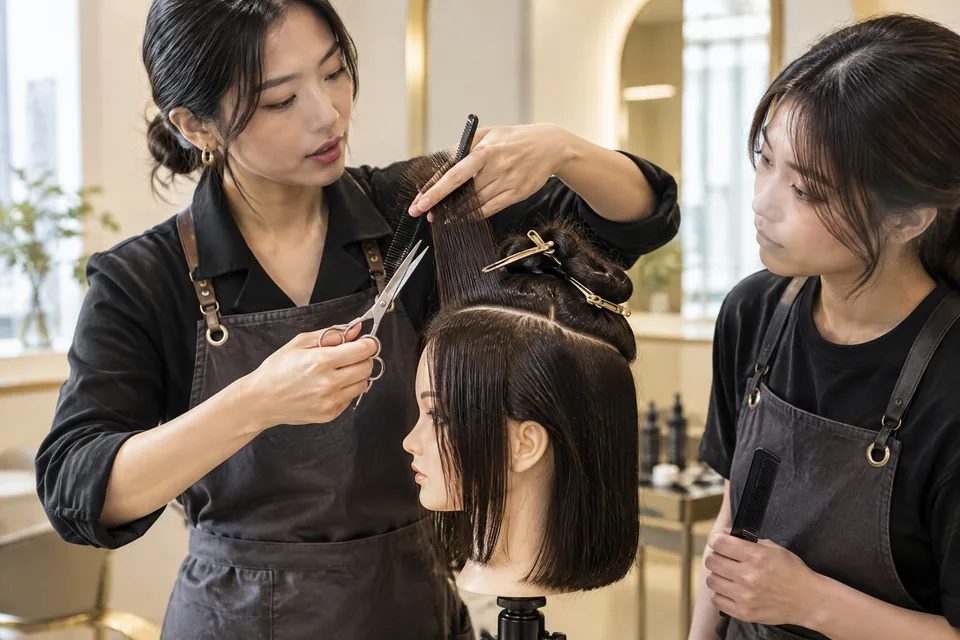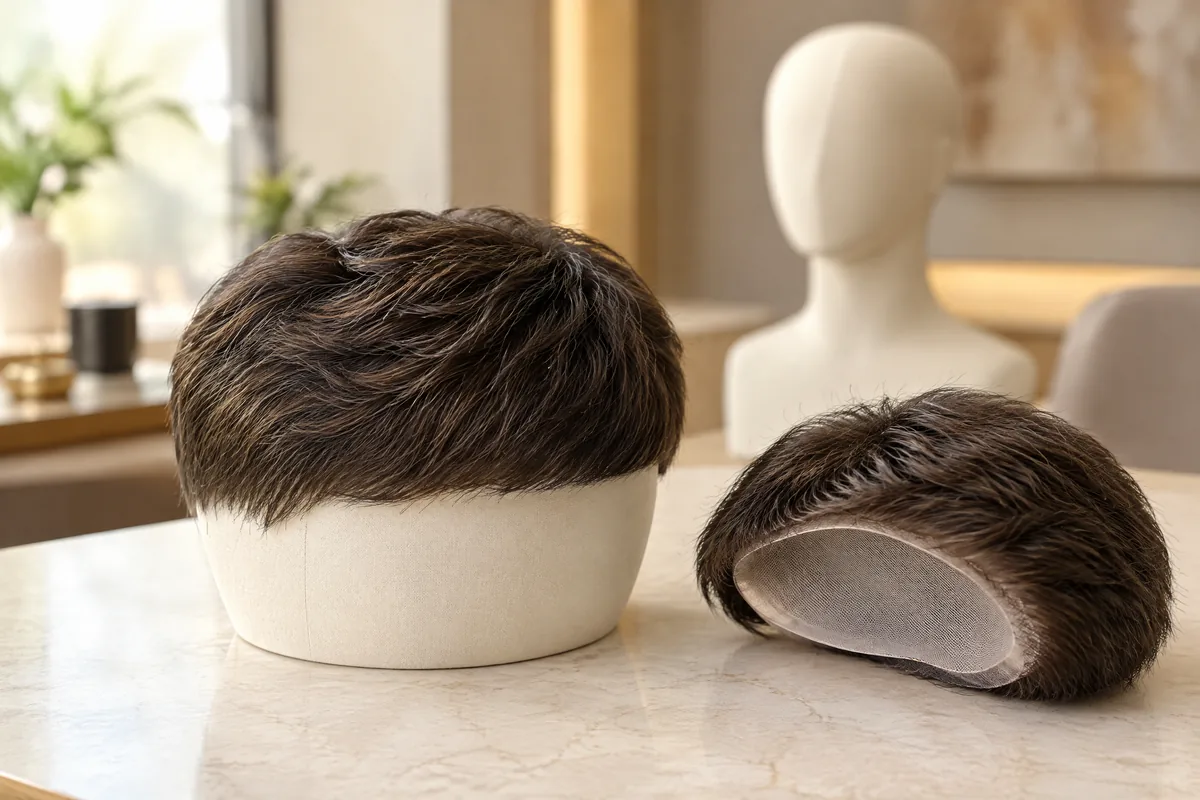
Keep the bob outline fixed while comparing the fringe
A model photograph combines several decisions: fringe direction, cheek coverage, side volume and the position of the ends. If all four change between pictures, it is difficult to identify what you actually prefer. Begin with one bob outline that you like around the jaw and nape, then compare its front section separately.
When browsing bob wigs, save a front and side reference for the same design. OWNSTRAND's catalogue includes Amore Bay, listed as straight synthetic hair with an average cap, and Amore Codi, listed as straight synthetic hair with a petite cap. These are different specifications, not interchangeable versions of one bob.
Keep colour, ends and cheek-level volume as constant as possible during your comparison. Do not tuck one version behind both ears while leaving another loose. If you cannot arrange the same wig into all three positions, compare sketches over copies of one photograph instead. Treat those sketches as proposed shapes, not proof of achievable styling.
Build a nine-photo brow-to-cheek grid
Give each fringe arrangement its own row: straight across, softly split, and side swept. Use three columns: a level front view, a three-quarter view, and a front view with your usual glasses or other face-level accessory. The third column tests everyday compatibility rather than adding another hairstyle to the comparison.
Set the camera at eye level, keep your chin level and use the same distance and lighting. Avoid wide-angle close-ups and portrait effects that blur the hair boundary. If your phone reverses selfies, label the actual sweep direction. A mirrored image can otherwise make you request the opposite side from the one you prefer.
Mark brow exposure and the cheek opening
Label the brows B-left and B-right. Record each as mostly covered, partly visible or clearly visible; you do not need percentages. Notice whether you can see the brow arch and tail, not just a small patch near the nose. A fringe can clear the eyes while still hiding the expression of the brows.
For C, draw a light horizontal guide through the fullest visible part of the cheeks. Mark where hair meets skin on either side at that level. Compare the opening between those marks across the three rows. This is the visible face opening, not a measurement of your actual cheekbones or a claim that your face has changed width.
Find the visible fringe corner
Mark F where the lower fringe edge turns into the longer temple or side section. On a straight fringe, this may be a distinct corner near the brow tail. On a split fringe, there can be two sloping edges. On a sweep, mark the lower end of the diagonal and the opposite exposed temple.
Look for F in the angled view as well as the front. A corner that seems softly blended head-on may form a heavy ledge from the side. Conversely, a small gap that worries you in a close-up may barely register at conversational distance. Keep the uncropped photographs beside the marked copies so details do not overwhelm the whole look.
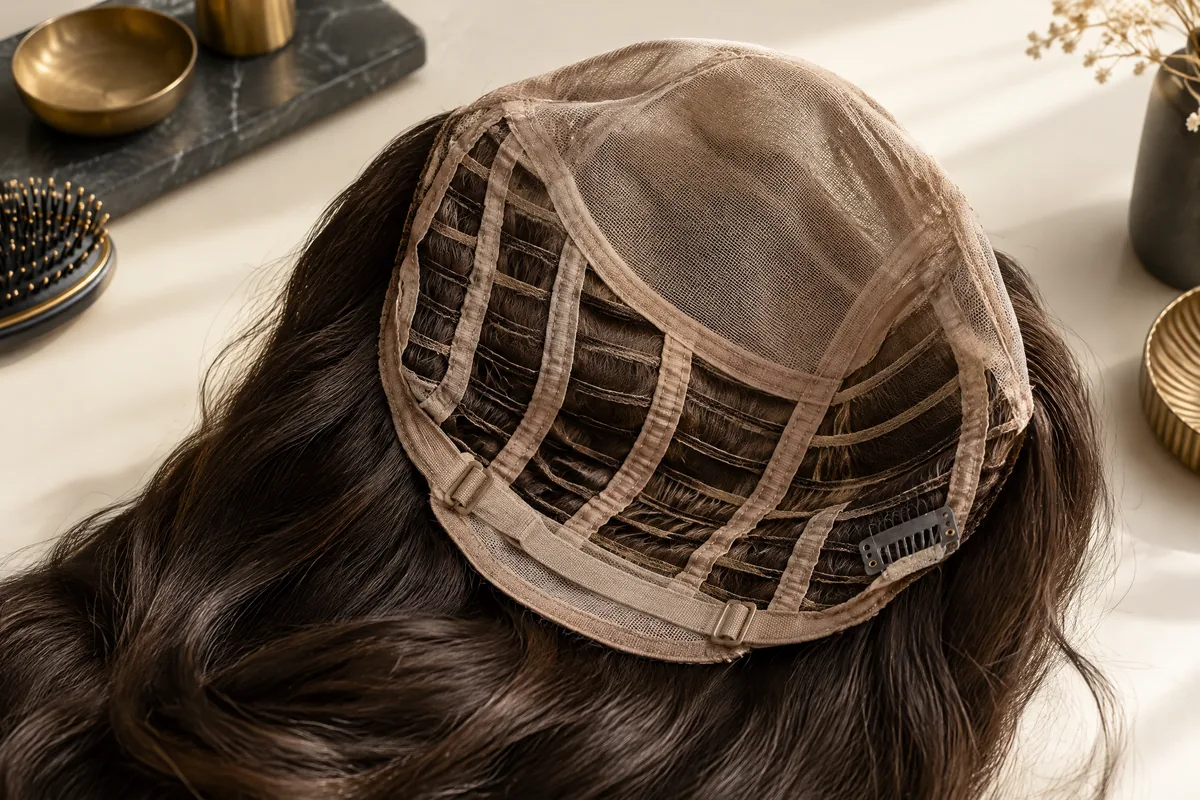
Read the three fringe positions as different trade-offs
A straight-across fringe gives the upper face a horizontal boundary. Check whether that boundary sits above, across or below the brows and whether its corners connect smoothly to the bob. It can create the compact, graphic appearance you want. The trade-off is less forehead exposure and a more obvious line if the fringe is dense.
A softly split fringe introduces an opening rather than a continuous edge. Vogue's hairstylist-led guide distinguishes a longer centre-parted fringe that opens the cheekbone area from a more forward fringe that frames the brow line. That makes the location of the opening more useful than simply choosing the label “curtain bangs”. 1
A side sweep creates unequal exposure: one brow or temple may be clearer while the opposite side carries more hair. Check both sides rather than treating asymmetry as a fault. The question is whether the diagonal ends where you want it, and whether the covered eye stays clear when you turn or look down.
| Fringe position | Look for in the grid | What it can offer | Trade-off to test |
|---|---|---|---|
| Straight across | A continuous edge and two visible corner joins | A deliberate, compact front frame | Brow coverage and a heavy corner near the temple |
| Softly split | The centre opening and both sloping edges | More visible central forehead with adjustable framing | Short sections that cannot reach or hold the opening |
| Side swept | Unequal brow exposure and the diagonal endpoint | An off-centre frame with one more open side | Hair crossing an eye or a sweep that needs repeated resetting |
A split does not automatically become a long curtain fringe. Short integrated bangs may only form a small central separation. OWNSTRAND's guide to wigs with bangs distinguishes full-wig fringes from detachable pieces and notes that parting flexibility depends on the individual design. Choose an achievable arrangement, not a name alone.
Use the grid to resolve specific proportion dilemmas
Suppose a jaw-length bob looks wider than you want in the front view. In the straight-fringe row, both corner joins sit at the same level as outward-curving side hair. Before shortening anything, try opening the fringe while leaving the sides untouched. If the face frame improves, the upper boundary was contributing to the impression.
If the cheek opening remains equally broad in every row, changing fringe direction has not solved your concern. Compare a bob with closer side placement or less cheek-level volume instead. Shortening the fringe would expose more forehead, but it would not necessarily reduce the width created by the sides. Separate those two decisions.
Now consider someone who likes visible brows but dislikes a large central opening. A deep split may meet the first preference and miss the second. A loose sweep can expose the preferred brow while keeping some forehead coverage. Compare its diagonal endpoint in the angled photograph; if it sits over the eye, a different front design may work better.
For a glasses wearer, the unaccessorised row is only half the decision. Put the frames on without shifting the wig and look down as though reading an MTR message. If the fringe catches the top rim or the side hair bunches at the arms, mark the interference point. Do not approve a shorter cut merely because the static photograph looks tidy.
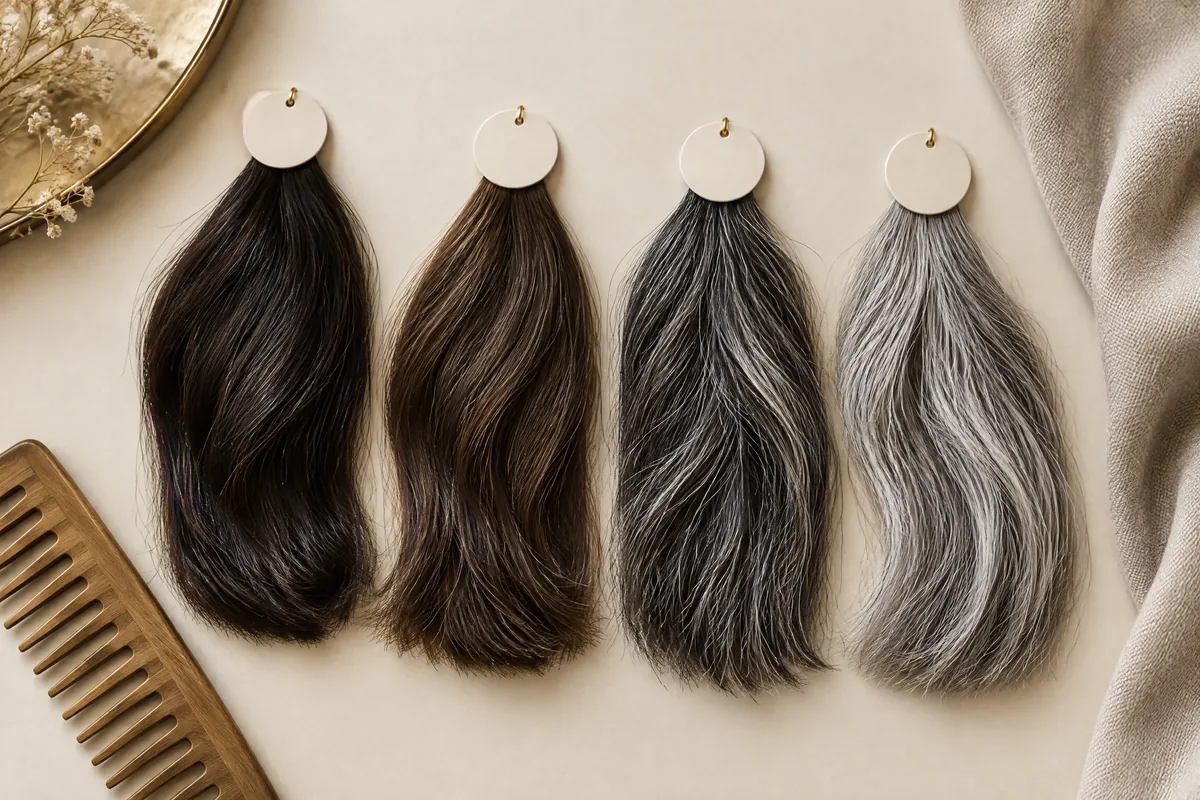
Diagnose direction, length and weight separately
Direction is where the hair falls; length is how far it reaches; weight is how dense the section looks. These can produce similar complaints but require different responses. “My fringe feels too heavy” might mean too much brow coverage, a dense corner, or hair directed straight into the eyes. Describe the visible problem before asking for a cut.
Start with a reversible direction change that the wig permits. Next, consider whether a different arrangement gives the needed clearance. Only then discuss removing length or density. The American Cancer Society's styling guidance suggests a hairstylist can trim bangs or thin a wig when needed; these are options for a specific problem, not compulsory finishing steps. 2
| Grid observation | Likely issue to investigate | Reversible check first | Alteration to discuss only if needed |
|---|---|---|---|
| Brow appears when hair is redirected | Direction or coverage preference | Try the permitted split or sweep | Keep length if the preferred position holds |
| Ends enter the eyes in every workable position | Excess front length | Check settled cap position and natural fall | A cautious fringe-length adjustment |
| Corner looks dense but ends clear the eyes | Local weight or an abrupt join | Separate the corner gently from the sides | Local softening rather than shortening the entire fringe |
| Face opening stays broad in all rows | Side volume or bob outline | Hold fringe constant and compare side shapes | Another bob design, not necessarily a fringe trim |
A longer fringe preserves reach for a diagonal or split arrangement, but may need more attention to keep clear. A shorter fringe reduces reach and can make the edge more prominent. Removing density may soften a corner, yet leave gaps that become obvious when parted. None of these changes is automatically an upgrade; each spends some styling flexibility.
Settle cap position and fibre before using scissors
Use the same properly settled cap position for every photograph. Do not pull the wig farther forward just to hide a gap, or move it back to lift the fringe off the eyes. The American Cancer Society notes that sizing can vary between brands and advises checking the maker's size chart. A fit problem should not be disguised by a haircut. 2
After arranging the fringe, release it and let it fall without holding tension. Turn your head, look down and return to level. Record the position it settles into, not only the shape you can hold with your fingers. A sweep that springs back may require another design rather than daily attempts to force the hair against its intended direction.
Do not borrow a natural-hair blow-drying tutorial to make the experiment work. Cancer Hair Care warns that direct heat can melt ordinary synthetic fibres and tells wearers to follow the manufacturer's advice for every wig type. Use heat only when the exact product permits it, following its tool, temperature and technique instructions. 3
Give the stylist a precise fringe brief
Take the clean grid and its marked copy to the discussion. State what must stay unchanged: the bob's ends, side fullness or coverage at the temples. Then identify the preferred row and the unresolved point. “Keep this sweep, but clear the lower end from my glasses” is more actionable than asking for a generally softer or younger look.
For a full-head option, OWNSTRAND's women's wigs guide separates coverage, cap and fibre choices. Its custom human-hair process describes sample viewing and head measurement, followed by handmade production and a return fitting with washing, cutting and blow-drying. Discuss fringe goals alongside that process; catalogue items still require their own quotation and supply confirmation.
Bring a compact checklist rather than a collection of unrelated model photographs:
- Name the preferred fringe position and the actual left or right sweep.
- Identify which brow features you want visible.
- Show the cheek opening you prefer without changing side volume.
- Circle the corner that needs blending, if there is one.
- Note eye clearance with glasses and during downward movement.
- Ask what styling options would be lost after the proposed alteration.
Agree on the intended resting position before any hair is removed. Ask the stylist to consider the fringe in its worn shape, with your usual accessories available, and to preserve enough length for the chosen direction. If you are undecided between a split and sweep, keeping the longer option may be more sensible than cutting for a straight fringe immediately.
Choose the frame you will actually wear
Rank comfort and repeatability alongside appearance. A straight fringe that stays clear may suit your routine better than a split that needs constant resetting, even if you prefer the split in one photograph. Vogue's guide also highlights lifestyle and the discomfort some people feel from hair touching the face. That preference deserves space in the decision. 1
Choose one arrangement as your ordinary position and a second only if the wig genuinely supports it. Keep the labelled photographs as a reference for styling and future discussions. Once brow exposure, cheek opening and the corner join work together, assess any remaining trim on its own merits. You may find the bob already has the length you need.
Questions & answers
Do I need to decide my face-shape category first?
No. Labels such as round or oval can be a starting point, but they cannot describe your brow position, glasses or preferred coverage. Comparing the hair boundaries on your own photographs gives you more specific information for a styling discussion.
Should my fringe finish exactly at my eyebrows?
There is no compulsory eyebrow length. You might prefer the brows clearly visible or partly framed. The useful boundary is comfortable eye clearance in the fringe's settled position, rather than a measurement copied from someone else's face.
Can I reverse the side sweep by flipping the wig around?
No. Wear the cap in its intended orientation. Reversing the hairstyle means checking whether its front section and parting allow the opposite direction; it does not mean turning the whole wig back to front.
Will a detachable fringe predict a bob wig's finished appearance?
It can help explore whether you enjoy forehead coverage, but its attachment, density and connection to your own hair differ from an integrated wig fringe. Do not use it as a precise test of a particular bob's corner joins.
What if I cannot take photographs at home?
Use two mirrors for front and angled views and write down brow exposure, cheek opening and corner position for each permitted arrangement. Keep the wig position unchanged. Simple notes are more useful than relying on memory after several different styles.
Put the next step into practice
Build a clearer understanding of hair shape and everyday styling through learning at Canvas. Hair styling courses in Hong Kong。
Explore more practical styling and selection notes. Canvas hair and beauty journal。
Tell the team which hair styling techniques you would like to learn. Contact Canvas Academy。
Sources & further reading
- Vogue — A Definitive Guide to Curtain Bangs for All Face Shapes and Hair Textures
Hairstylists explain how fringe placement frames brows or opens the cheekbone area, and why features, lifestyle and professional consultation matter.
- American Cancer Society — Wigs for Hair Loss
Practical wig guidance covers brand-specific sizing and the option of having a hairstylist adjust bangs or density.
- Cancer Hair Care — Wigs commonly asked Q&A
Explains the risk of direct heat on ordinary synthetic fibres and the importance of following each wig manufacturer's care advice.