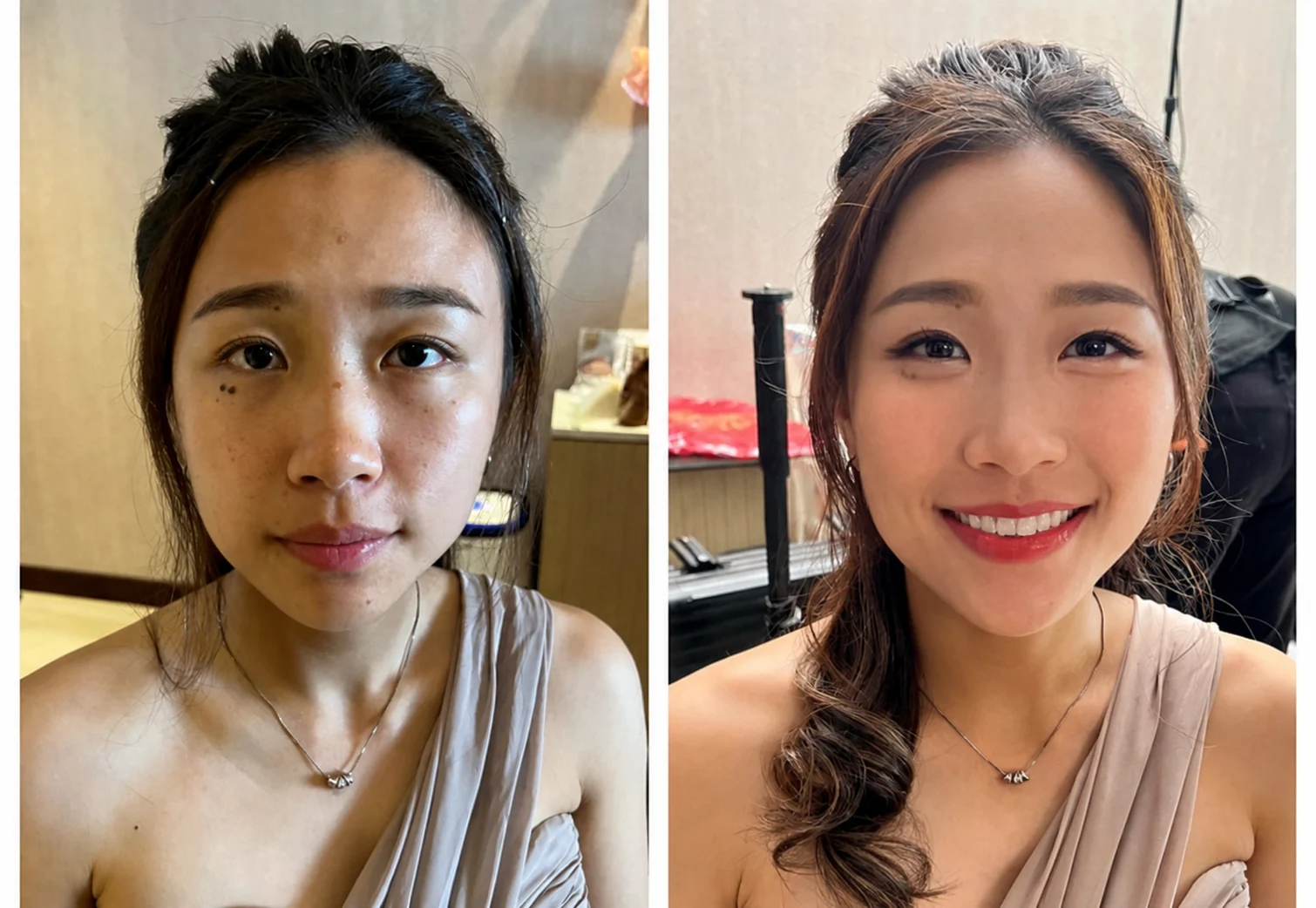
Start with the route, not the favourite outfit
With mixed indoor and outdoor scenes, begin with a stable look in controlled light, use nearby scenes while it is still fresh, and save the most disruptive hair change for a later, distinct light window. This does not mean the plainest outfit must go first. It means the opening look must survive the first travel leg without a second full styling session before the camera has had useful time with it.
A favourite gown can lead when its change cost is low: perhaps it needs only a veil clipped into a secure half-up style. A fitted dress needing a smooth low bun may be better later if the earlier outfit needs loose movement and the hair would otherwise be undone completely. Decide the order after mapping the route, not from a rail of outfits alone.
Give the photographer and stylist one shared schedule with addresses, first-frame time, access constraints and every change. If the plan needs an initial camera-ready finish followed by support through moves and changes, the scope described under bridal makeup pre-wedding shoot is a useful prompt for what to confirm in writing. It does not replace confirmation of a particular booking, travel allowance or touch-up arrangement.
Build the day on three layers
Draw light windows, travel and hairstyle rebuild cost on the same page. A beautiful backdrop is not automatically the right first stop if it is far from the preparation space or only works later.
Layer one: light windows
Label each scene as controlled indoor light, open shade, direct sun, sunset or after-dark artificial light. Put narrow windows first. A west-facing waterfront may belong late in the day, while a studio, hotel interior or covered arcade is more flexible. Place flexible scenes around fixed light rather than forcing every outfit into a favourite hour.
Also note the intended visual character. A softly structured look may suit window light but need a check before flash. A bold evening lip can be a final accent instead of something that must remain perfect through lunch, humidity and several changes.
Layer two: travel and access
For each move, include packing accessories, walking to transport, travel, finding the entrance, lifts or stairs, and a few minutes to settle. A map estimate is only the vehicle portion. Group scenes by area and preparation needs. Make one deliberate move to the furthest or most access-sensitive location instead of detouring between short portrait sets.
Layer three: hairstyle rebuild cost
Classify every transition before putting it into the route:
| Transition type | Typical work involved | Sensible position in the route |
|---|---|---|
| Accessory swap | Add or remove veil, comb or earrings; smooth flyaways | Between adjacent scenes when the base hair stays intact |
| Directional adjustment | Change part, tuck one side, refresh lip | After a short move or before an outfit in the same area |
| Partial restyle | Release pins, reshape curls, reset volume | At a planned indoor stop with a real change window |
| Full rebuild | Take down an updo, rework texture, create a new silhouette or reposition extensions | Once only, before the final major visual chapter |
These are planning labels, not standard durations. Hair density, extensions, weather, the original set and the desired finish matter. Ask the stylist to label each proposed transition. That stops an editorial rebuild being hidden inside a ten-minute location hop.
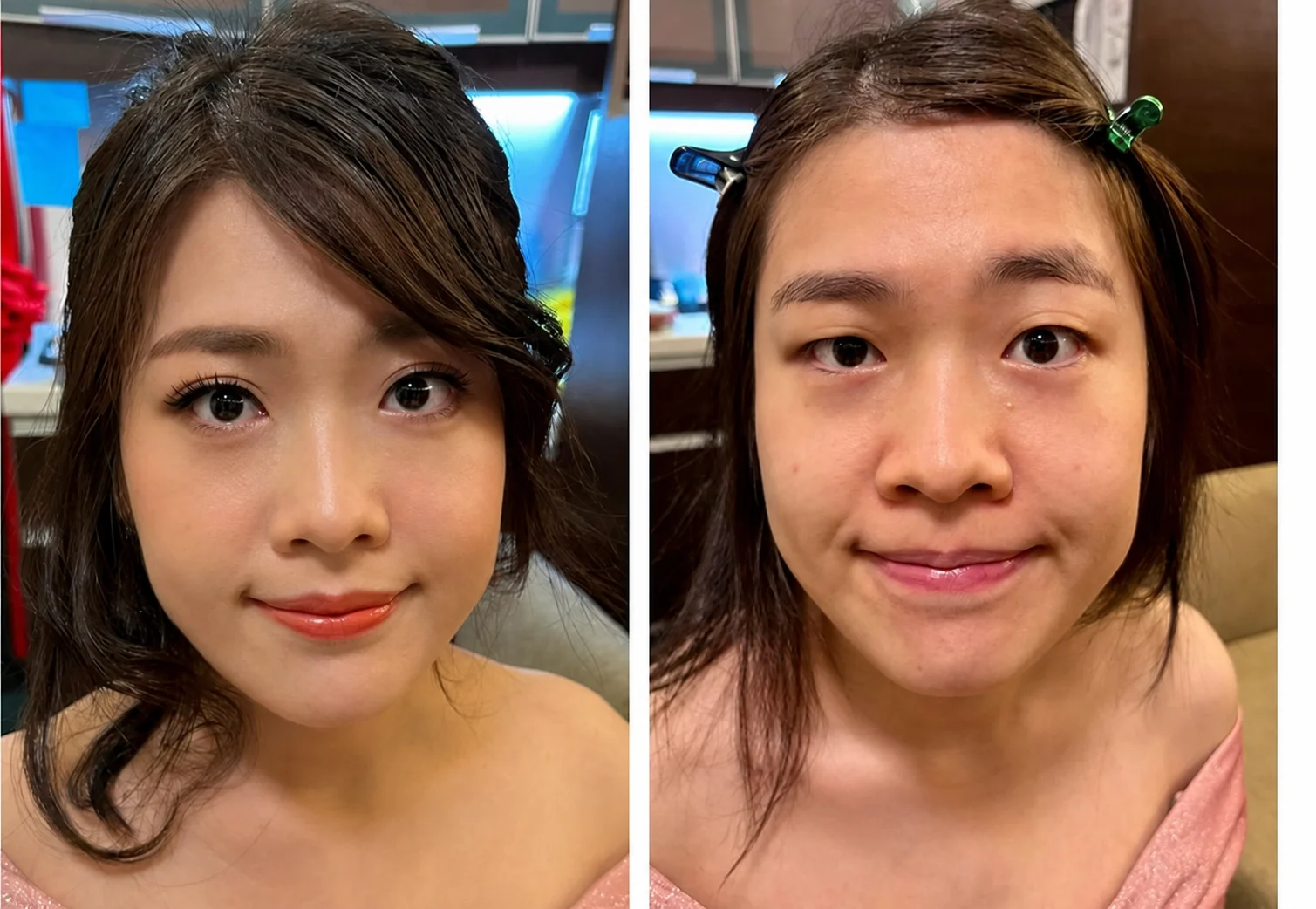
Choose a lead look that can travel
A lead look is a working base, not a compromise. It should match the opening clothing and allow one or two controlled adjustments later. For example, secure half-up hair with soft face-framing pieces can take a veil for formal indoor portraits, then lose it for an outdoor garden set. Different earrings and lip tone can distinguish a casual outfit without dismantling the hair.
Avoid making the lead look depend on conditions that arrive later. Loose hair can be a valid creative choice for a humid outdoor opening, but it is not a neutral base for a subsequent immaculate studio updo. Either photograph it first and reserve an indoor rebuild, or begin polished and make a deliberate release the final transformation.
Makeup often evolves faster than hair. A well-set complexion may carry from indoor portraits to open shade with blotting, lip and cheek adjustments. A major change of finish, coverage or eye structure is a new look, not a small touch-up. Take a quick phone reference of the first finished look, including both sides and the back, so a disturbed detail can be restored.
Match outfits to the change they require
The practical question is not which dress you love most, but what must change after it and whether that change can happen cleanly where you will be. Use this sequence:
- List each outfit with shoes, outer layer, jewellery, veil or headpiece, underwear and intended scene. Missing accessories create false change windows.
- Name the non-negotiable hair silhouette beside it: loose, half-up, low bun, high bun or sleek ponytail. Do not write merely “hair change”.
- Draw an arrow between consecutive outfits and name the work: add veil, release curls, rebuild into bun, swap lip or full reset.
- Put only low-cost arrows between far-apart, outdoor or access-sensitive scenes. Put the largest arrow at a private space with seats, mirrors, power and time.
- Review the route backwards. If the final look is intricate, ensure it is not after the team must leave or the only changing room closes.
This can show that two outfits do not need two full looks. It can also show that a sleek civil-look dress and a bohemian gown need different hair architecture. For a concise, single-location plan, pre-wedding makeup one look helps frame whether one completed finish suits the schedule or an explicitly arranged on-set change is needed. Confirm inclusions; do not assume a one-look service includes waiting, return visits or a second hairstyle.
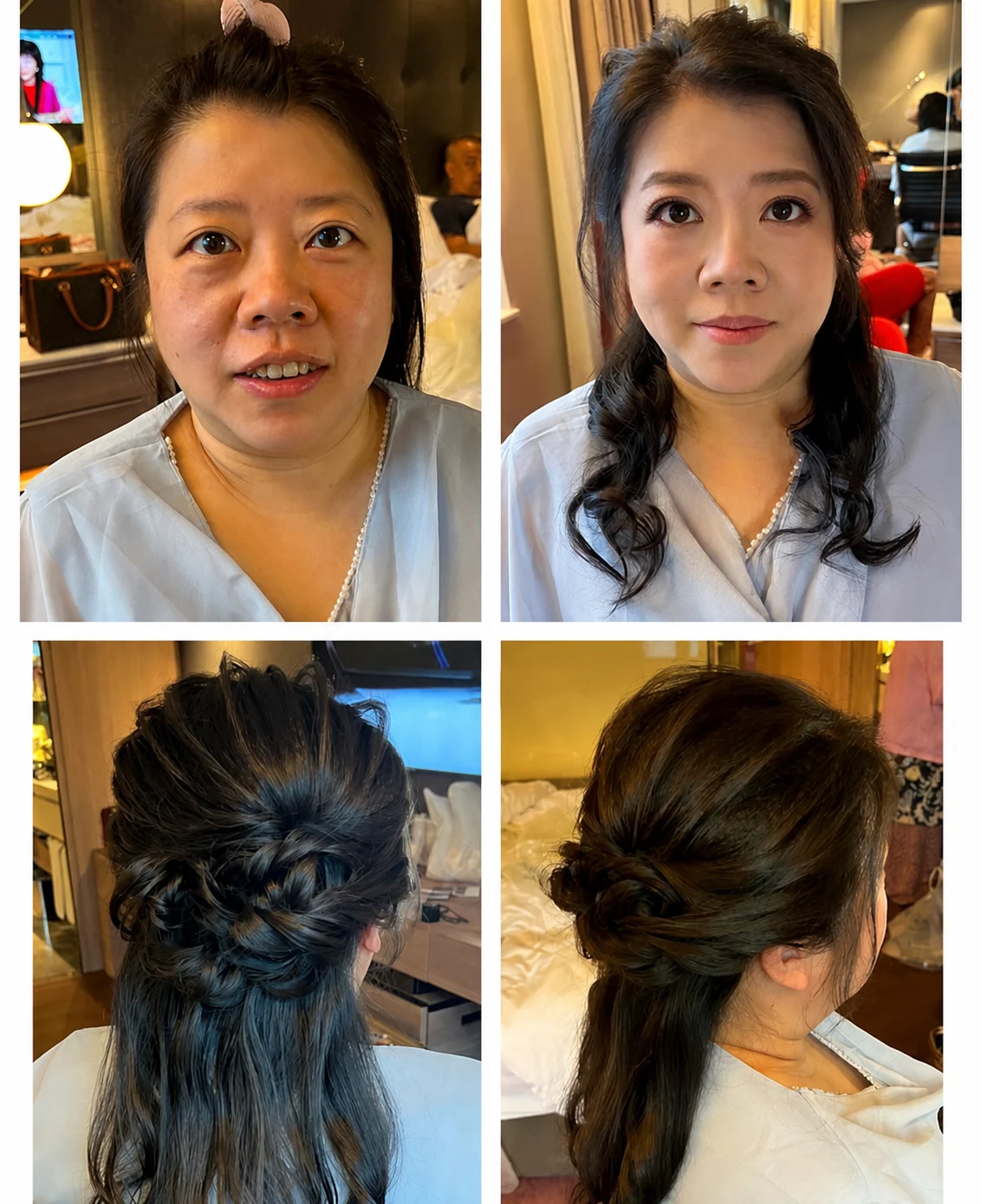
Put a real changeover in the call sheet
Reserve time for the change and for the work around it. Keep wardrobe, hair, makeup, photographer reset, walking and contingency as separate lines. A single “change: 20 minutes” entry hides where the plan is fragile.
Illustrative route map for a two-look day
This is a planning example, not a report of a client shoot or a universal duration guide.
| Day stage | Scene and light | Look action | Route decision |
|---|---|---|---|
| Early preparation | Hotel or studio with controllable light | Finish Look 1: half-up hair, neutral satin makeup | Take indoor portraits before leaving |
| First outdoor set | Nearby open shade | Add veil for selected frames; remove it for movement shots | No rebuild; carry pins, blotting paper and the reference image |
| Midday reset | Permitted indoor changing space | Wardrobe change, meal, blot and check hairline | Use the least valuable light period for recovery, not a distant move |
| Final change | Private indoor base close to evening site | Full rebuild to low bun; deepen lip if planned | Give stylist and photographer separate reset tasks |
| Last outdoor set | Sunset-facing or evening location | Look 2 formal portraits | Finish here so the style need not become polished again |
The useful direction is adaptable to structured, not structured back to adaptable. It avoids rebuilding a formal look twice. If the concept genuinely needs the reverse, protect it with a longer written change window and a reliable indoor base.
Make outdoor resilience part of the order
Heat, wind and rain affect which look can travel. Check forecast and actual conditions on the morning. The Hong Kong Observatory’s UV guidance calls an index of 6 or above high and advises avoiding prolonged sun exposure, seeking shade and using protective measures; it also notes that UV may remain high in cloudy periods.
Bring venue-permitted shade, water, a clean cloth, blotting papers, a small mirror and the next-look accessories. Keep a dry indoor or covered fallback nearby if feasible. Ask which frames truly need direct sun; open shade may reduce perspiration and repair work without weakening the plan.
The American Academy of Dermatology’s application advice recommends broad-spectrum, water-resistant SPF 30 or higher, applied before going outdoors and reapplied every two hours or after swimming or sweating. Discuss product compatibility with the makeup artist, especially if you have sensitive skin or a product you know suits you. This is general sun-safety information, not personalised medical advice.
Set up the changeover base before the first photo
A good base is private, clean, shaded or climate-controlled, with a chair, mirror, flat surface, safe power and room for the gown and kit. It should be close enough to the next scene that the completed second look is not immediately exposed to a long journey.
Do not assume a public site, hotel lobby or new venue has these facilities because it looks polished in photographs. Confirm the actual room or agreed point, entry rules, lift access, vendor check-in and opening hours. For a multi-venue day, pre-wedding makeup artist on location Hong Kong is relevant because a confirmed address, access plan and ready-by time determine whether an on-location arrangement is workable.
Name one person who may approve a route change for weather, traffic or access. The couple should be deciding whether they like the images, not negotiating a lift queue while dressed for portraits.
Protect the final look from avoidable work
Where possible, reserve the most refined, heat-sensitive or structurally different look for the route’s end. Then it does not have to recover from sea air, a long transfer or another outfit change. Before the last set, check hairline and nape, pins and accessories, lip edges, teeth, neckline transfer, lint, hem, bouquet stems and the back view. Take one close-up and one full-length test frame.
More looks can add narrative variety, but each consumes time, space and attention. A smaller number of well-routed looks usually gives the photographer longer usable windows and gives the couple a calmer day. Add a look only when it creates a visibly different chapter and its rebuild, location and support are explicit in the schedule.
Questions & answers
Should the outdoor look always be last?
No. Put it where its light is best and its hair requirements make sense. An outdoor set in open shade can work early, while a sunset scene is naturally late. The key is not outdoors versus indoors; it is whether the next look needs the current hair to remain intact.
Can two outfits share one hairstyle?
Often, yes, when the silhouette and accessory system are compatible. A secure half-up style may serve a gown with a veil and then a relaxed outfit after the veil is removed. Decide this with reference images and the actual collars, necklines and earrings, rather than assuming different clothing requires a full rebuild.
What should be on a pre-wedding changeover line?
List wardrobe, hair work, makeup adjustment, accessory handling, photographer reset, walking or transport, and contingency separately. Include the exact change space. This makes a weak point in the schedule visible before the shoot day.
How do we plan for humid or windy conditions?
Use an adaptable first style, keep pins and a small touch-up kit accessible, and identify a covered backup point. Check the forecast on the day. If the plan relies on a precise sunset scene, protect it by avoiding an unnecessary hairstyle rebuild immediately beforehand.
When is an extra look worth the effort?
Add one when it creates a clearly different visual chapter and you have a private base, a realistic change window and confirmed styling support. If the difference is only an accessory or lip colour, a controlled adjustment may protect more shooting time than a second complete look.
Put the next step into practice
For the learning options at Canvas, explore makeup course Hong Kong。
For another practical reference, see bridal makeup Hong Kong。
To plan a next step that fits your needs, read makeup course Hong Kong。
Sources & further reading
- Ultraviolet (UV) radiation information | Hong Kong Observatory
Supports the article’s high-UV precautions, including shade, SPF 30+ protection and two-hour reapplication advice.
- How to apply sunscreen | American Academy of Dermatology
Supports general advice to use broad-spectrum water-resistant SPF 30+ sunscreen before outdoor exposure and to reapply after two hours or sweating.