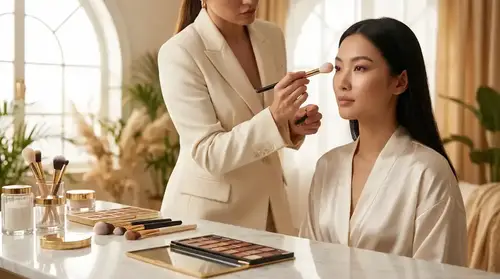
Begin with the condition of your face, not the name of the event
A dinner, birthday or date does not automatically call for a full evening makeover. The useful question at the end of a workday is simpler: what has changed since this morning, and what will people actually see tonight? A base that still looks even may only need oil control and a little colour back in the cheeks. A face that has separated around the nose, gathered into fine lines or lost eye definition needs a more selective repair.
Separate the event from the evidence in the mirror. Stand near a window or a neutral light if possible, then look once from normal conversation distance and once closer. Normal distance tells you whether your features still have balance; close distance reveals makeup buildup, flaking and dry patches. Do not try to correct every tiny detail that only you can see at two centimetres from the mirror.
Use three routes: touch up when the workday look is sound, change emphasis when it needs one evening feature, and restyle when hair or makeup is no longer working structurally. Choosing the smallest effective route prevents the heavy finish that often photographs less naturally than a lighter repair.
Use a ten-minute triage before you open another product
Put a timer on for ten minutes. Gather blotting papers or a clean tissue, a small setting product, one complexion product, lip colour and a compact hair tool. The aim is a decision, not a complete application.
Check the base in the right order
First, gently press away surface oil. Rubbing can lift the base underneath; pressing lets you see what remains after shine is removed. Next, inspect the centre of the face: around the nostrils, chin, under-eye area and between the brows. These are the places where a small amount of product is often more effective than a new layer over the entire face.
If the base is intact but shiny, touch up. If coverage is uneven only in two or three places, tap on a small amount of product there and press it in with clean fingers or a clean sponge. When it has broken up broadly, repair can look heavier than a quick, pared-back reset; rebuild only the failing area in a thin layer if practical.
Check the features that disappear first
After a full workday, brows, lashes, lip colour and cheek colour often fade before the base fails. A brow brushed back into shape, lashes combed cleanly and a controlled flush can make the whole face look intentional. Choose one or two of these rather than upgrading every feature at once.
Use this working table as a decision tool. It is deliberately practical: the best route is the smallest one that meets the evening’s visual demands.
| What you notice at the ten-minute check | Time still available | Best next move | Trade-off to accept |
|---|---|---|---|
| Base is even; only T-zone shine and a faded lip | 5–10 minutes | Blot, set only the shiny zones, then reapply lip colour | You will keep the softer workday eye |
| Skin is presentable; cheeks and eyes look flat in dim light | 10–20 minutes | Add blush, refine brows, then deepen one lash line or outer eye corner | Avoid adding a second full base layer |
| Lip has worn away but eyes and skin still work | 10 minutes | Choose a more saturated lip and tidy the lip edge | Transfer risk rises with a creamier or brighter formula |
| Makeup has split widely or feels uncomfortable | 25 minutes or more | Simplify: remove failing areas and rebuild lightly, or start fresh if time permits | A full reinvention may be unrealistic before travel |
| Hair has lost shape while makeup remains sound | 10–15 minutes | Refresh the parting, smooth the crown, then choose a low, controlled style or revived waves | Do not spend the makeup budget of time on hair products |
Let venue light and camera distance set the intensity
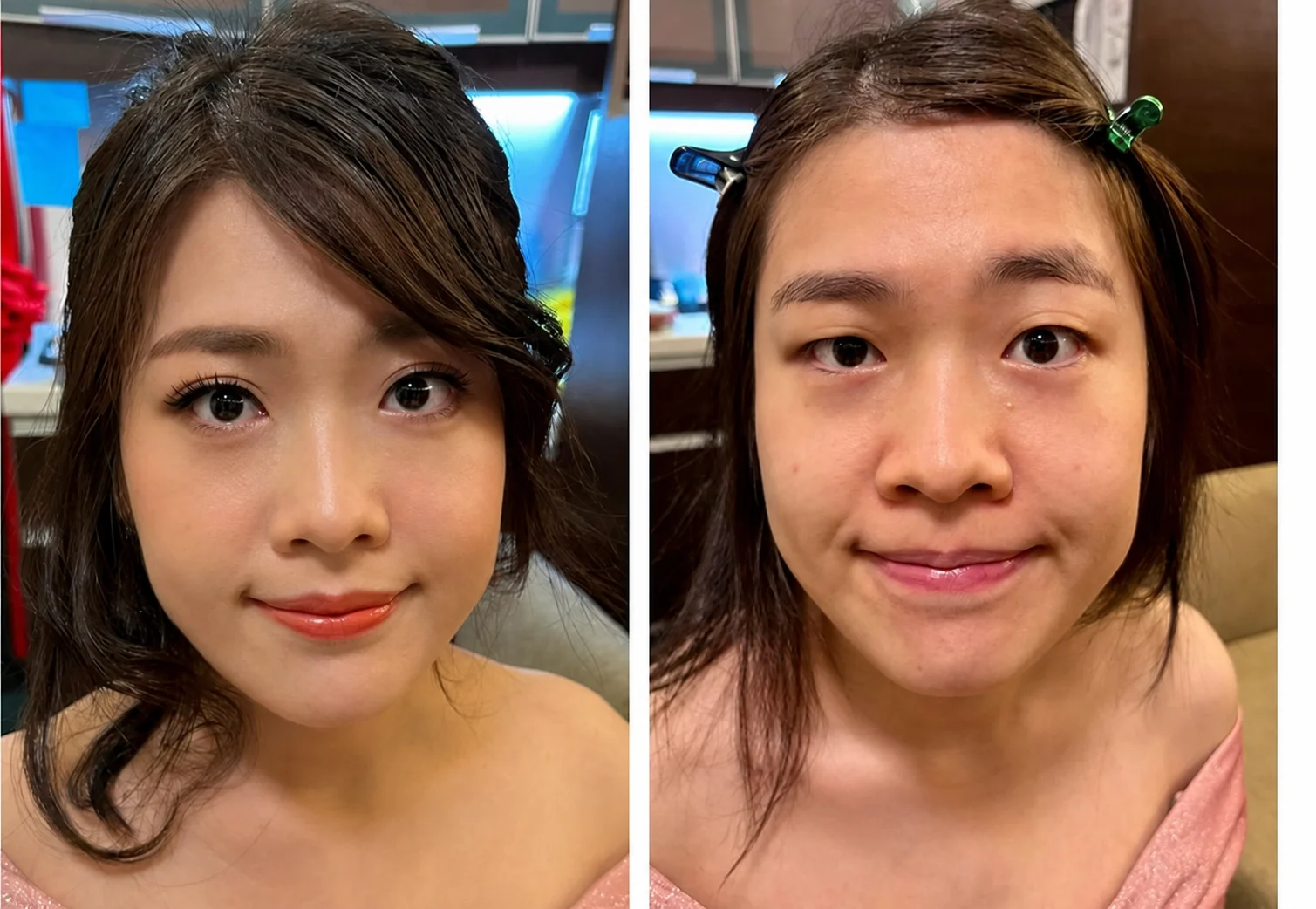
Indoor evening light changes what a face needs. Warm restaurant bulbs can make bronze, peach and berry tones feel richer, while cool LEDs can make some complexions appear flatter or drain warmth from blush. Mixed lighting is less predictable, so favour balanced skin and a single clear focal point rather than a very pale lip plus a very pale eye.
A camera is another type of light. Group photographs reduce subtle definition, while close phone photographs reveal texture. For a ballroom, flash photographs or a staged toast, lightly strengthen brows, cheeks or the outer eye. For a close dinner date, a smooth lip edge and separated lashes may matter more than dramatic contour.
Take one ordinary phone photo before committing. Check centre-face shine, whether the focal point is visible, and whether product reads as texture rather than skin. Adjust one variable only.
If your evening is a formal dinner and you want help translating outfit, timing, venue light and a basic hairstyle into one plan, the occasion details on banquet makeup Hong Kong can help you frame the questions to ask before confirming an arrangement. It is particularly relevant when speeches, group photographs or a long banquet schedule make a ready-by time important.
Choose one focal point instead of upgrading everything
Evening polish is mostly about hierarchy. The eye, lip, skin and hair cannot all be the loudest element without competing with one another. Pick the feature that makes sense for the venue, outfit and your personal comfort. Then let the rest of the look support it.
Choose a defined eye for distant photographs or a simple neckline. Choose a richer lip for fast impact. Let luminous skin lead only when it will be seen close up, and control shine rather than applying highlighter everywhere.
Match the focal point to the neckline
A high neck, collar detail or statement earring already creates activity near the face, so a clean brow, polished skin and restrained eye often feel more resolved. An open neckline can support a more visible lip or eye, provided the hair does not conceal it. With sequins or metallic fabric, choose a smoother makeup finish and skip competing sparkle. The practical rule is to remove one competing element when you add another.
Refresh hair by silhouette, not by trying to recreate morning
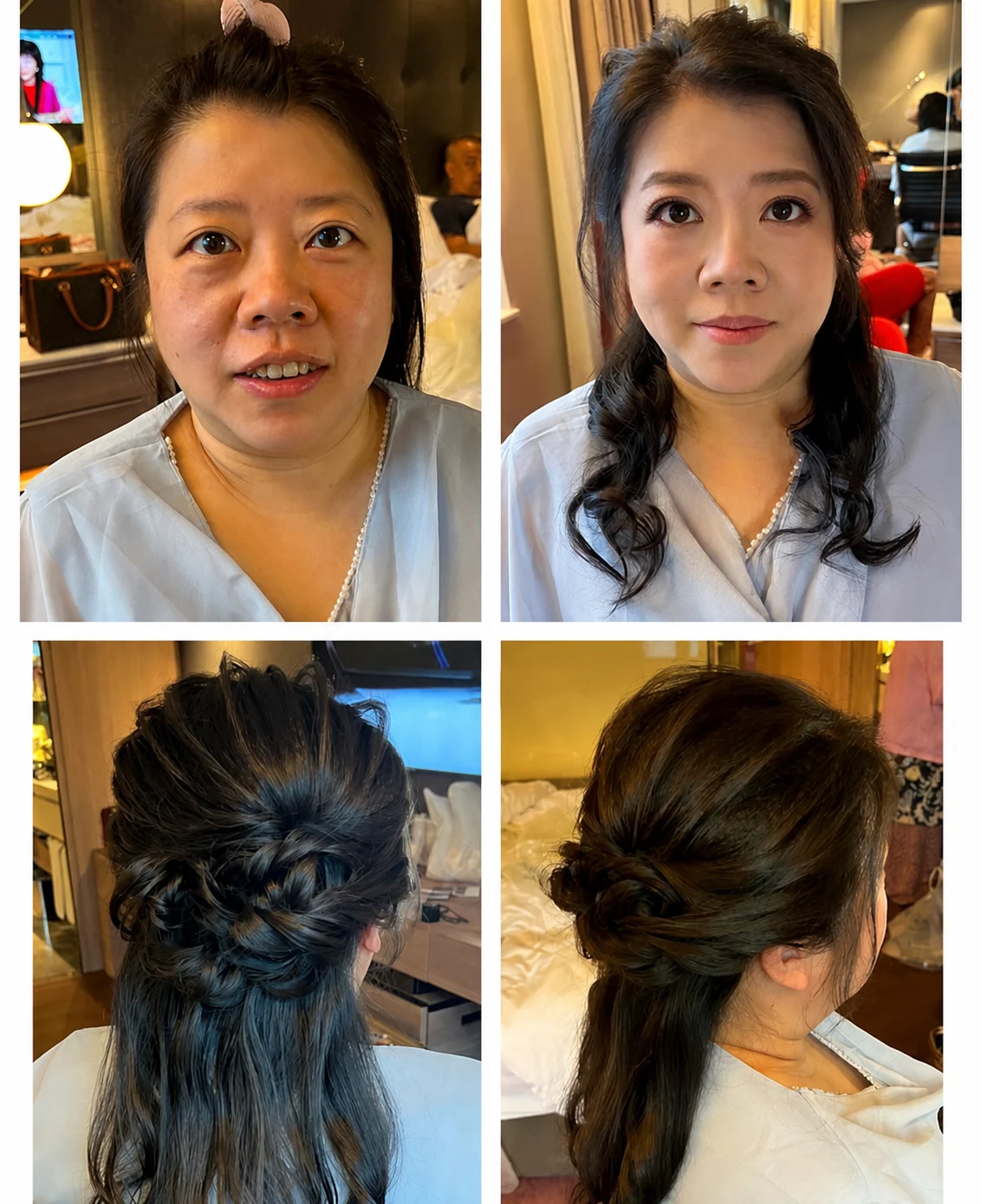
Hair often determines whether an after-work look feels considered. Yet the quickest improvement is rarely a complete restyle. Start by deciding what silhouette remains: volume at the crown, soft waves, a clean parting or an upstyle. Preserve the strongest part and correct only the weak one.
For flat straight hair, change the parting, lift only the crown roots and smooth the lengths. For loosened waves, curl face-framing pieces and the outer layer rather than every section. With frizz, skim a very small amount of smoothing product across the surface.
When time is short, a low ponytail, bun or half-up shape is more dependable than chasing waves that no longer hold. Secure the base, then check the crown and nape with a second mirror or phone camera.
For a birthday plan involving a change of outfit, a hotel gathering or several photo moments, consider the questions set out on birthday makeup Hong Kong: where you will get ready, which photos matter, how long the look must last and whether the hair should show the neckline. These details make a briefing more useful than simply requesting “glam”.
Build your schedule backwards from the first photo
The first photo is often taken before the meal, not at the end of the night. Work backwards from that point rather than from the reservation time. Include travel, changing clothes, a drink or snack, and a five-minute buffer for a missed lift or a late colleague. The buffer is what turns a compact refresh from rushed into deliberate.
Here is an illustrative 35-minute sequence for someone leaving at 6:15pm and needing to be photo-ready at 6:50pm: 0–5 minutes, remove shine and assess; 5–14, repair and set locally; 14–23, add the focal point; 23–31, create the hair silhouette; 31–35, dress, take a final phone photo and pack. It is a planning example, not a promise about anyone’s routine.
Keep the kit compact: blotting papers, your lip product, a clean cotton bud, mirror and hair tie or pins. Carrying every product invites unnecessary intervention.
For a date, closeness matters more than a visible transformation. The guide to date makeup Hong Kong is a relevant starting point if you are weighing a dewy, natural, soft-glam or red-lip direction against your usual comfort level, outfit and setting. A clear brief can prevent a look that photographs impressively but does not feel like you at conversation distance.
Know when a touch-up should stop
Stop when the face appears balanced in a normal-distance mirror and one ordinary photograph. Chasing a flawless close-up under harsh bathroom light can disturb a finish that was already good.
Treat new products cautiously before an important evening. The American Academy of Dermatology advises testing a skincare or cosmetic product on a small area twice daily for seven to ten days before regular use; if a reaction such as redness, itching or swelling appears, wash it off and do not reuse it. Read the full AAD product-testing guidance rather than relying on an “hypoallergenic” label alone.
For the eye area, use products intended for that area, keep hands and tools clean, and do not share makeup. The FDA’s cosmetic-safety guidance also advises discarding eye makeup after an eye infection and stopping use when an unexpected reaction occurs. If your eyes are actively irritated, skip lashes and eye experiments; a quieter look is the better evening choice.
Put the framework into practice tonight
Decide the focal point before leaving home, then do the ten-minute check before adding anything. A specific plan—“blot plus berry lip” or “brows plus low bun”—makes it easier to stop.
The goal is to arrive comfortable under the venue lights, recognisable in photographs and free to enjoy the evening.
Questions & answers
Should I always wash off work makeup before an evening event?
No. If your base is comfortable and even, blot first and repair worn areas. Start again only when makeup has separated broadly, feels uncomfortable or no longer gives a reliable surface to work on.
How can I make work makeup look more evening-appropriate in ten minutes?
Remove shine, then choose one change: restore brows and blush, define the lash line, or use a saturated lip. Do not maximise all three. Take one ordinary phone photo before leaving.
Is a bold lip or a stronger eye better for a dinner?
Choose for comfort, meal and outfit. A strong lip is fast and clear in photos but needs checking after food. A softly defined eye is lower-maintenance, but needs more precision when applied quickly.
What hair change has the biggest impact after work?
A deliberate silhouette matters more than recurling every strand. Refresh the parting and crown. If the original style has fallen, a neat low ponytail, bun or half-up shape can reveal earrings or neckline.
Can I try a new lash, lip or complexion product on the day of an event?
Avoid making an important evening the first full test, especially near eyes or with sensitive skin. Use familiar options. If irritation develops, stop using it; severe or persistent symptoms merit healthcare advice.
Put the next step into practice
For the learning options at Canvas, explore makeup course Hong Kong。
For another practical reference, see bridal makeup Hong Kong。
To plan a next step that fits your needs, read makeup course Hong Kong。
Sources & further reading
- Using Cosmetics Safely | U.S. Food and Drug Administration
Supports hygiene, eye-area product use, makeup-sharing and unexpected-reaction guidance; content current 15 October 2024.
- How to test skin care products | American Academy of Dermatology
Supports the cautious new-product test approach and response to redness, itching or swelling.