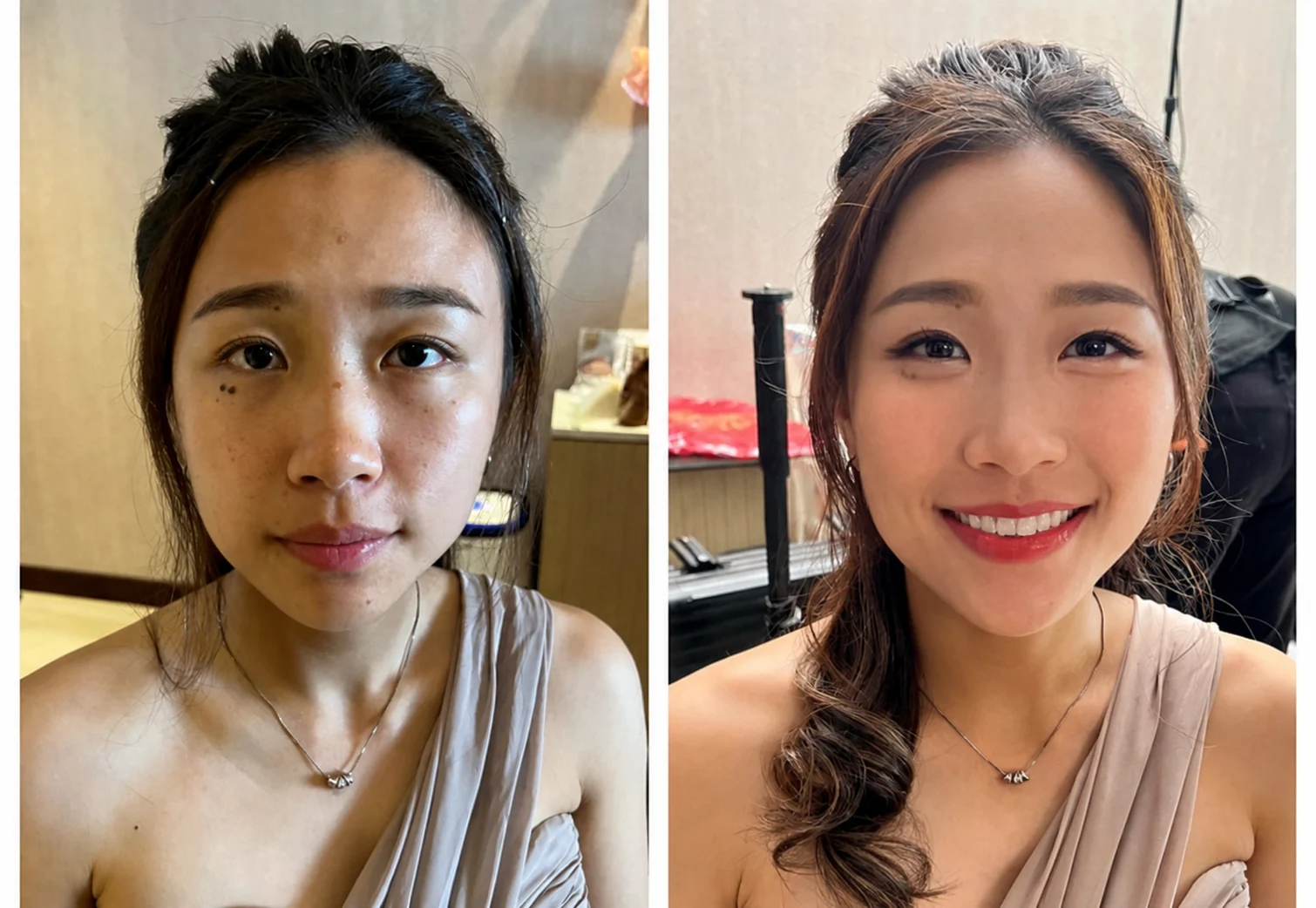
Start with the moments that cannot move
A three-part wedding day is not automatically a three-look day. The right number of changes is the number that protects the photographs and clothing moments you cannot repeat, while leaving enough real time to eat, travel, greet family and breathe.
Put every commitment on one running order: registry reporting time, tea service, family portraits, transport, reception arrival, first entrance and staged evening portraits. Treat the official appointment as a hard edge. Hong Kong’s Immigration Department marriage-registration information separates the notice process from arrangements for the marriage ceremony; check your own booking rather than assuming a grace period.
Use a transition matrix before choosing looks
Score each transition honestly. “Usable change time” means minutes in a private, lit room after removing travel, changing clothes, toilet breaks, food, family requests and the time needed to be photo-ready again. It is not the gap shown on an invitation.
| Transition | Non-negotiable photo need | Usable change time | Clothing and hair constraint | Best default decision |
|---|---|---|---|---|
| Registration → tea ceremony | Very high if outfits or heirlooms differ | Usually low | High collars, headpieces, jewellery and repeated greetings | Keep the base; make a small accessory or lip adjustment only |
| Tea ceremony → reception | High when the entrance and evening portrait are formal | Often medium, but confirm room access | Reception dress neckline, veil removal, bolder accessories | Plan a targeted enhancement and one controlled hair change |
| Reception interlude → late dancing | Low unless there is another formal entrance | Low and unpredictable | Heat, hugs, meals and movement | Touch up rather than rebuild |
A useful rule is simple: high photo value plus enough usable time supports a change; high photo value without time calls for one durable base; low photo value calls for maintenance. The matrix prevents a common mistake—reserving the largest change for a gap that disappears once the family schedule starts.
Protect the registration look as the day’s working base
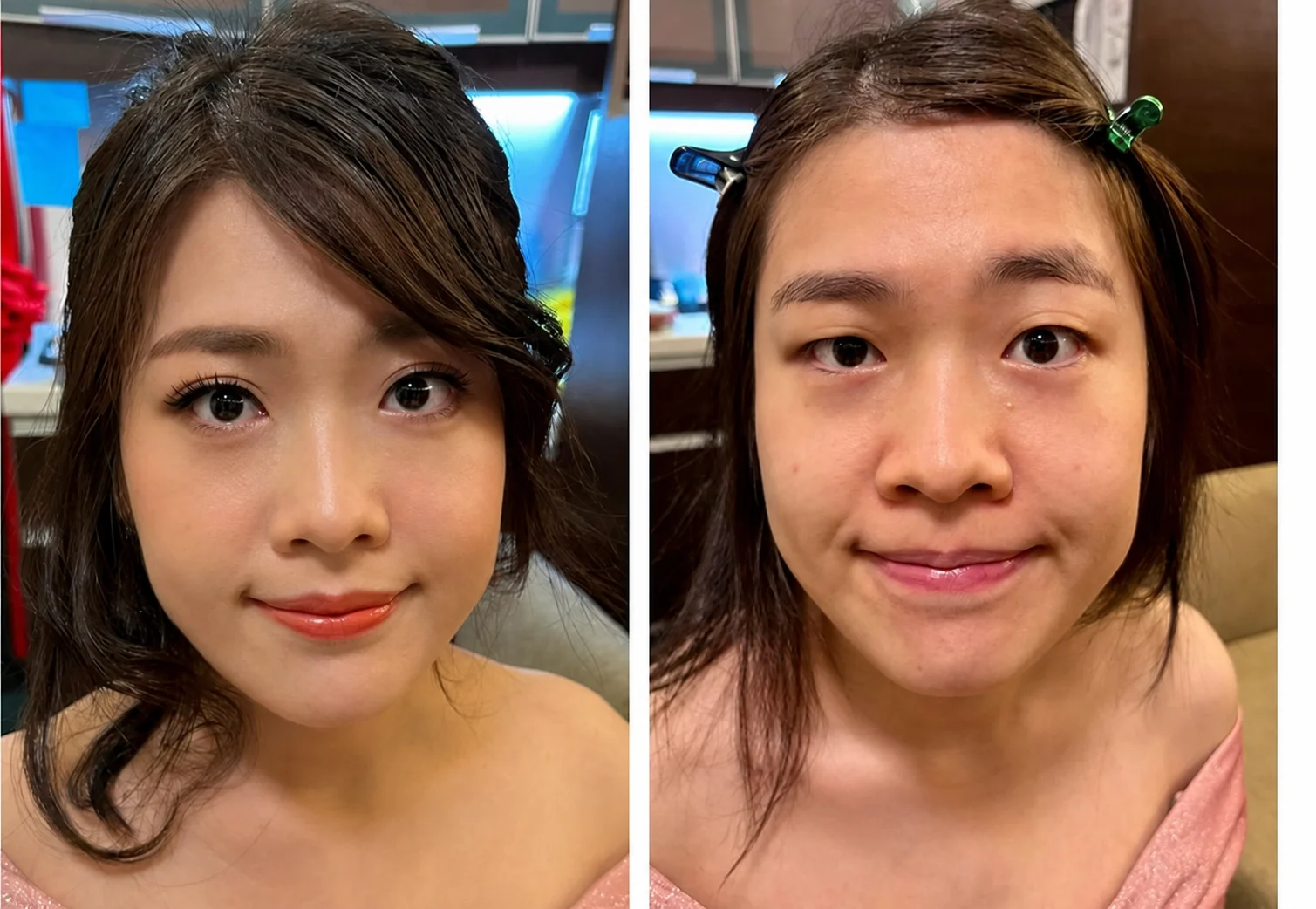
The first look has the hardest job. It must survive early preparation, documents, close conversation, flashes, a possible transfer and tea without making the bride feel overdone in intimate family photos. Prioritise even, comfortable-looking skin; brows that still look like your brows; a lip colour you can reapply; and hair that stays secure while clothing and jewellery are handled.
Choose the first hairstyle around the most demanding attachment, not the most decorative picture. A veil, traditional headpiece, high collar or heavy earrings may dictate where pins can sit. Photograph the accessories and the back of each garment in advance. It is much easier to plan a low bun that later opens into a softer shape than to force a dramatic style around an untested headpiece on the morning.
If your actual requirement is one bride, one morning look and one hairstyle for a registration or tea ceremony, review the stated scope and timing of wedding morning makeup Hong Kong before deciding whether a single appointment matches your running order. The page notes a distinct morning session and asks clients to confirm early starts, transfers and touch-ups separately, which are precisely the details that can turn a simple morning into a longer coverage need.
Give the morning a “photo-ready” deadline, not a finish-time wish
Set a ready-by time before the first required portrait, rather than saying “we start at seven.” Work backwards from the first camera moment and include dressing, jewellery, a quick room check and an unhurried handover of personal items. The person holding the day’s schedule should know that “finished” means dressed, accessories secure, and able to leave—not only that the last brush has been put down.
Do not book an ambitious look change into the final minutes before registration. A small buffer protects the registry appointment and lets you respond calmly if a zipper, boutonnière, family arrival or traffic issue takes longer than expected.
Treat the tea ceremony as a continuity test
The tea ceremony is normally close-range and interaction-heavy. Hands, lips and hair are visible while you greet elders, hold cups, bend, sit and turn towards several cameras. This makes it a poor place for a transformation that adds loose pieces, a fragile lip formula or a style that cannot tolerate movement.
Keep the complexion and eye structure from the registration. The most useful tea-ceremony adjustments are usually a fresh lip layer, blotting, a secure accessory check and, if the second outfit is stronger in colour, a modest colour shift that still photographs as one person across the album. Put a clean tissue, blotting paper, chosen lip product and a few hairpins in a labelled kit with one trusted person. That person should know where it is; the couple should not need to search for it.
Make the reception change earn its time
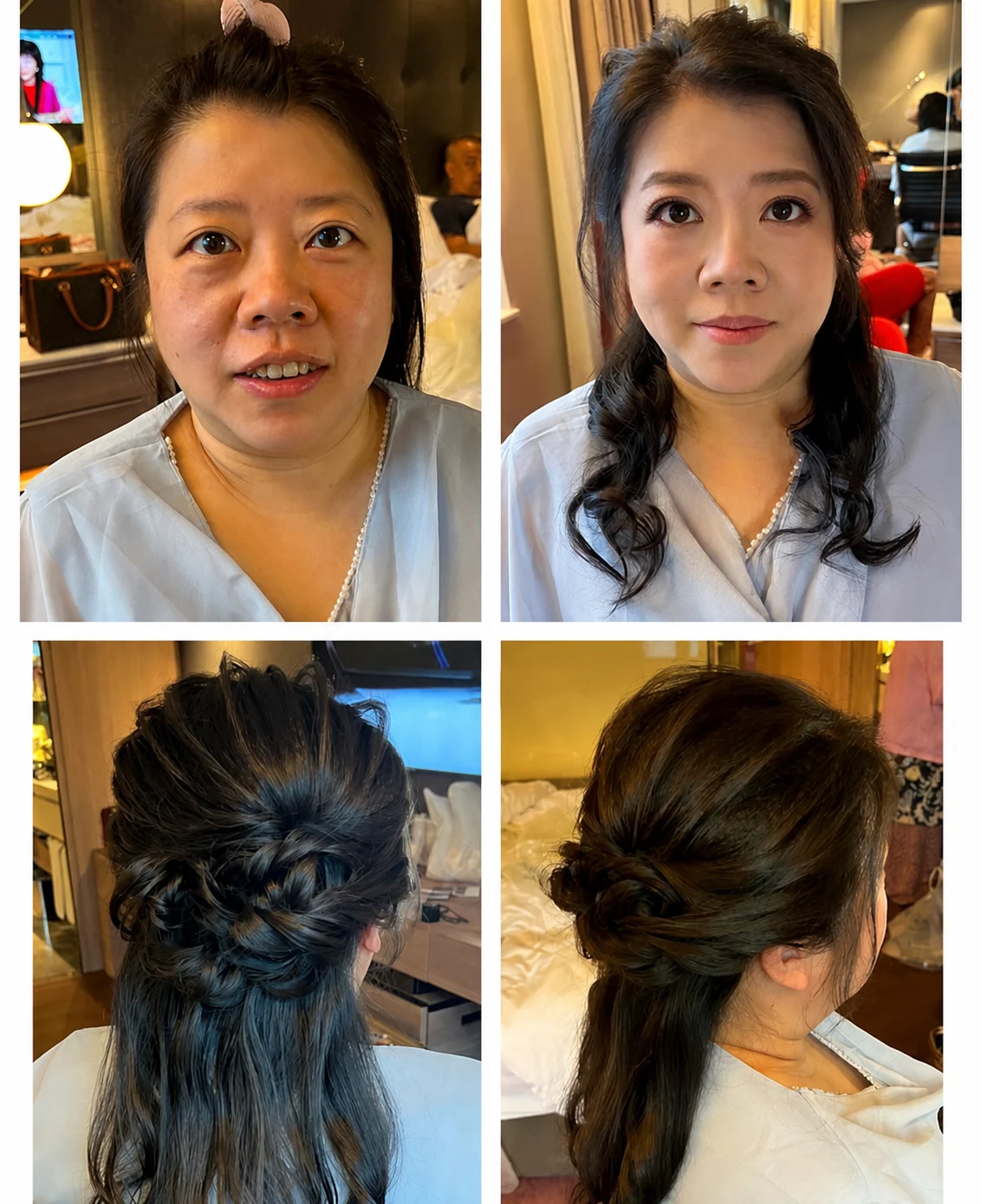
Evening lighting and a more formal gown can justify a visible lift. But reserve a full remake for a true visual break: a major colour-family switch, a radically different neckline that needs another hair silhouette, a second formal entrance, or a reception portrait plan where the first look will plainly not fit.
For most one-day schedules, allocate reception time to an enhancement sequence: remove shine; revive base only where needed; deepen or refine the eyes; change the lip; adjust the hair outline; then add the evening accessory. This preserves the recognisable morning face while creating a result that reads clearly at a distance. It also leaves capacity for delays and for a later lip or pin check.
When you need a morning completion plus planned evening attendance, the service details for morning and banquet bridal makeup are a useful scope-checking reference. It describes separate morning and evening windows and distinguishes tidy-ups and selective enhancements from unlimited full remakes. Confirm both locations, the gap, waiting or travel requirements, and the exact changes in writing; do not assume that a long calendar gap is staffed coverage.
Separate a reset from an enhancement
Use this quick distinction when speaking with a stylist:
- Maintenance: blot, powder where wanted, lip, pin and veil or accessory check. This fits a short or uncertain gap.
- Enhancement: targeted eye depth, a different lip, added lash definition, re-shaped front sections or a controlled bun adjustment. This needs a private setup and a reliable block of time.
- Reset: removal and rebuild of complexion, eyes and hair. Choose it only for a clearly different creative brief and a protected schedule.
A reset can remove the margin protecting portraits, meals or the reception entrance. Name the visual outcome and the minutes available.
Schedule the groom and group without creating a bottleneck
If that is the intended result, groom makeup provides a practical reference for defining the finish in plain language—such as barely-there, matte and controlled, or polished for photos—and for sharing the photographer’s call time. It is especially helpful to decide whether the groom needs only an early photo-ready finish or a later shine-and-hair check before evening portraits.
Build a timetable from usable minutes
The following is a demonstrative example, not a promise of service duration or a real client itinerary. It assumes a registry in the late morning, tea ceremony soon after and a reception that night. Replace every time with your own confirmed appointments and travel reality.
| Checkpoint | Example clock | Owner | Decision to lock |
|---|---|---|---|
| Bride photo-ready for registry portraits | 09:45 | Couple and photographer | Morning look, dress, documents and accessories are complete |
| Registry and immediate portraits | 10:15–11:15 | Couple | No change is scheduled here |
| Tea outfit/accessory check | 11:20 | Designated helper | Lip refresh, headpiece and collar movement tested |
| Tea ceremony and family photos | 11:30–12:30 | Family coordinator | One continuity look; kit stays accessible |
| Reception styling room available | 16:45 | Venue contact | Lighting, chair, power point and privacy confirmed |
| Reception photo-ready | 18:15 | Couple and photographer | Enhancement completed; entrance buffer remains |
Keep touch-ups safe, small and intentional
A well-packed kit reduces unnecessary interruption: the final lip product or a compatible balm, blotting papers, facial tissues, a small compact or powder chosen for the finish, hairpins, a mini comb and any approved accessory fastener. Avoid experimenting with a new product halfway through the day.
For eye-area products, hygiene matters more than squeezing in one more adjustment. The U.S. Food and Drug Administration’s eye-cosmetic guidance advises clean instruments and hands, not sharing eye cosmetics, and stopping use if irritation occurs. Keep mascara wands and liners out of a moving vehicle; save any eye refresh until you are seated, still and have a clean surface.
Decanting shared products into unnamed containers can make a long day less manageable, not more. Keep your own items identifiable, close containers after use and assign one helper to the kit. The best evening touch-up is the one that is quick, hygienic and does not pull the couple away from their guests.
A worked decision example
Example: The bride has a white registry dress, a red tea outfit with family jewellery and a dark reception gown. Registry portraits, tea and the reception entrance matter most. There are only twenty usable minutes between registry photos and tea, but ninety confirmed minutes in a private reception room.
The sensible plan is one soft morning base, a pinned style designed to accept the tea accessory, then a lip and accessory adjustment for tea. The evening receives deeper eye definition, a richer lip and a deliberate hair re-shape that suits the dark gown. A complete lunchtime reset would spend scarce time without improving the photos enough to justify the risk. The reception enhancement gets the protected room and the real time because it has both a different visual brief and a dependable setup.
Questions & answers
Must I have three distinct looks for three events?
No. Three events often work best as one protected morning base, a tea-ceremony continuity adjustment and one evening enhancement. Choose a full additional look only when the outfit, lighting, entrance or portrait plan makes it visually necessary and the schedule protects enough usable time.
How much time should I reserve for a reception change?
Work from the completed outcome, not from a nominal gap. Subtract travel, room access, changing, food, photography and a buffer. The remainder determines whether you can safely maintain, enhance or reset. Confirm the stylist’s own required timing and scope directly; this article’s timetable is only an example.
What should change first if the evening gap becomes short?
Protect the reception-ready essentials: blot or refine shine, reapply lip, secure hair and add the one eye or accessory detail that changes the evening read. Skip any full base removal unless there is a practical reason, such as a major clothing issue or product failure.
How can the groom look polished without feeling made up?
Agree the level of coverage before the day and use plain language: natural complexion balance, reduced shine in photographs, tidier brows or a familiar hairstyle. Schedule the groom to be ready for portraits, then keep a small option for a later shine or hair check rather than creating a competing full change.
What information should I give a stylist before booking?
Provide every venue address, fixed ready-by and photographer times, travel plan, number of people, outfit and accessory photos, the desired morning and evening outcome, sensitivities you want considered, and whether you expect touch-ups or a substantial re-style. Ask for the confirmed scope, timing, travel, waiting and overtime arrangements in writing.
Put the next step into practice
For the learning options at Canvas, explore makeup course Hong Kong。
For another practical reference, see bridal makeup Hong Kong。
To plan a next step that fits your needs, read makeup course Hong Kong。
Sources & further reading
- Registration of a Marriage | Hong Kong Immigration Department
Used to frame the registry ceremony as a fixed official commitment; couples should verify their own ceremony arrangement rather than assume flexible time.
- Eye Cosmetic Safety | U.S. Food and Drug Administration
Supports the hygiene advice on clean instruments and hands, not sharing eye cosmetics, avoiding application in a moving vehicle, and responding to irritation.