Set the weather decision before the call sheet
A location shoot in humid or rainy weather works best when everyone agrees on who can pause, who can move, and which images matter most before anyone travels. Treat the forecast as a planning input, not a promise that a look will last unchanged from first makeup to the final frame.
Put a simple risk ladder in the shared call sheet. It prevents a damaging middle ground where the crew waits outdoors because no one wants to be the first to stop.
Use a four-level weather-risk ladder
Level 1 — warm or humid, with no active rain: Proceed with the outdoor sequence, but begin with the key close-ups. Schedule shade, water and a short blotting break rather than hoping shine will never appear.
Level 2 — intermittent drizzle or wet ground: Move to covered frames or a sheltered route. Keep the subject off slippery edges and give the photographer a smaller, deliberate frame list. Clothing hems, shoes and trailing fabrics may become the limiting factor before makeup does.
Level 3 — steady rain, strong gusts or water pooling: Switch to the agreed indoor or substantially covered scene. Do not use an umbrella as the whole contingency; it may protect a face briefly while leaving hair, wardrobe, crew and gear exposed.
Level 4 — thunderstorm, lightning, severe squalls or an unsafe site: Stop the outdoor plan and seek proper shelter. The Hong Kong Observatory’s Thunderstorm Warning guidance advises people outdoors to seek safe shelter, leave the water, avoid high ground, trees, masts and conductive objects, and beware gusts and flying debris. A great frame is never worth treating a shelter decision as negotiable.
Build a substitute-scene list that protects the key frames
A backup location is not merely “somewhere indoors.” It should preserve the purpose of the original shot. A portrait planned for a harbour promenade may need open sight lines and soft reflected light; a backup could be a covered colonnade, a bright hotel lobby permitted for photography, or a window-side interior—not an arbitrary corridor.
Prepare two alternatives for each priority scene: one nearby shelter for a brief shower and one full relocation for persistent rain. Confirm in advance whether the building permits photography, whether a reservation or vendor clearance is needed, how long access lasts, and where people may wait without blocking guests. If an alternative is private, obtain permission rather than assuming an attractive entrance is a usable set.
| Original intention | Nearby rain option | Full weather option | Decision to make in advance |
|---|---|---|---|
| Wide outdoor establishing portrait | Covered arcade, canopy or building overhang with a dry walkway | Window-lit room or permitted indoor public area | Which wide frame may be dropped without losing the story? |
| Moving dress or veil image | Sheltered terrace with enough clear space | Stairwell or hall only if access, light and safety are approved | Is movement still safe with wet shoes and fabric? |
| Close beauty portrait | Shelter facing open daylight | Makeup station by a large window | Who holds reflector or controls background clutter? |
| Family or group photograph | Dry entrance with a clear gathering point | Reserved indoor room | Where will children, bags and umbrellas wait between frames? |
Test the substitute scene for the camera, not just the eye
Inspect the backup at roughly the planned time if possible. Check window direction, colour casts, floor condition, a dry route and whether the setup needs power, a stable table or lift access.
The example list is a planning model, not a record of any client shoot. A covered space may protect the schedule but offer less depth; an indoor room may protect hair but remove the city context. Decide which trade-off protects the images you cannot replace.
When the makeup artist is travelling to the venue, detailed address, room, entry and workspace notes matter as much as the weather. This guide to photoshoot makeup on location Hong Kong is relevant when you need to clarify access, a work surface, power, loading restrictions and whether touch-up support is part of the agreed arrangement.
Put the most valuable frames at the front of the schedule
Weather resilience is primarily a scheduling choice. Identify three to five “must-have” images before allocating optional walking shots, elaborate outfit changes or distant travel. Shoot those frames soon after the subject is ready, while the light, hair and clothing are freshest and there is still room to relocate.
Use time blocks, not vague intentions. A practical example might reserve 20 minutes for an indoor-ready beauty portrait, 30 minutes for the outdoor hero scene, 10 minutes to reset, and 20 minutes for a covered substitute. The exact minutes are only an example; the real plan must reflect travel time, venue rules, number of people and the photographer’s working pace.
Keep a protected buffer between final makeup and the first important photograph for a sky check, moving bags and a calm route decision. It is not spare time to fill with extra poses. A move also needs lift queues, guest registration, wet-footwear changes and a quick check of the new light.
Choose a makeup and hair strategy for maintenance, not a promise
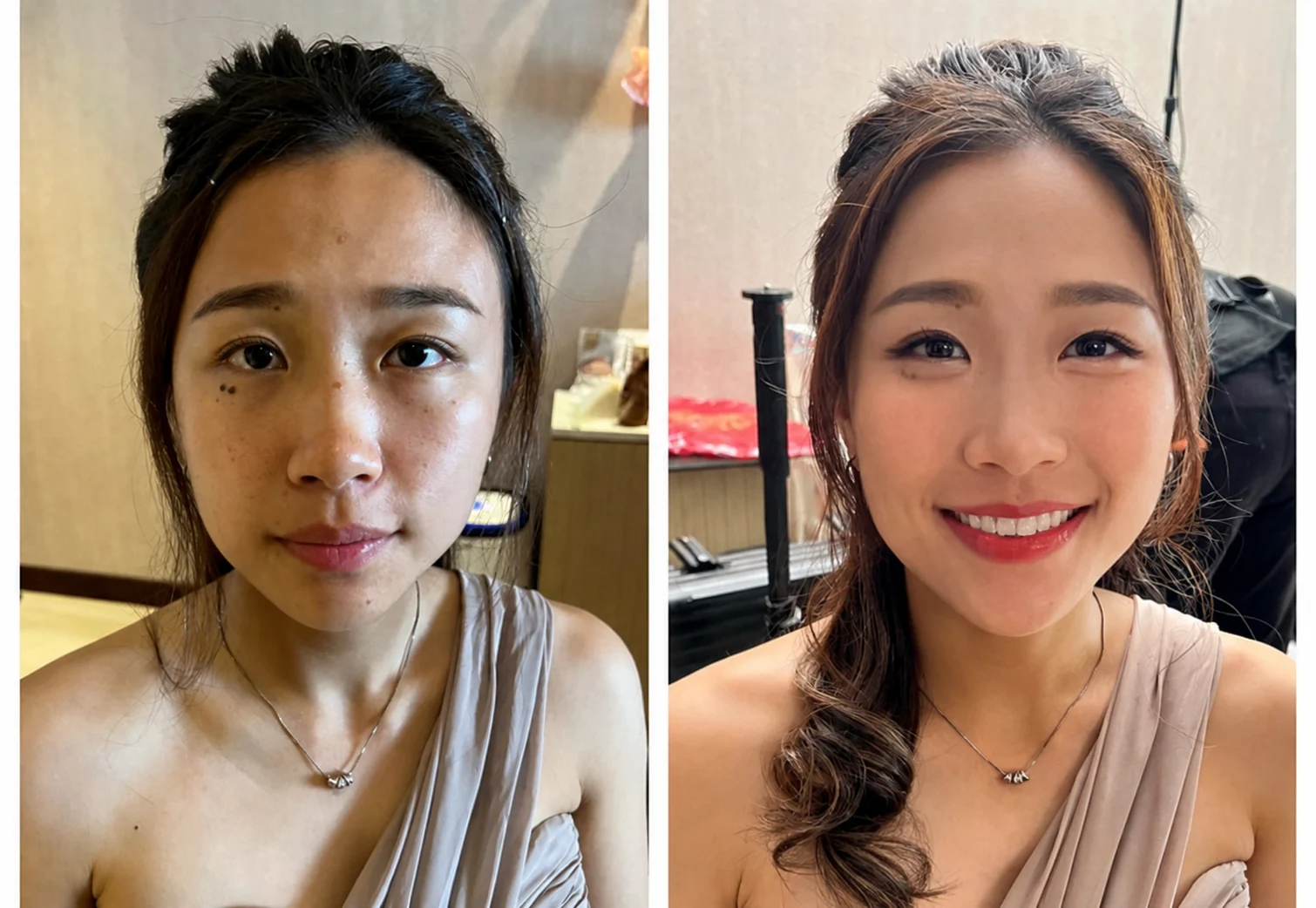
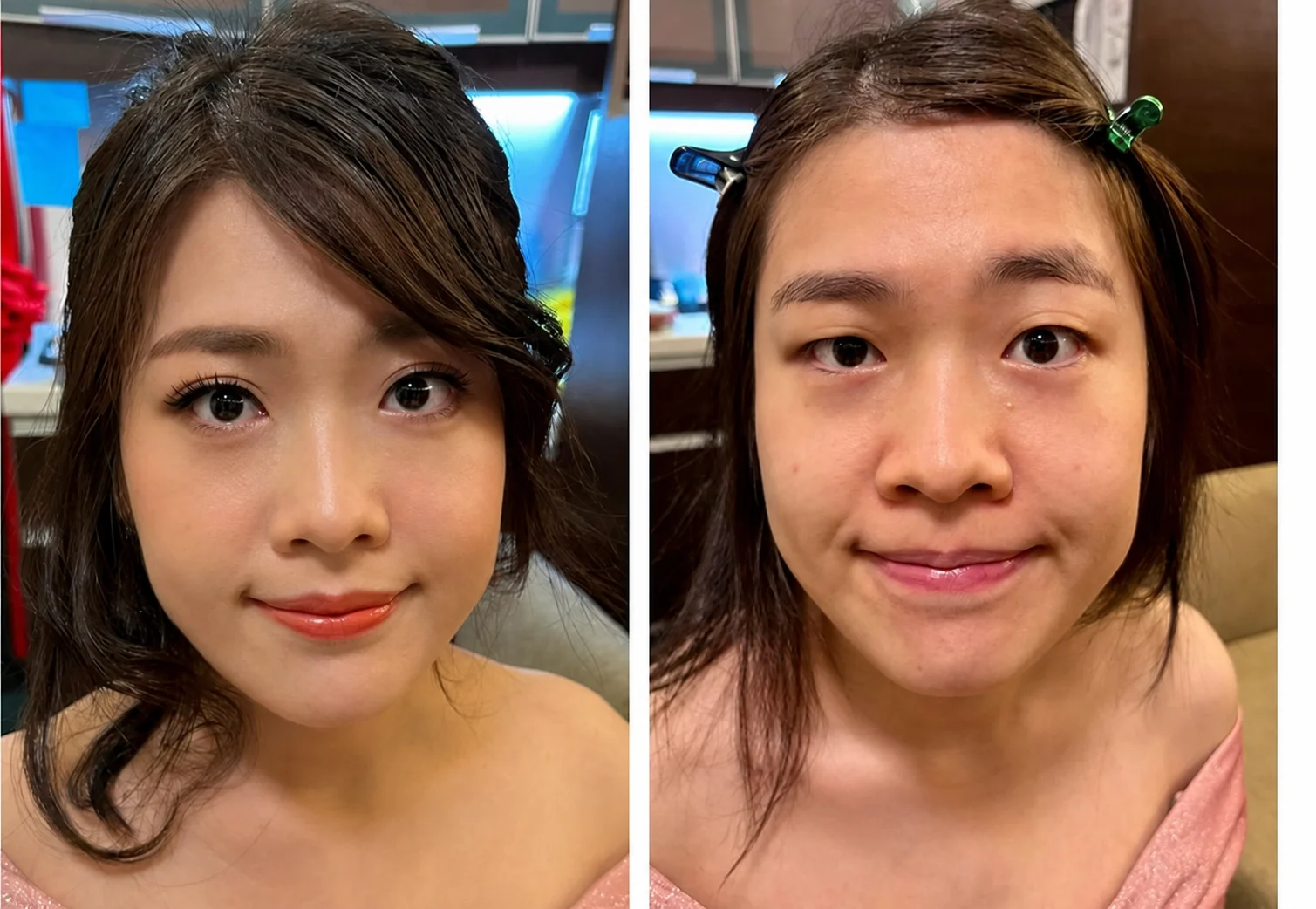
Humidity can change skin shine, hair texture and the way a base feels. The useful objective is a look that remains comfortable, photographs consistently and can be refreshed with small actions—not a claim that no product will ever move. Thin, purposeful layers and selective powdering are usually easier to maintain than one heavy attempt at total coverage.
A trial is the right time to test the finish under conditions close to the shoot: comparable daylight or flash, the intended hair accessory, and enough time to observe how the base settles. Bring reference images, a garment swatch if available and details of contact lenses or products you prefer to avoid. The pre-wedding makeup trial Hong Kong guide describes a trial as a separate rehearsal and stresses recording choices such as shades, lashes and accessory placement; confirm the actual shoot-day scope separately in writing.
Choose a deliberate finish rather than automatically choosing matte. A softly set T-zone may be more convincing in portraits than powder across the whole face. A controlled hairstyle may tolerate weather better than a loose style, but changes the mood; make that trade-off consciously.
For a humidity-focused discussion of light layers, targeted powder and modest scheduled checks, see long-lasting makeup Hong Kong. It is useful preparation for a realistic touch-up brief, not a substitute for confirming the services, timing and products for a particular booking.
Agree the touch-up handover before the first frame
On-site attendance, a scheduled return and a self-managed pouch are different plans. Do not assume that a makeup artist will remain at the venue, redo a look or be available between scenes unless it is clearly agreed. If the plan is self-managed, designate one calm person—not the subject—to hold the pouch and watch the timing.
Use a small kit that matches the finished look: blotting papers, a clean compact or powder, the exact lip colour, a mirror, cotton buds and any pre-agreed lash or hair item. Label it and keep it dry. Too many unfamiliar products invite over-correction, especially when the group is rushing.
The FDA’s cosmetics safety guidance recommends washing hands before use, not sharing makeup, keeping containers clean and closed, and stopping use after an unexpected reaction. For a shared shoot-day kit, those basic habits are more practical than improvising with someone else’s eye product or a damp applicator.
Write a one-page weather brief everyone can use
Send the weather brief the day before, then read it together at the first call. It should be short enough for a phone screen and detailed enough to prevent guesswork. A useful format is below.
- Priority frames: List the three to five images that must be attempted first and the latest practical time for each.
- Weather trigger: State the Level 2, 3 and 4 conditions that prompt a route change, indoor move or full stop.
- Decision authority: Name the person who calls a pause, the person who confirms the venue and the person who tells the group.
- Two substitute scenes: Include pin locations, permission contact, access hours, meeting point and whether the space has power, seating and a dry prep area.
- Transport and clothing: Record taxi or vehicle plan, umbrella responsibility, garment bags, clean shoes and a towel or cloth for wet surfaces.
- Touch-up handover: Identify the pouch holder, contents, check times and the boundary between a quick refresh and a new look.
- Exit rule: Write the condition that ends outdoor work. If thunderstorm conditions arise, move to safe shelter rather than debating one more frame.
The same brief also works if the original venue becomes unavailable for a non-weather reason: it records what the scene must accomplish, who can move it and what the team will give up.
Run the shoot day in short check-ins
Check conditions before makeup, before leaving prep and immediately before outdoor priority frames. The Hong Kong Observatory notes that thunderstorms can develop, move and dissipate quickly and locally; check the official warning and live local conditions, then act on the ladder.
When a shower begins, move the subject and vulnerable wardrobe under shelter first, then crew and equipment. Once everyone is dry and safe, choose the covered scene or full relocation. Do not repair makeup while waiting at a wet roadside.
Questions & answers
When should we abandon the outdoor plan rather than wait for better weather?
Decide this before the shoot, using the risk ladder in the call sheet. Intermittent drizzle may justify a covered scene, while steady rain, unsafe footing or strong gusts should trigger the agreed indoor option. If thunderstorm conditions arise, stop outdoor work and seek safe shelter; do not keep waiting for one more photograph.
Can umbrellas count as our weather contingency?
Use umbrellas for short transfers, not as the entire Plan B. They do not solve slippery ground, wind, wet wardrobe, restricted shooting space or a lack of safe shelter. A proper contingency names a covered nearby scene and a fully permitted indoor location, with transport and access details for both.
How much buffer should a rainy-day location shoot include?
There is no universal number because travel, venue access, group size and the shot list differ. As a planning example, protect a short block between final makeup and the first key frame for a weather check and route change. Include realistic time for lifts, wet footwear, moving bags and checking the substitute scene’s light.
Who should hold the touch-up kit if the artist is not staying on site?
Assign one calm, trusted person other than the subject. Give them only the labelled items that match the finished look, such as blotting papers, a clean powder compact, the original lip colour, mirror and cotton buds. Set check moments in advance so the pouch supports quick maintenance rather than rushed, unfamiliar changes.
What should I do if a cosmetic causes irritation during the shoot?
Stop using the product and avoid trying to cover the reaction with more makeup. Tell the artist or person managing the kit what was used, keep the product details, and seek appropriate healthcare advice if symptoms need attention. Do not share eye makeup or applicators while trying to solve the issue.
Put the next step into practice
For the learning options at Canvas, explore makeup course Hong Kong。
For another practical reference, see bridal makeup Hong Kong。
To plan a next step that fits your needs, read makeup course Hong Kong。
Sources & further reading
- Hong Kong Observatory: Thunderstorm Warning
Used for the outdoor stop-and-shelter guidance: seek safe shelter, leave water, avoid high ground, trees, masts and conductive objects, and watch for gust hazards.
- U.S. Food and Drug Administration: Using Cosmetics Safely
Used for basic shoot-day cosmetic hygiene and the advice to stop using a cosmetic after an unexpected reaction.