Start with the change you would pay for on its own
Before comparing combinations, finish this sentence: ‘My hair would feel more useful if…’ Perhaps the back sat closer, the ends looked fuller, or visible regrowth blended with the lengths. Those are different jobs. A bundle can be convenient, but it is not good value if you accept a second major service merely because it appears beside the one you need.
Look at your hair loose and in the way you normally wear it. Separate shape from colour: a heavy outline is not the same problem as a dark band of regrowth. Write one main goal and one optional change. This makes it easier to decide what to keep when the proposed appointment exceeds your budget or available time.
Vit So’s hair salon price list separates cutting, tinting, root touch-up, toner and lightening entries from its listed combinations. That separation is useful for identifying the work you are actually seeking. Begin with the relevant service, then compare a combination only if it includes another change you already want. A menu heading is a starting point, not a complete design brief.
| Your main need | Likely route to discuss | What must match | What need not be added |
|---|---|---|---|
| A better outline, unchanged shade | Cut-only | Length, weight and finishing | Colour solely to fill a bundle |
| Visible roots, shape still working | Colour-only | Regrowth area and desired blend | A restyle you do not want |
| A new shape and overall colour | Combined | Cutting brief and colour coverage | Unrequested lightening |
| Lighter pieces around a new cut | Assessed cut-and-lightening plan | Placement, processing and tone | Every technique under ‘colour’ |
Use this matrix to identify a route, not to book a procedure from a photograph. Two people wanting ‘softer hair’ might mean a softer outline or a less contrasting shade. Explain which you mean.
When a cut-only appointment is the stronger choice
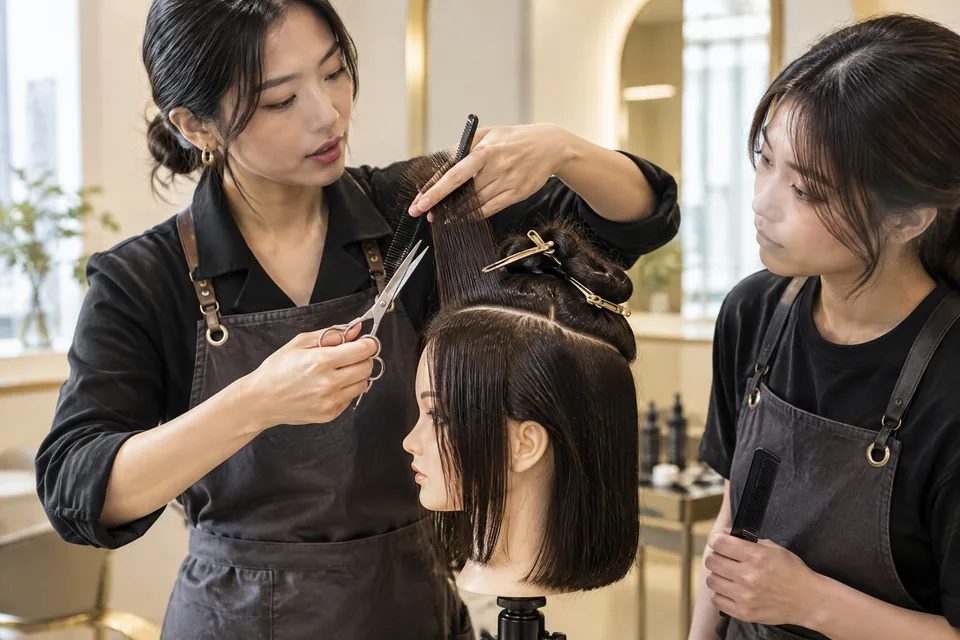
A cut deserves priority when the current length or distribution of weight makes everyday styling awkward. Check the outline at the shoulders, the fullness at the bottom and the way the front falls beside your face. If you like the shade but dislike those lines, changing the colour may leave the practical problem untouched.
Check the line before asking for more layers
For a bob, show where you want the edge to sit relative to your jaw or collar. For longer hair, distinguish fuller ends from extra movement higher up. More layers remove weight from particular areas; that may suit movement but conflict with a wish for a dense-looking lower edge. Discuss the trade-off rather than requesting both indiscriminately.
Imagine a hypothetical shoulder-length cut that catches on a work shirt collar. The main request could be a revised length and cleaner outline, while retaining enough hair to tie back. That is a cutting discussion. A colour service would become relevant only if the shade is also something the person genuinely wants to change.
Bring a short cutting brief:
- The shortest length you would accept, shown on your own hair.
- The front pieces that must reach your ponytail or tuck behind an ear.
- The areas that feel too heavy, or the ends you want to keep full.
- How you usually dry your hair, including whether you use a brush.
A finish styled differently from your daily routine can obscure the result you need. Ask to discuss the shape in the context of that routine, not just the polished reference image.
Colour-only: name the area and the type of change
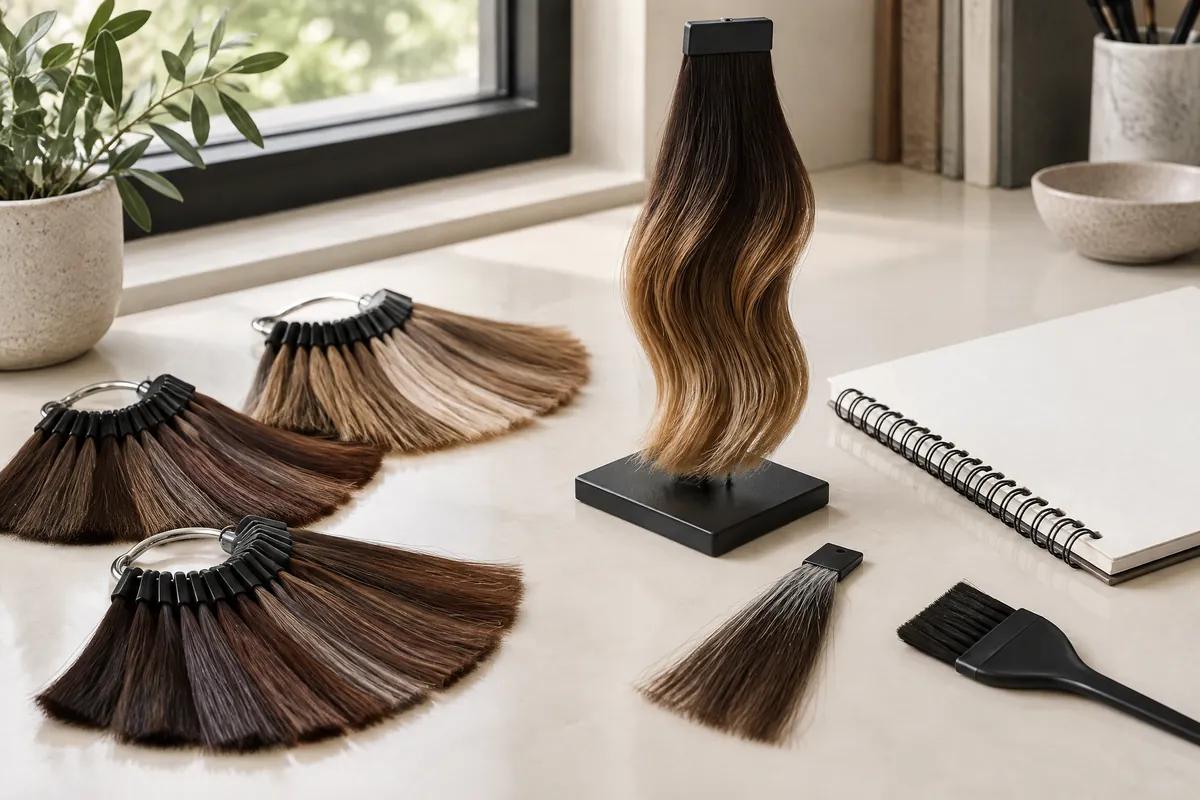
A colour request becomes clearer when divided into roots, middle lengths and ends. Do you want new growth blended, the whole head darker, or a different tone through already lighter lengths? These are not interchangeable goals. If the haircut still sits well, colour-only may preserve it while directing your budget towards the area that actually bothers you.
Depth means how light or dark the hair looks. Tone means its colour character, such as warmer or cooler. Placement means where the colour is visible. In a reference photograph, point to the feature you like: dark roots, lighter front pieces or a more even overall appearance. ‘That colour’ leaves too many decisions unresolved.
Previous processing changes the colour conversation
Describe earlier home dye, bleach, perms and straightening, including which lengths remain from those services. A natural root beside previously lightened ends is not one uniform starting point. Share visible roughness or breakage as observations, not a self-diagnosis. The stylist can then assess whether your desired change needs a different scope or a staged approach.
The American Academy of Dermatology notes that appearance-enhancing treatments can leave hair dry and brittle. It also explains that substantial lightening can cause more damage than a smaller shade change. This makes the amount of change a meaningful trade-off, not merely a pricing detail. A protection inclusion should not be read as a damage-free promise. 1
A useful colour brief: “Keep the darker roots, make the front visibly lighter, and avoid a pale result through all the ends.” This describes priorities without prescribing a technique or promising an outcome.
Read a combination as a list of named jobs
When exploring hair salon packages at Vit So, distinguish its standard-colour combination from its separate women’s Balayage / Ombré combination. The first names wash, cut and blow-dry, standard colour and pre-service protection. The second names a lightening design with one bleaching session, one toner application and protection. They are different scopes, not interchangeable labels for every colour photograph.
A haircut and colour package is worth considering when the cutting and colour briefs both match its contents. A wish for full-head highlights, additional lightening or correction needs its own discussion. Do not count an unspecified job as included because ‘colour’ appears in the heading. Equally, do not buy extra bleaching when your real priority is simply a more even depth.
| Component | What to identify in the proposal | Why it affects the choice |
|---|---|---|
| Cut | Outline, length and any restyle | A trim and a major shape change are different briefs |
| Colour | Roots, full-head coverage or placed lightness | Coverage determines what the service is trying to achieve |
| Lightening | Included session and intended area | One named session does not mean unlimited processing |
| Toner | Whether an application is named | Tone adjustment is not the same job as lifting colour |
| Protection or care | The specific included treatment | Named care is not every treatment on the menu |
| Finish and additions | Washing, drying and separately quoted work | The final total must reflect the complete appointment |
Think of ‘included’, ‘additional’ and ‘not needed’ as three separate columns in your notes. A necessary addition belongs in the first-visit budget even if absent from the bundle. An optional extra belongs in a separate decision. This prevents a useful appointment from growing into a collection of unrelated services.

Compare matched quotes, not impressive-looking totals
Ask for the price of your actual plan, then the equivalent separate-service arrangement if offered. Keep the colour area, cutting brief, protection and finish the same on both sides. Comparing a simple tint with a package containing a different lightening design cannot establish a saving. They do different work, even if both end with a cut and blow-dry.
The Hong Kong Consumer Council advises clarifying less prominent surcharges, including hair length, designated hairdresser and particular requirements, before service. It also recommends retaining a receipt that lists the services provided. Although its published examples are historical, these practical checks remain useful for making the agreed scope visible. 2
Write the comparison this way:
- Separate route: the quoted services needed for your goal, plus required additions.
- Package route: the quoted combination, plus required work outside its contents.
- Deferred route: the priority service now, with the second change considered later.
A ‘from’ figure, a range or two published options needs an applicable quote before it can enter this comparison. Also ask how length charges apply to the chosen work. Do not assume a surcharge disappears because cutting is included, or that shortening the hair will automatically change how another service is charged.
Consider a hypothetical person who wants root coverage and only a small tidy-up. A combined route could be convenient if both services are due. If the outline needs no attention, colour-only may be more relevant. Convenience is a valid reason to combine services; the number of named items alone is not evidence of a bargain.
Include the next appointment in today’s decision
The first-visit quote is only part of the commitment. Ask what future work maintains the chosen design: regrowth coverage, tone adjustment, reshaping, or some combination. These tasks may become relevant at different times. A toner named in the initial package is one application, not a promise of included future visits or a universally lasting shade.
Discuss what you are comfortable seeing as the hair changes. A deliberate darker-root design may suit someone willing to retain visible depth at the scalp. Someone who dislikes any regrowth contrast has a different priority. For the cut, decide whether you want a precise short outline or more freedom as the shape grows. Neither preference is inherently better value.
Set a maintenance limit: “I want to keep this presentable between planned appointments, and I do not want every visit to involve both cutting and major colour work.” Let that preference influence the initial design.
Home care should also fit your habits. The AAD notes that sun exposure can weaken and fade hair, especially when it is dyed, bleached or permed, and recommends a wide-brimmed hat outdoors. Include practical sun protection in your routine rather than treating another salon treatment as the only response to weather exposure. 1
Be selective about care additions. Ask whether the intended benefit is easier handling, a smoother-looking finish or conditioning. Those cosmetic aims are different from medical treatment or hair growth. Choose an addition for a clear purpose; a long list of care names does not by itself make a chemical plan appropriate.
Prepare one brief that keeps the appointment focused
Photographs are most helpful when they show your starting point as well as your inspiration. Take views of the roots, side outline and ends in natural light, without a colour filter. Add a photo with your hair tied up if that is how you usually wear it. Mark one feature you like in the reference and one you would not want copied.
Before enquiring, gather these details:
- Your primary change and the optional change you would drop first.
- Present length, tie-back requirements and your usual drying routine.
- Colour, bleach, perm and straightening history across the remaining hair.
- A first-visit budget and a realistic preference for later maintenance.
- Questions about named inclusions, required additions and total timing.
Keep the agreed scope in writing. If the assessment changes the plan, ask what has changed in the work and total before proceeding. An acceptable response might be a less dramatic colour goal, a cut-first appointment or postponing an optional service. You do not need to preserve the original bundle simply because it was the first option you noticed.
A useful final brief is specific without dictating every method: “Keep enough length for a low ponytail, improve the lower outline, and blend the roots rather than lighten all the lengths. Please separate essential work from optional care.” That gives the stylist a result to assess and gives you a clear basis for choosing an appointment you actually want.
Questions & answers
What if my budget covers the cut but not the colour I want?
Prioritise the change that solves your main difficulty. A cut can improve an awkward outline while you postpone a more ambitious colour plan. Alternatively, discuss a smaller colour goal. Ask whether splitting the work affects placement or the eventual design before deciding which appointment comes first.
Can I swap an unwanted package component for something else?
Ask rather than treating the package as a credit balance. A substitution may change the products, work or price, and may not be offered. If the unwanted component is substantial, request a separate-service quote for the combination you do need instead of forcing a bundle to fit.
Should I change my haircut and colour before an important event?
Balance the appeal of a coordinated change against the adjustment it requires. A familiar shape with refreshed colour may feel easier than changing everything at once. Mention the event date and any fixed departure time when discussing the appointment; do not infer timing from the package name.
Is a discounted package still useful if I skip one service?
Possibly, but judge the amount payable for the result you keep. Check whether omitting a component changes the charge, and compare that total with the relevant separate route. An unused service has no practical benefit to you, even when the overall combination has an attractive advertised price.
How do I explain that I dislike the styling in a reference photo?
Separate the permanent design from its temporary presentation. Say that you like the colour placement or cut length but not the curled finish. Bring a second image showing how you normally wear your hair. This helps prevent a styled photograph from becoming a brief for changes you never wanted.
Put the next step into practice
Develop your understanding of shape, cutting and styling with structured learning at Canvas. Hair styling courses in Hong Kong。
Explore practical guides for a clearer plan before your next style change. Canvas hair and beauty journal。
Tell the team which cutting or styling skills you would like to learn. Contact Canvas Academy。
Sources & further reading
- Coloring and perming tips for healthier-looking hair
The American Academy of Dermatology explains the damage trade-offs of substantial lightening and chemical treatments, and recommends sun protection for dyed, bleached or permed hair.
- Consumers' Woes against Hair Salons Many and Varied - CHOICE # 456
Hong Kong Consumer Council advice on clarifying hair-length, hairdresser and other requirement surcharges before services, and keeping a receipt that lists the work provided.