Identify the line you want to change
Start with your usual dry hair, not a photograph taken just after curling. Look at the back against a plain top, then look from each side. Is the concern a transparent bottom edge, short pieces separating from longer ones, or a flat crown? Those are different design problems. Extra length below the shoulders does not automatically improve the area that bothers you.
Fine describes individual strands; density describes the amount of hair across an area. For a practical consultation, describe what you see rather than labelling all your hair thin. Note whether the ends have always looked light or whether the appearance has changed recently. A new density change is separate from deciding where a hairstyle should finish.
Use a simple sentence to define the brief: “I like the collarbone length, but want the back edge to look less see-through when straight.” A different brief might be: “I want hair below my shoulders, and I am happy to style loose bends.” Naming both the desired line and your normal texture makes the compromise visible before you discuss attachments.
Compare three outcomes, not three marketing names
A fuller-end design concentrates on the existing boundary. A length-led design moves that boundary and must connect your natural ends to the hair beneath them. A styling-only finish changes the way existing hair sits. These choices can all create a different impression, but they do not require the same appointment or home routine.
| Desired outcome | What can change | The trade-off to examine |
|---|---|---|
| Fuller ends at the current length | A more substantial visible bottom edge | Fitting and care still apply even without extra length. |
| A longer overall outline | The endpoint and the transition below natural layers | The blend must work loose, straight or waved, with suitable support. |
| Styling-only lift or movement | Direction, root lift and temporary end shape | No added hair, but the effect changes with washing and daily wear. |
Do not add length simply because supplied hair arrives longer than your chosen finish. Agree on the endpoint first. Equally, added length should not become permission to thin out your own hair extensively to hide a mismatch. Ask what would be cut from the natural hair, what would be cut from the added hair, and how the remaining haircut would sit after removal.
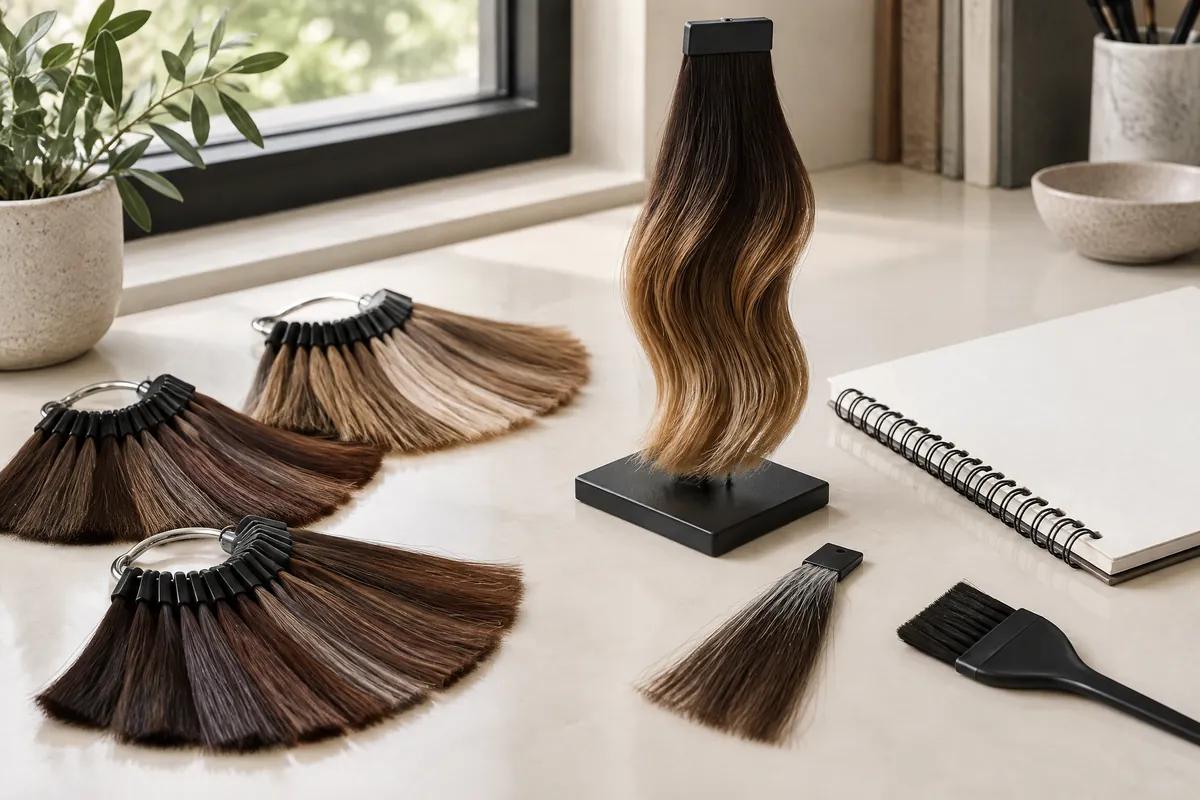
When discussing hair extensions with Vit So, separate supplied hair, fitting and blending from later checks and removal. Its service information invites length and fullness enquiries but does not promise a particular stocked system. A useful proposal explains the actual hair and work being offered, rather than giving only an attractive method name.
Check support and concealment separately
Which natural hair carries the attachment?
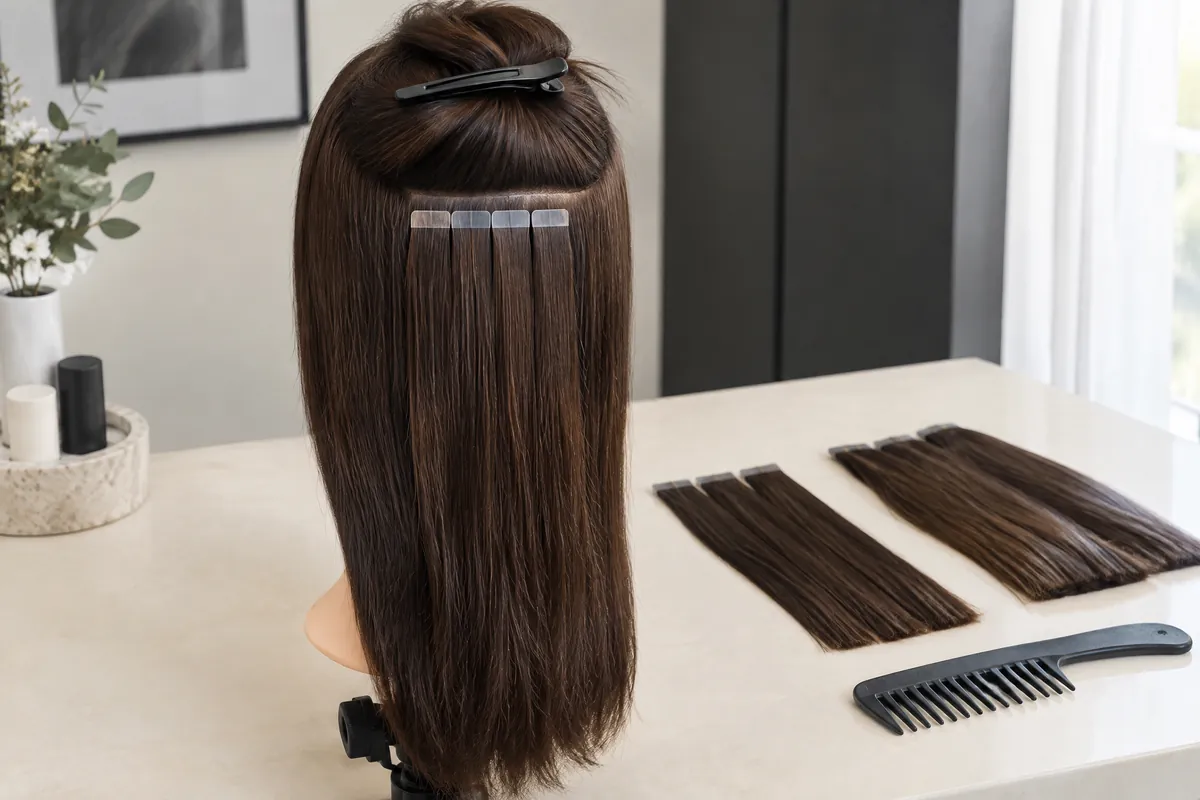
Ask the fitter to show the proposed supporting sections and explain how the added hair would be distributed. A small connector is not proof of a light overall arrangement. Neither a flat shape nor the absence of adhesive establishes suitability by itself. Compare the complete proposal: the amount of added hair, its placement, the natural hair carrying it and the removal process.
Share your bleaching, colouring, perming and straightening history, including where processing overlaps. Mention previous breakage or uncomfortable fittings. The British Association of Dermatologists explains that traction-related hair loss can involve extensions and tight hairstyles, and that chemical relaxers combined with such tension increase risk. This supports discussing processed hair and pulling together, not treating them as unrelated concerns.2
Which natural hair covers the attachment?
Covering hair is the hair that falls over a connection. It may look sufficient with your head still and hair down, yet shift when you tuck a side behind an ear. Ask to consider your normal parting, a loose low tie and the front sections you move repeatedly. Do not judge concealment solely from a waved rear-view reference.
Use these everyday movements as consultation prompts:
- Show the parting you normally wear, including any crown whorl.
- Demonstrate your comfortable tie-back rather than a tighter salon version.
- Wear your glasses and show which side you tuck behind the ear.
- Explain any helmet or protective headwear you must keep using.
Vit So's discussion of hair extensions for fine hair makes retained-length fullness a separate goal from a longer style. Apply that distinction to your own priorities: decide whether discretion in a workday ponytail matters more than extra length worn loose. If the proposed placement conflicts with a hairstyle you need, change the design brief rather than forcing the tie.
Rehearse the workload of an ordinary wash day
Before committing, write down what happens on your busiest wash day. Perhaps you shower after exercise and leave for work soon afterwards, or wash late and go straight to bed. Map the proposed care onto that sequence. The relevant question is not whether you could manage it once; it is whether you could repeat it when tired or rushed.
| Task | What to establish with the fitter | What to prepare at home |
|---|---|---|
| Washing | How to reach the scalp and which products may touch connections | The actual product instructions, not a generic extension shopping list |
| Detangling | Where to support the hair and which tool suits the arrangement | A demonstration you can repeat without pulling through resistance |
| Drying | Which areas need drying and how to handle connections | Enough time and access to your usual drying equipment |
| Exercise and bedtime | How to manage sweat, loose lengths and any permitted tie | A routine that does not depend on a tight bun or skipping washing |
The American Academy of Dermatology recommends washing as needed for your hair type and maintaining natural-hair care during extension wear. For clip-in extensions, it advises removing them before washing your natural hair. That is a specific instruction for removable pieces, not a reason to remove or loosen fitted connections yourself.1
Request a hands-on demonstration of supporting a section while working through the ends. If the brush catches, stop and locate the resistance; do not pull harder to finish faster. Ask how the fitter wants you to deal with a knot near a connection. Home care should reduce avoidable pulling, not become a daily test of how firmly an attachment holds.
General AAD styling guidance recommends limiting handling of wet hair, allowing partial air-drying before styling and reducing blow-drying frequency to limit damage. It also warns that excessive heat can damage any hair type. With fitted hair, ask how these principles fit the specific fibre and attachment drying instructions; do not assume overnight air-drying or extra hot-tool passes are appropriate.3
Try a styling-only finish for the right reason
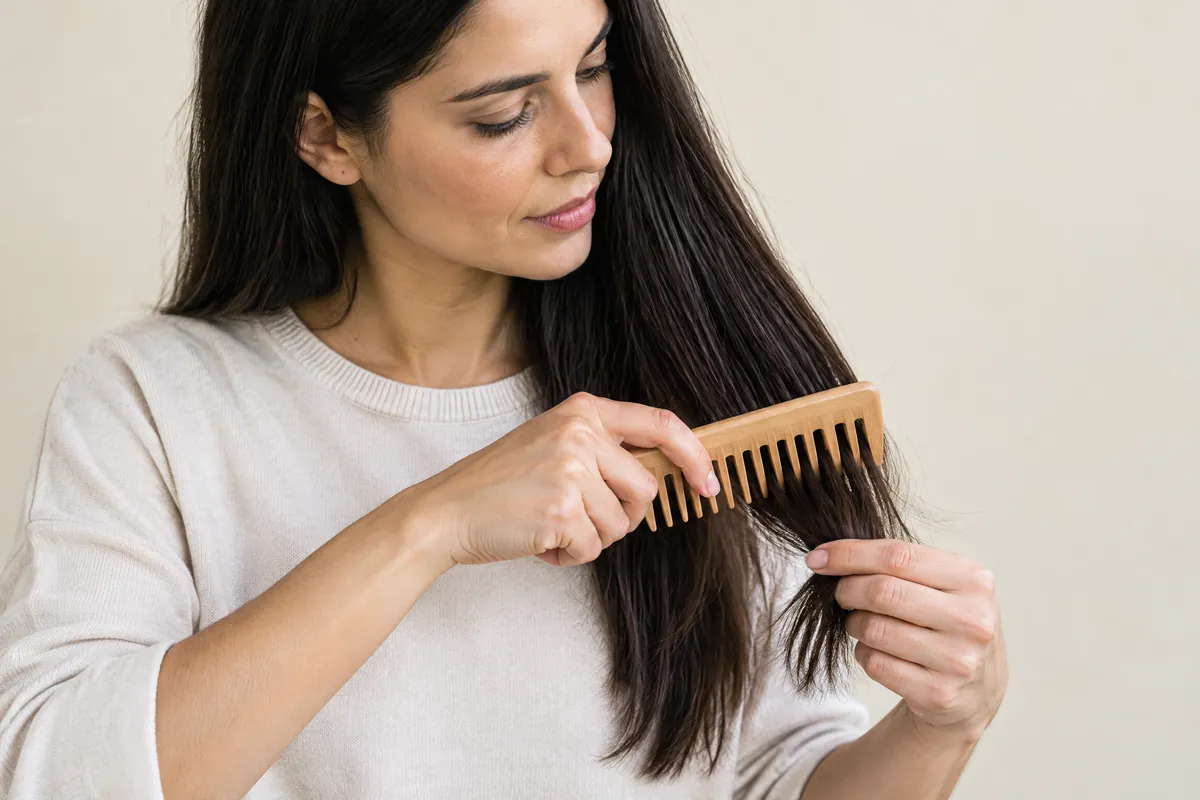
If the main complaint is a flat crown, demonstrate the root lift you like before considering more hair through the ends. Ask for a finish with your usual parting and manageable movement. If the concern is a wispy bottom edge, styling can curve the ends together temporarily, but it cannot create new strands or permanently change that edge. A cut may address the outline more directly.
A wash and blow dry at Vit So is described separately from cutting. Say that you want to retain all length if you are comparing a finish first. Additional curling, pinned sections or accessories need their own scope discussion; they should not silently become part of a simple wash-and-dry request.
Afterwards, assess the specific feature you wanted: did lift at the crown solve the visual concern, or do the ends still feel too sparse? Consider the result after your actual journey and activities, not only in the salon mirror. Hong Kong rain, a commute involving headwear or a workout may change a temporary finish. No fixed duration is needed for this comparison.
Decision prompt: if a temporary finish satisfies the occasion, avoid turning a one-evening goal into a daily attachment-care commitment. If length itself remains essential, return to the longer-outline discussion with that priority clearly stated.
Include removal and support in the original decision
A fitting quote is only one part of the commitment. Ask which checks are recommended, how to report a slipped or tangled connection and who will assess removal. Keep any supplied method details and care instructions. If you later seek help elsewhere, that information is more useful than a photograph of the loose finished hair alone.
Separate removal from reuse. Attractive lengths do not establish that the attachment ends can be fitted again, or that your natural hair should carry the same arrangement next time. Ask how the hair will be examined after removal and whether a blending cut would need adjustment. Do not schedule automatic repeat fitting simply because you like the added hair.
Clarify the support terms in writing: the contact route for a problem, what assessment involves and which work has a separate charge. Vit So's published haircut, colour and perm correction assurance excludes extensions. Do not treat that assurance as an extension repair, replacement or refund promise. Ask specifically about the arrangement proposed for the extension work.
The AAD advises professional fitting, responding to pain or a headache by having the affected area loosened, and taking breaks from extension wear. Repeated pulling can cause traction alopecia, including permanent hair loss. Discomfort is a reason to act promptly, not evidence that the installation is settling correctly.1
Avoid pulling out, cutting through or dissolving an unfamiliar connection at home. Contact the fitting professional about a safe assessment and removal plan. Persistent soreness, unusual shedding or a new scalp concern warrants healthcare advice; a cosmetic fitting discussion cannot establish its cause or provide hair-regrowth treatment. This boundary should support sensible action, not frighten you away from every styling choice.
See how the trade-offs work in two hypothetical briefs
Brief A: keep the collarbone length. Imagine fine hair with a light-looking back edge, usually worn straight and in a low ponytail. The first comparison is a tidier perimeter, a temporary inward bend, or a modest fuller-end proposal. Extra length has no special value here unless the reader actually wants it. Ponytail concealment and the natural hair carrying attachments remain important even for volume-only work.
Brief B: gain a longer loose outline. Imagine shoulder-level layers with a chest-length waved reference. The consultation should include a straight reference as well. If the transition looks convincing only with frequent curling, decide whether that styling obligation is acceptable. A shorter target may deliver enough length while requiring a different blend; it is a design compromise, not a promised reduction in risk.
In both hypothetical examples, rank the non-negotiable first. It might be keeping natural length, wearing a workday tie or avoiding regular heated styling. Then name the feature you can compromise on. This gives the fitter a useful choice to design around, instead of an instruction to maximise length and fullness regardless of everything else.
Bring a compact brief, not just an inspiration picture
Prepare one note with your desired endpoint and the area you want fuller. Add photographs of ordinary dry hair from the back and sides, plus your everyday tie-back. Use consistent light and avoid filters. If a reference involves waves, explain whether those waves are part of the goal or merely the way the length is shown.
Before agreeing to work, bring these practical details:
- Record colour, bleach, perm and straightening history, including affected sections.
- Note your washing pattern, drying habits, exercise and essential headwear.
- Identify the natural lengths and front pieces you do not want cut.
- Ask to see handling around the proposed connection, with suitable tools.
- Request separate scope for hair supply, fitting, blending, checks and removal.
- State whether a smaller change or styling-only option remains acceptable.
End the conversation with a clear choice rather than a bundle of undecided requests. If you choose fuller ends, retain that boundary. If you choose length, agree on the everyday texture used to judge the blend. If you choose styling alone, specify the finish and whether cutting is excluded. The right commitment is the one whose appearance and routine both make sense to you.
Questions & answers
Does fine hair mean I cannot have extensions?
Not necessarily. Fine strands alone do not settle suitability. Supporting sections, coverage, processing history and the complete amount of added hair matter. Ask how these features affect your proposal; a smaller design or no fitting can be sensible outcomes.
Can I keep using my normal conditioner?
Check the fibre instructions and where conditioner may touch connections. Bring your product name or label to the appointment. You may need a different application pattern, not necessarily an entirely new range or less natural-hair care.
Will a shorter extension design take less care?
Not automatically. There may be fewer added lengths to organise, but connections still affect washing, handling and removal. Compare the actual routines for two proposals. Retaining length makes sense when fuller ends are your real priority.
Should I fit new extensions just before travelling?
Consider your access to drying tools, care time and professional help while away. Ask about the assessment and fitting sequence before travelling. If managing the routine or a connection problem seems impractical, consider temporary styling or postponement.
Can a blending cut leave my natural hair shorter after removal?
It can if natural sections are shortened for blending. Agree which pieces may be cut and ask how the haircut would sit without added hair. Preserving every natural length may limit the longer outline that can be blended convincingly.
Put the next step into practice
Develop your understanding of shape, cutting and styling with structured learning at Canvas. Hair styling courses in Hong Kong。
Explore practical guides for a clearer plan before your next style change. Canvas hair and beauty journal。
Tell the team which cutting or styling skills you would like to learn. Contact Canvas Academy。
Sources & further reading
- How to prevent hair damage from a weave or extensions — American Academy of Dermatology
Explains tension-related damage, professional fitting, responding to pain or headache, continuing natural-hair care, removing clip-ins before washing and taking breaks from extension wear.
- Traction alopecia — British Association of Dermatologists
Explains repeated pulling, the role of extensions and tight hairstyles, increased risk when combined with chemical relaxers, and possible symptoms such as soreness, itching and flaking.
- Hair styling without damage — American Academy of Dermatology
Offers general guidance on limiting wet-hair handling, partial air-drying, reducing blow-drying frequency and avoiding excessive heat when planning a manageable styling routine.