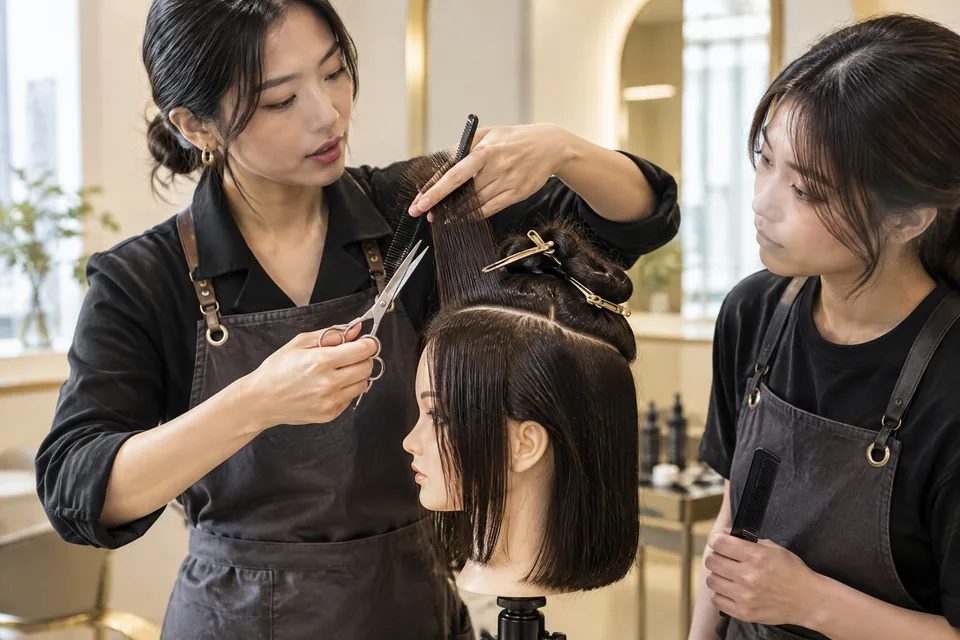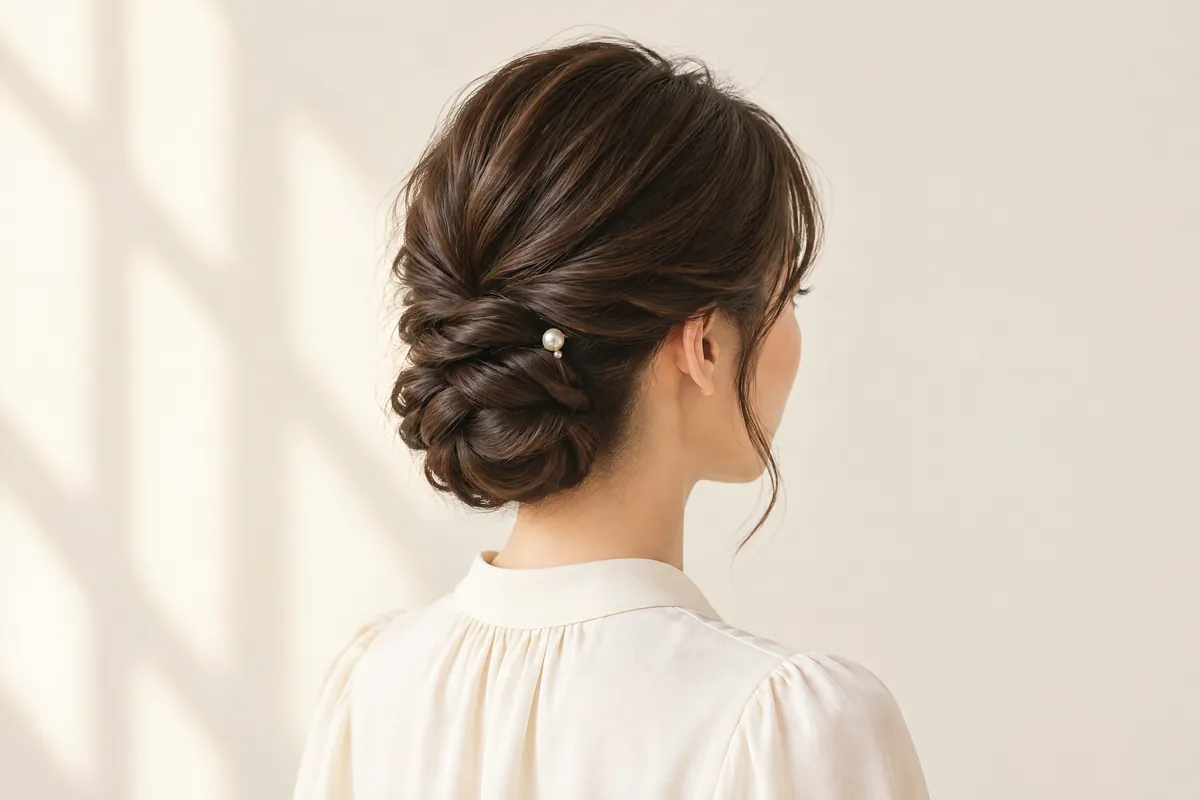
Start with the outline, not the occasion label
A wedding, graduation and formal dinner can begin with the same side part and softly shaped ends. What changes is the space available around that shape. A veil needs an attachment point. A cap occupies the upper head. An evening outfit brings collars, earrings and movement into the decision. Choose the base outline first, then check what each occasion adds.
Look at a reference from three directions. From the front, notice the parting and how much forehead or ear is visible. From the side, identify the height above the crown and any hair beside the cheek. From behind, check where the ends or gathered shape sit. These details explain a preference more clearly than calling everything romantic or elegant.
For an ordinary salon finish, Vit So's hair styling information distinguishes loose movement from gathered shapes. Describe the shape you want rather than naming a tool: bends below the cheek, a clear left ear or a compact gathering beneath the crown. That gives the appointment a more useful starting point than asking for something suitable for everything.
Keep three decisions in a short note:
- The detail to preserve: your parting, fringe, ear exposure or visible length.
- The area to leave free: the cap band, veil attachment or outfit collar.
- The change you want later: decoration only, a small adjustment or a genuinely different hairstyle.
Compare loose, partly gathered and up styles
Loose hair is not inherently casual, and fully gathered hair is not automatically more appropriate for a wedding. The difference is where the length goes and what needs supporting. Compare each option with the things that will touch your head and shoulders. The table below is a planning comparison, not a prediction of how long any finish will last.
| Base outline | With a veil | With a graduation cap | At dinner or while dancing | Main compromise |
|---|---|---|---|---|
| Loose shaped hair | A separate attachment may be needed; show the actual comb | Leaves the crown available if root height stays modest | Keeps movement visible, but ends can meet jewellery or shoulders | More loose hair to manage near the face |
| Partly gathered hair | The gathering and veil attachment need their own space | Place the fastening outside the cap's contact area | Clears selected front sections while retaining falling length | Short layers may not reach the chosen fastening |
| Fully gathered hair | The veil may sit above or below the shape, depending on its attachment | A lower or smaller shape may fit better than a crown-level bun | Reveals the neckline and reduces loose length against clothing | Collar height and seated head position can restrict placement |
Read across a row rather than choosing by occasion alone. If you like the partly gathered option for all three, the location of its fastening becomes the key decision. Moving it slightly lower may free the cap area but bring it closer to a high collar. A practical adjustment solves one conflict without quietly creating another.
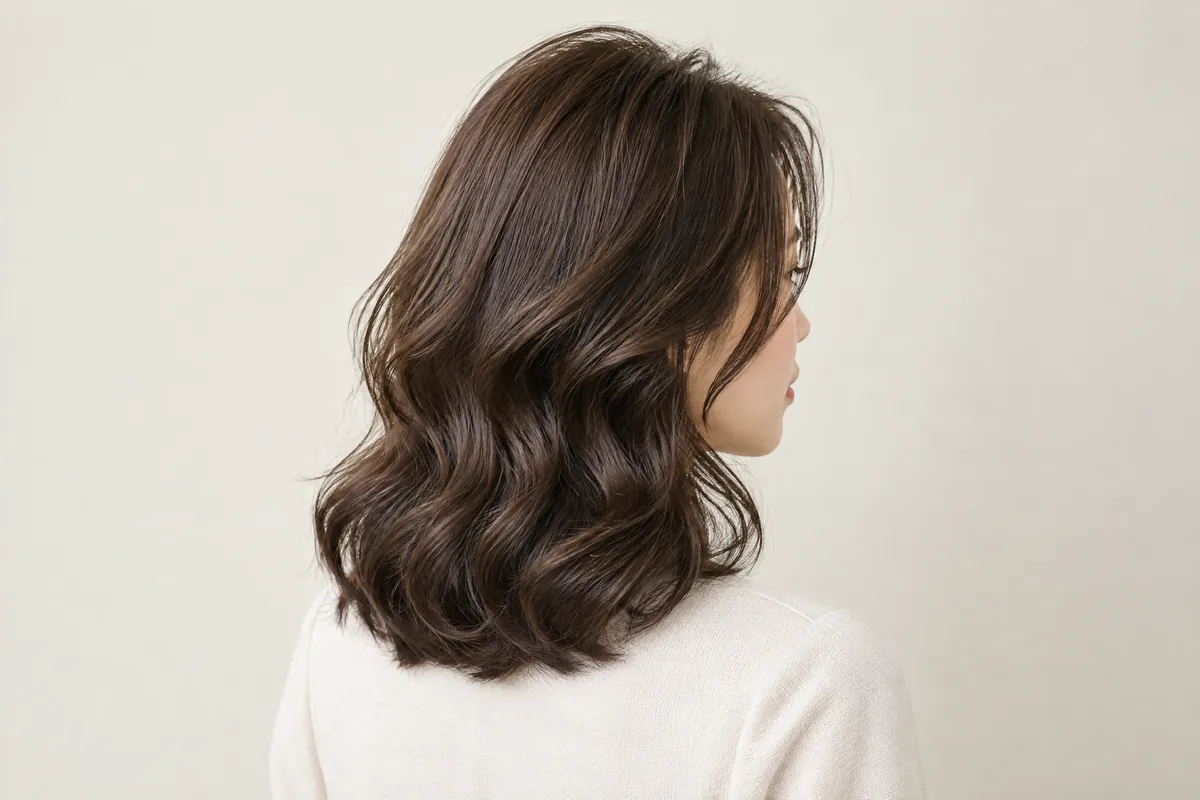
Give the veil support without hiding the hair
A veil changes both the attachment and the photograph. Placed above a gathering, it may cover the detail you liked at the back. Placed lower, it leaves more hair visible above it but changes where the fabric falls. Neither placement is a universal answer. Look at the hairstyle with the veil on, then again with it removed.
Separate decoration from structural support
Ask whether the decorative piece holds the hairstyle together or simply sits over a separate fastening. This matters when the veil comes off before dinner. If removing a comb also releases the gathered sections, the planned change is structural, not just decorative. A smaller removable ornament over an independently supported shape can be a simpler changeover to discuss.
Bring the actual veil, not just its shop photograph. Show its comb width and the attachment on the reverse. One Fab Day's trial checklist recommends taking the veil, hair accessories, earrings and a dress photograph, together with style references. These items let the fitting address the whole outfit rather than an isolated rear-view image. 2
For a wedding-specific appointment, Vit So's bridal hair enquiry is framed around in-salon hair work. Include when the veil will be removed and whether the next outfit has a different collar. A trial or second look needs a separate discussion; neither follows automatically from choosing a wedding hairstyle.
Let the graduation cap set the upper boundary
A cap should be part of the first fitting, not an object balanced on top after the hairstyle is finished. Put it on in the direction your institution requires. Check where its band touches the forehead, sides and back. A raised crown or bulky fastening in that contact area can compete with the cap, even if it looks attractive without it.
For HKU ceremonies, the official instructions place the seam-free base lining at the front, the seam at the back and the tassel on the left. Follow your own institution's directions rather than treating tassel placement seen in overseas photographs as universal. Establish the correct cap position before deciding which front detail remains visible. 3
Compare the cap-on and cap-off versions
With the cap on, look down and turn gently as you would when walking or receiving a certificate. Then remove it carefully and inspect the front and crown again. If a fringe becomes pressed into a shape you dislike, consider a different fringe direction or less height beneath the band. Adding more volume before the ceremony may work against the space available.
Design prompt: reserve the cap's contact area first, then place any gathering outside it. Do not start with a high bun and expect the cap to find room.
For a hypothetical shoulder-length style, a side part with bends through the ends could remain loose beneath the cap. Gathering only the side sections below its rear edge might clear the face. Test the actual fit before adopting that version; the shorter layers, cap size and fastening position decide whether it makes sense.
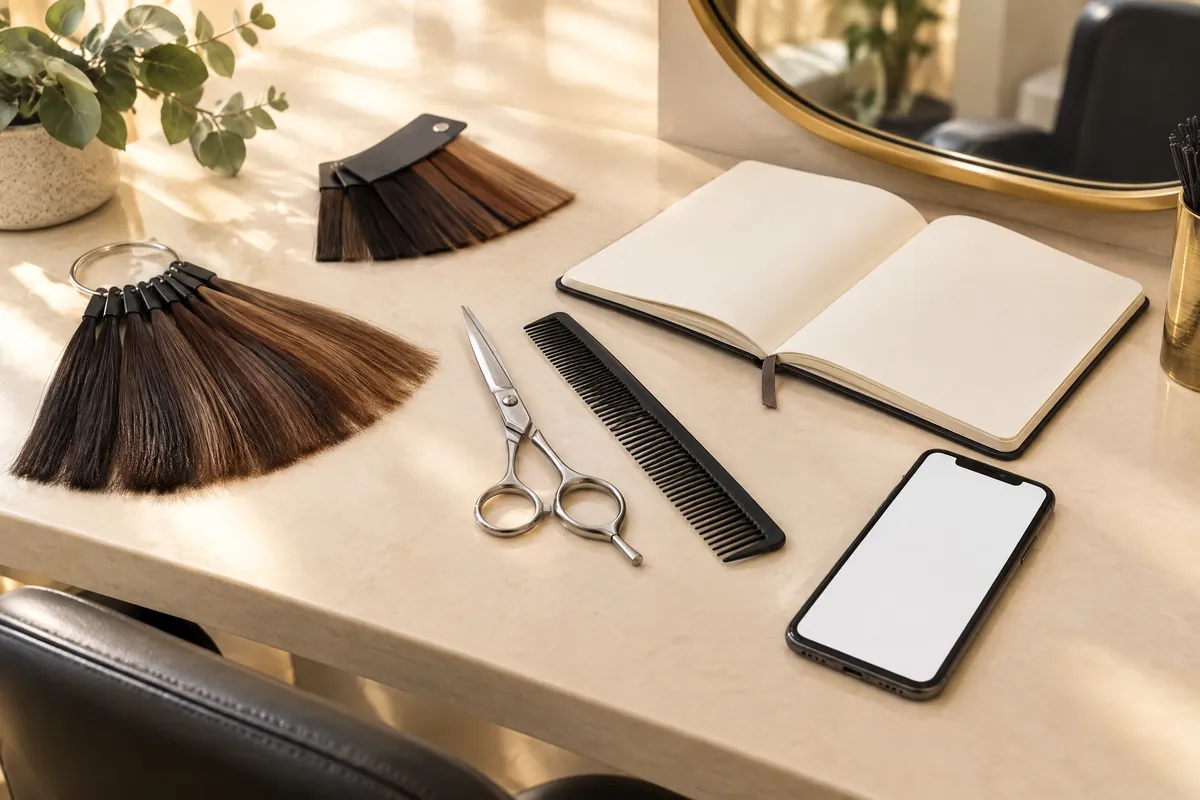
Test dinner hair in a chair, not only in a mirror
At dinner, the most important constraint may be behind you. Sit in a chair resembling the one you expect to use and turn towards someone beside you. A very low bun can meet a collar or chair back. Loose ends can rest against textured shoulder detail. Moving the gathering upwards is one option, but a smaller shape may preserve the preferred outline with less interference.
Try the earrings and glasses together. A long earring may disappear behind a loose section, while an exposed ear may make a smaller accessory feel more noticeable. The arms of glasses need their usual path over the ears. Choose which feature deserves space rather than making every visible detail compete in the same small area.
Decide what movement is welcome
For dancing, distinguish hair that moves attractively from hair you repeatedly push out of your eyes. A half-up shape may keep the front clearer without removing the length you enjoy. If an entirely open neckline matters more, a gathered outline is another direction. Neither choice requires pulling every short front layer into a distant fastening.
Do a brief movement check:
- Look down as if reading a menu or holding a phone.
- Turn to each side, then sit back normally.
- Put on and remove your glasses if you wear them.
- Notice whether a pin presses, the collar catches or loose hair blocks your view.
Use the result to change a specific detail, such as one cheek section or the bun position. Do not keep tightening the whole style to solve a problem in one area. Comfort is part of the design, and a painful pin or pulling section should be addressed rather than accepted for the sake of the finished photograph.
Match the preparation to your real hair
Your shortest layers matter as much as the longest ends. Fine strands do not automatically require a large added hairpiece, and dense hair does not automatically suit a heavy accessory. Show the current front, sides and back, with your hair loose. Discuss a compact shape or a smaller interpretation if the reference depends on much more length or fullness.
Tell the stylist about colouring, bleaching, perming or straightening, especially when different parts of the lengths have different treatment histories. Mention ends that tangle or break easily and any extensions already fitted. These details affect preparation, tools and the amount of manipulation to discuss. A temporary finish is not a repair treatment, and curls created for an occasion are not a perm.
Avoid repeatedly reheating your hair while trying to copy a reference beforehand. The American Academy of Dermatology says excessive heat can damage any hair type and advises using flat irons on dry hair at low or medium heat. Showing ordinary hair photographs is more useful than arriving with heavily restyled hair that conceals its starting condition. 1
Ask for washing instructions for the agreed appointment. Freshly washed hair is not universally wrong for an updo, and yesterday's product is not universally helpful. Describe dry shampoo, oil or firm-hold spray already present. Choose clothing you can remove without dragging it across the finished style, particularly if you will dress or apply makeup after leaving the salon.
Plan the changeover before the first pin goes in
A successful changeover preserves the part you still want. Removing a cap is different from taking down a bun. Replacing a veil with a small decoration is different from rebuilding loose waves after hours in a gathered shape. Name the change precisely so the starting style can be designed around it, including what you can manage yourself.
| Stage | Prepare in advance | Check while styling | Keep the later action simple |
|---|---|---|---|
| Veil for ceremony, no veil for dinner | Actual veil, dress-back image and later neckline | Identify the veil fastening separately from the hairstyle's support | Remove only the agreed veil attachment; leave structural pins alone |
| Cap for ceremony, no cap for portraits | Correctly sized cap and institution's wearing instructions | Examine the band contact area and cap-off front shape | Lift off carefully; adjust only a section demonstrated beforehand |
| Seated dinner followed by dancing | Earrings, glasses and photographs of the collar | Check turning, sitting and front sections near the eyes | Use the agreed small tuck or adjustment, not a new improvised updo |
| New outfit requiring a different shape | Outfit order and an explicit request for a second look | Decide whether the first style can remain or needs rebuilding | Arrange the additional work rather than treating it as decoration removal |
If a fitting or trial has been arranged, photograph the agreed front, side and back after the accessory is removed as well as before. One Fab Day suggests checking a trial look in daylight and artificial light. Use those photographs to choose between versions, not to infer an exact wear time for different weather or activity on the occasion itself. 2
Keep the salon finish separate from event attendance
For a dinner or graduation appointment, Vit So's event hair styling information separates a salon hair enquiry from makeup and venue arrangements. Give the time you must leave the salon, not only the ceremony or dinner start. Transport, dressing and earlier portraits belong in your own timetable; on-site help and later touch-ups are separate requests.
Write the sequence in order: salon finish, onward journey, outfit change, photographs, ceremony or dinner, then any accessory removal. Place a named person or confirmed service beside any change requiring help. If nobody can rebuild the hair later, choose a starting outline that remains appealing after removing only the headwear. This is often more useful than planning two incompatible looks.
At the end of the occasion, remove accessories and supports gently before trying to detangle the hair. Avoid forceful combing through a firm-held shape. The American Academy of Dermatology warns that combing after applying long-lasting-hold products can cause breakage. Ask about handling the products used and stop pulling if a section resists. 1
Questions & answers
Can I keep my natural curls for a formal occasion?
Yes. A formal finish can retain your natural pattern while changing the parting or gathering selected sections. Share how your curls behave after washing and under headwear. Choose the placement you enjoy rather than straightening solely because the occasion is formal.
Is a veil needed to make a wedding hairstyle look bridal?
No. The hairstyle can complement the dress with a smaller headpiece or none at all. Without a veil, you have more placement freedom. Choose a detail you enjoy, such as a clear neckline, rather than adding an accessory only to signal the occasion.
Should I cut my fringe immediately before graduation?
Discuss the proposed length with the cap position in mind. A new fringe may sit differently after headwear. Keeping a familiar fringe is reasonable when there is little opportunity to check a new shape before the ceremony.
Can I reuse the same reference for occasions on separate dates?
Yes, but update your hair and outfit photographs for each date. New layers, chemical services or different accessories may change the workable version. Reuse the reference to communicate taste, not to insist on identical fastenings and curls.
What if my outfit is undecided when I enquire?
Share the likely neckline and any fixed requirement, such as a cap or veil. Choose a flexible outline and settle the gathering position when the collar is decided. Send an updated outfit photograph before the appointment if that detail changes.
Put the next step into practice
Develop your understanding of shape, cutting and styling with structured learning at Canvas. Hair styling courses in Hong Kong。
Explore practical guides for a clearer plan before your next style change. Canvas hair and beauty journal。
Tell the team which cutting or styling skills you would like to learn. Contact Canvas Academy。
Sources & further reading
- Hair styling without damage — American Academy of Dermatology
Practical advice on limiting excessive heat, using flat irons on dry hair and avoiding forceful combing after long-lasting-hold products.
- Your Essential Wedding Hair & Makeup Trial Checklist — One Fab Day
A wedding preparation checklist covering actual veils, accessories, earrings, dress photographs, individual preparation instructions and checking an arranged trial in different lighting.
- Academic Dress: Suggested Attire — The University of Hong Kong
HKU's specific cap orientation and tassel guidance help graduates establish the correct headwear position before testing their hairstyle. Other institutions may give different directions.