Start with the hair that will still be there
A colour reference may owe its appeal to pale tips, a bright face frame or a dark-to-light transition. A haircut reference may remove those very areas. Treating the two pictures as separate shopping choices can therefore produce a confused brief. Begin by comparing where the colour sits with where your proposed finished ends will sit.
On a current back-view photograph, mark a provisional cut line using an ordinary body landmark: above the shoulder, at the collarbone or below it. Keep the original image alongside the marked version. The line is a discussion aid, not an instruction to cut immediately. Include a side view because the front may finish somewhere different from the back.
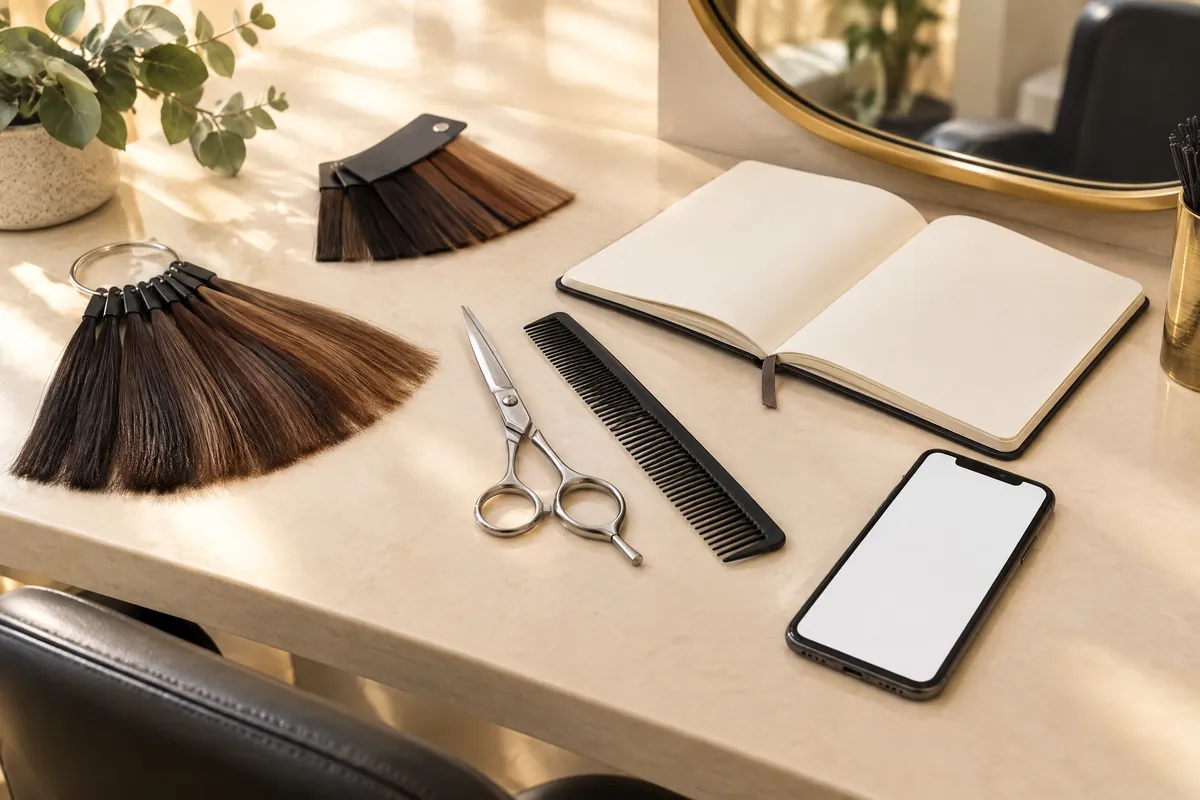
Sort the visible hair into three groups. The first is length you expect to remove. The second is length you definitely want to retain. The third is uncertain: shorter layers, face-framing sections or ends whose condition needs assessment. Colour placed in that third group should remain provisional until you have discussed the cut.
- Remove: ask whether the proposed colour work would mainly land below the new outline.
- Retain: identify the brightness or depth you want visible in the finished shape.
- Discuss: flag any section whose final length, condition or everyday position is undecided.
Fix the dry outline before deciding how much brightness to add
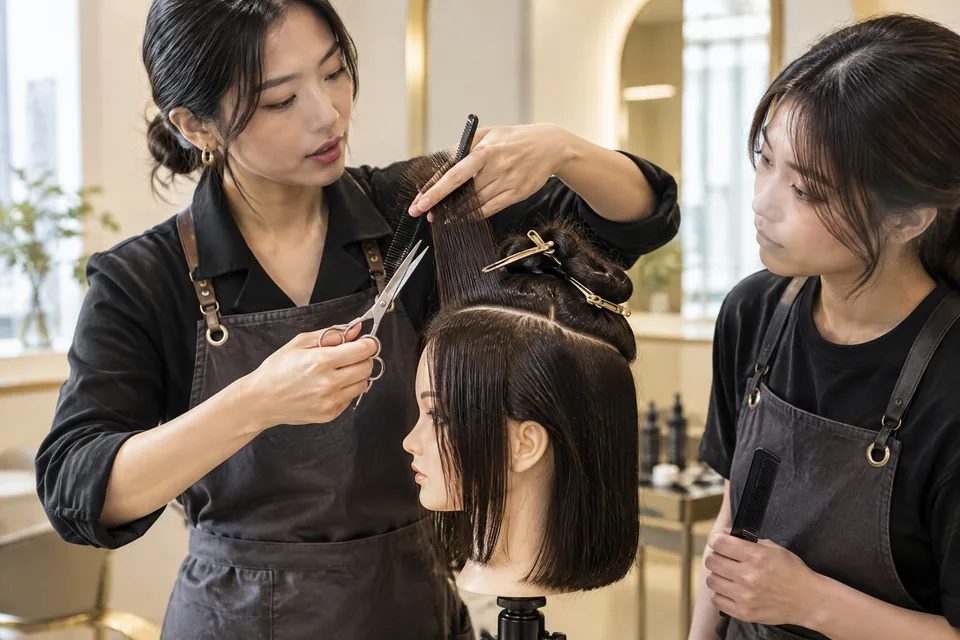
The perimeter is the outer edge formed by the longest ends. Layers are shorter lengths within that shape. Keeping the perimeter does not mean keeping every layer, and shortening the perimeter does not require the same reduction around the face. Write those choices separately, especially when bright front pieces are part of your colour reference.
Protect the shortest length that must remain useful
Demonstrate your normal ponytail or bun, rather than describing all shoulder-length hair as tieable. Front pieces and nape hair have different distances to travel into a tie. Say whether loose strands are welcome or whether you need them contained without extra clips. This can change both the cutting boundary and which coloured sections remain visible.
Judge the proposed end position in your ordinary dry shape. A stretched curl, brushed-out wave and naturally dried section may show different apparent lengths. Show where hair bends or turns out, and explain whether you usually smooth it with a brush. A reference styled into waves should not be your only evidence for choosing a straight everyday outline.
For a discussion about a women's haircut sheung wan, Vit So's service information distinguishes the longest end line from layers and front pieces. Bring that same separation to a combined change: specify the minimum back length, the shortest front piece and the amount of weight you want to retain at the ends.
If your ends look sparse, compare a fuller perimeter with extra layering before deciding how much brightness to expose.
Design the colour for the new shape, not the old length
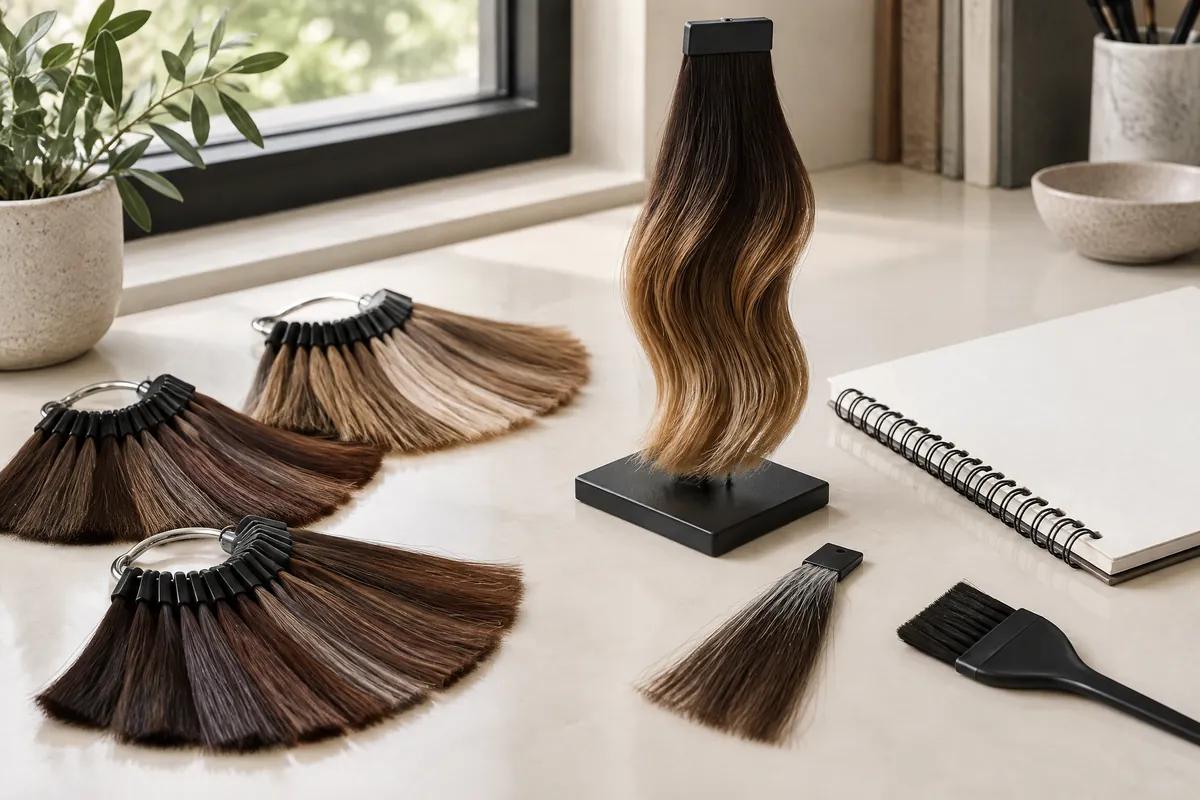
Once the outline is provisional, decide where brightness should begin and where dark hair should remain. Depth describes how light or dark a colour looks; tone describes its warm, cool or neutral character. Placement is a separate decision. A pleasing shade on a swatch will not tell you whether you want it near the face, through the lengths or only at the ends.
Compare the reference at your intended end line
Imagine cropping the colour reference at the length you want. Would the feature you like still exist? A long, gradual transition may lose its lightest section when shortened. A compact colour pattern near the face may remain visible, but a new fringe or shorter side section could change its proportion. Ask which feature matters most before borrowing the whole look.
| Colour feature | If the relevant hair is removed | If it remains in the finished cut | Useful design choice |
|---|---|---|---|
| Pale tips | The brightest section disappears | Lightness continues to define the edge | Move brightness higher, retain length or accept a darker edge |
| A warm mid-length band | Some or all of the band may go | It may become more prominent near the new ends | Discuss tone adjustment in retained hair |
| Bright face-framing pieces | Shortening may reduce their visible length | They can remain a focal point | Agree front length before choosing their width |
| Dark lower sections beneath highlights | Cutting may expose a different mix | Depth can remain visible between light strands | Compare the cut loose and in your usual tie |
These are design comparisons, not predictions of how your hair will process. For an all-over colour request, the main question may be coverage rather than highlight placement. Separate natural regrowth, previously coloured lengths and the new perimeter. They need not share the same starting colour or require identical work to produce a coherent result.
Keep the history of retained hair in the conversation
Cutting off some processed ends does not make the remaining lengths chemically untouched. Record earlier home dye, salon colour, bleach, henna, perming and straightening where relevant. Approximate dates and the areas treated are more useful than guessing a formula. If the front was lightened separately, do not describe the entire head simply as previously coloured.
The American Academy of Dermatology notes that appearance-enhancing treatments can leave hair dry and brittle. Its advice also explains why substantial lightening can involve more damage than a modest shade change. That makes the condition of the hair you keep part of the design decision, not merely a question about which ends to remove.1
Tell the stylist what you notice during ordinary handling: repeated tangling, rough-feeling ends or short broken pieces. Do not pull strands hard to test them yourself. Photos help locate these concerns, but they cannot establish strand strength or show how an unfamiliar colour product will behave. Ask whether an in-person assessment or a strand test is needed for the proposed work.
Keep the two testing questions separate. A strand test concerns how a sample of hair responds to the planned process; product sensitivity preparation concerns reactions to the product. Mention previous dye reactions early and ask for the proposed product's preparation instructions. Neither a photograph nor a successful-looking strand sample settles every question about the appointment.
Before agreeing to a more ambitious colour, choose which compromise you could actually enjoy:
- A warmer or deeper result that keeps more of your preferred length.
- A shorter outline that removes unwanted ends, with colour designed around what remains.
- A cut now and a separate colour decision after the new shape is assessed.
Compare the service scope and price without counting twice
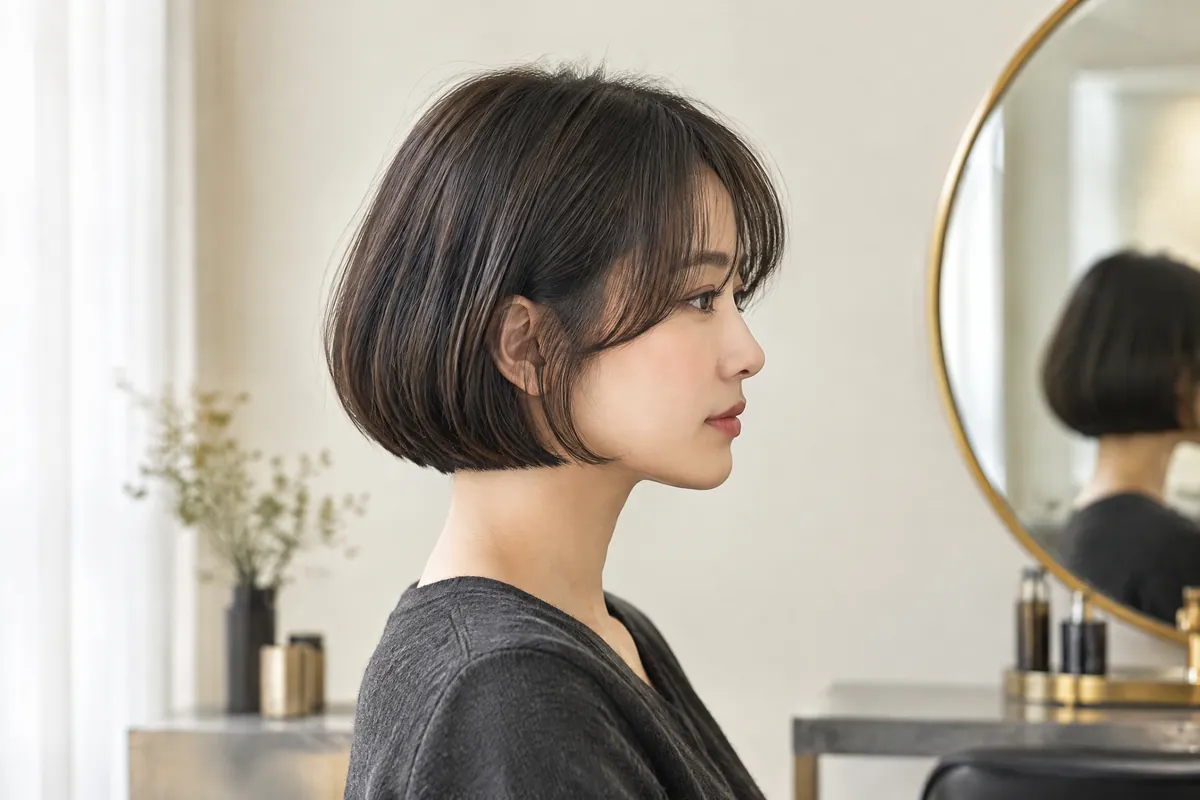
Read a package as a list of named work, not as a blank allowance for any colour change. Standard colour and a Balayage design are different scopes. A haircut inside a package should not be added again as though it were missing. Conversely, a toner or additional lightening should not be assumed included just because the finished reference looks light.
Vit So's women's haircut prices include individual entries and combined packages. The figures below were read on 6 November 2026 and are in Hong Kong dollars; they are Vit So's published charges, not Canvas fees. Use the inclusions column to compare the actual work before choosing between a standalone cut and a combined visit.
| Published entry | Published charge | Named scope | What to clarify for your plan |
|---|---|---|---|
| Women's wash, cut and blow-dry | HK$480 | Washing, cutting and blow-drying | Whether any requested work is separate |
| Tinting | HK$800–1,000 | Tinting entry | Coverage and applicable charge; not an automatic combined total |
| Women's cut, colour and protection package | HK$1,780 or HK$1,880 | Wash, cut, blow-dry, standard colour and pre-service protection | Which option applies and whether the colour goal fits |
| Women's cut and Balayage / Ombré package | HK$2,980–3,680 | Wash, cut, blow-dry, design, one bleaching session, one toner and protection | Design scope, applicable charge and any additional work |
| Below-chest length note | Additional HK$200 | Published length surcharge | Which selected services it affects |
Next to the proposed quote, mark each component as included, separately quoted or not requested. If toner appears in the package and again as an extra, ask whether the extra represents genuinely different work. Do the same for cutting and protection. A lower headline figure is not necessarily the better comparison if the included work differs.
The Hong Kong Consumer Council recommends finding out about hair-length and other surcharges beforehand, and retaining a receipt listing the services provided. Ask for the length basis when a substantial cut is planned: your arriving length and your finished length are different facts, and the published note alone does not resolve how it applies.2
Send current-hair images before choosing the appointment scope
Prepare front, side and back views in natural light, with the hair worn as it normally falls. Add a close view of the roots and a separate view of the ends if colour bands are hard to see. Avoid colour-changing filters. Include an unmarked version as well as any annotated copy so the original colour and outline remain visible.
For a hair colour consultation with Vit So, send your current hair details, previous processing and preferred dates together. Ask how the consultation is arranged and whether it has a fee. A message begins an enquiry rather than reserving an appointment, so agree the service scope and time before making travel plans.
Use this sequence to keep the decisions connected:
- State the minimum finished dry length and any tying-back requirement.
- Identify existing colour that will be removed and colour that will remain.
- Pick one main colour priority: coverage, depth, tone or brightness placement.
- Share treatment history and ask about assessment or preparation needed.
- Match the proposed work to named inclusions, separate charges and your budget ceiling.
- Agree the appointment details after the technical plan is discussed.
Leave the physical order to the stylist. A substantial length change may call for removing excess length before detailed placement, followed by finishing adjustments. Another plan may keep the main cutting work later. The useful commitment from you is the intended finished shape; there is no need to insist on a universal cut-first or colour-first rule.
Test the plan with one realistic hypothetical example
Imagine hair below the chest with darker roots, brown mid-lengths and pale tips. The desired cut ends near the collarbone, while the colour reference shows a long fade into light ends. These are hypothetical details, not a client result. Start by locating the pale section against the proposed cut line rather than immediately requesting the reference's colour technique.
If most pale hair falls below that line, colouring those tips again is unlikely to contribute to the planned finished design. The choice becomes whether to retain a little more length, place new brightness in the retained hair or enjoy a darker shorter outline. Those options differ aesthetically; none should be presented as the only correct answer.
Now examine what the new ends would contain. If the brown mid-lengths become the perimeter, decide whether you like that depth and warmth. You might need less new colour than first imagined. If you want the same pale edge as the reference, that becomes work on retained, previously processed hair and needs a fresh discussion about condition and achievable colour.
Finally, choose what happens if the desired brightness cannot fit the agreed budget, hair assessment or available time. A shape-first visit lets you evaluate the new proportions before investing in colour, but involves another appointment if you continue. A combined visit links both decisions at once, provided the assessed work fits. Choose the compromise you would prefer to wear, not just the package name.
Questions & answers
Should I bring a haircut reference and a colour reference from different people?
Yes, if you identify the feature you like in each. A shorter cut and a long colour fade may conflict, so prioritise the end position or the colour pattern rather than requesting both photographs unchanged. Include references shown straight if that is how you normally wear your hair.
What if I decide on a much shorter cut after receiving a colour quote?
Tell the salon before the appointment. The shorter design may change the retained areas, placement and proposed work, but it does not establish an automatic price reduction. Ask for the revised scope and quote rather than expecting the earlier plan to transfer unchanged.
Can I keep my existing highlights and change only the haircut?
Possibly. Check where the lighter strands will finish after the proposed cut and whether their contrast still appeals to you. Keeping the colour can avoid adding a colour service, but the new shape may reveal uneven bands or remove your favourite bright sections. Evaluate those trade-offs first.
Does the protection included in a package mean I can choose any lightness?
No. Protection is a named cosmetic-care component, not a guarantee against processing damage or a replacement for assessing retained hair. Ask what result the stylist proposes for your history and condition, and compare a deeper or warmer alternative if the original brightness would require unsuitable work.
Should the face-framing colour match the length of a new fringe?
Discuss them together rather than matching them by a fixed rule. Fringe length, parting and how you sweep or tuck the front affect where colour is visible. A fine accent and a broad bright section create different emphasis; choose the amount of contrast you want around the face.
Put the next step into practice
Develop your understanding of shape, cutting and styling with structured learning at Canvas. Hair styling courses in Hong Kong。
Explore practical guides for a clearer plan before your next style change. Canvas hair and beauty journal。
Tell the team which cutting or styling skills you would like to learn. Contact Canvas Academy。
Sources & further reading
- Coloring and perming tips for healthier-looking hair
The American Academy of Dermatology explains dryness and brittleness from appearance-enhancing treatments and the greater damage involved in substantial lightening, helping readers weigh colour ambition against the hair they intend to retain.
- Consumers' Woes against Hair Salons Many and Varied - CHOICE # 456
The Hong Kong Consumer Council advises clarifying hair-length and other surcharges before salon services and retaining a receipt that lists the work provided, useful when comparing standalone services with packages.