Number the specification as well as the quotation
A quote number alone tells you which offer arrived last. It does not tell you whether the wig stayed the same. Use two labels: S1 for the first specification and Q1 for the first quotation. If you request a different length, create S2. If the seller changes only the price, the new offer can be Q2 against S1.
This distinction works in a phone note or a simple spreadsheet. Record the seller, issue date, quoted total in HK dollars, validity period and status beside each pair. Useful statuses are enquiry, quoted, awaiting clarification, accepted and superseded. An earlier offer should remain visible even after you choose a later one; do not overwrite its amount or attachments.
Save the original message or document, not just a cropped price screenshot. A line above the total may identify the selected base, and a line below it may exclude delivery or later styling. Your own log is a navigation aid, not a replacement for the seller's wording. Ask the seller to acknowledge your labels if theirs use a different numbering system.
Establish what the starting price actually describes
OWNSTRAND's published in-store custom references are 遞針旋 at HK$2,780, 全遞針 at HK$3,280 and 瑞士網 at HK$5,680. Their stated emphases concern the parting area, full top and front hairline respectively. The custom human hair wig price Hong Kong guidance connects these named options with a style-specific enquiry. Record the chosen name rather than treating the three figures as interchangeable offers.
The names should not be translated into an assumed lace-front, monofilament or silk-top specification. Changing from one named option to another changes the item being discussed. Equally, a published reference is not your accepted quotation. The document you retain needs to identify the particular request, any agreed inclusions and the seller's response to that request.
The Consumer Council recommends complete information about the real overall price and says comparisons should concern reasonably similar goods or services. Those principles explain why a price stripped of its scope is a poor comparison. For your log, put the total beside what it buys, and separate included services from optional or unresolved charges. 1

Write a specification another person can compare
Avoid a baseline that says only 'natural brown, medium length, comfortable cap'. Those words express an aim but leave room for different interpretations. Keep that aim, then add the agreed sample, reference image or manufacturer code. Where a detail has not been settled, write 'unresolved'. A blank field must not silently become evidence that two versions match.
Separate hair length from the finished cut
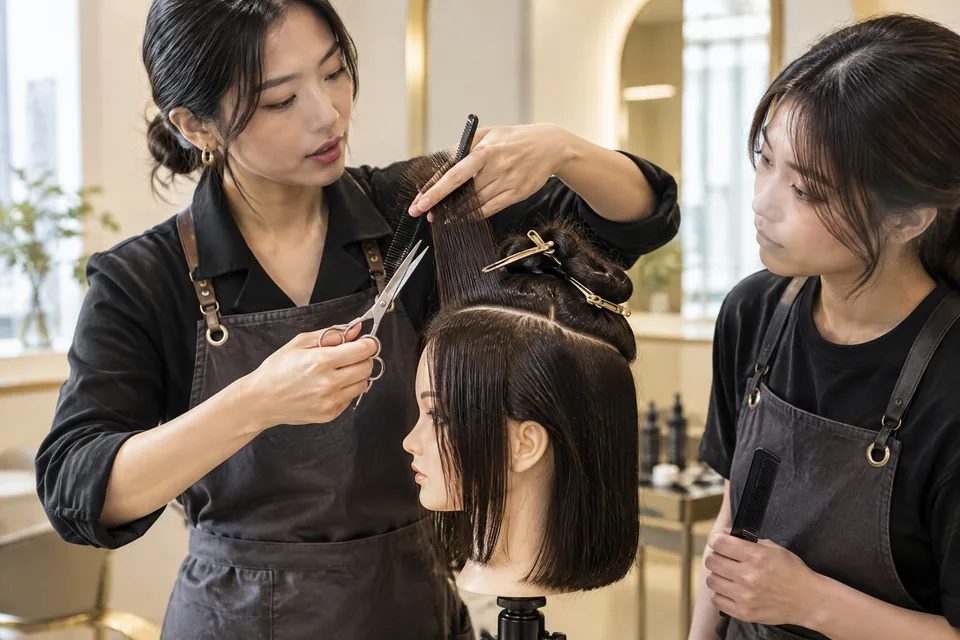
A chin-length bob describes a silhouette, while a supplied hair-length measurement may describe something else. Ask what is being measured and where the measurement begins. Record whether the quoted request concerns the hair before cutting or the agreed finished outline. Fringe length, layers and the position of the shortest face-framing section can matter even when the overall length sounds unchanged.
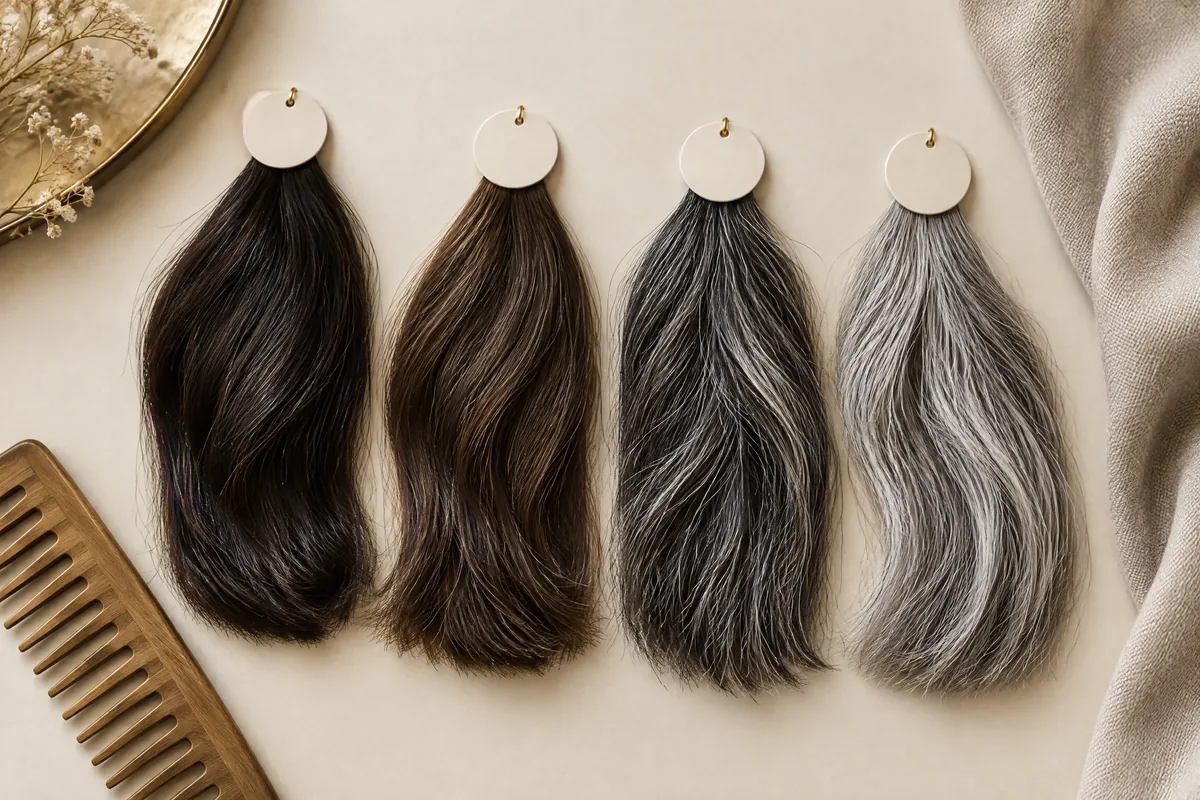
For colour, distinguish the agreed sample from a general preference. Note the shade reference, the direction of any highlights and the discussed grey proportion where relevant. A new reference photo is not automatically approval to change all three. Mark which features you intend to borrow from it and which details must remain from S1. Availability of a requested shade remains a separate question.
Keep construction and service scope in separate fields
Write down the actual named base or the construction stated for the specific model. Keep coverage area, size information and attachment details separate from hair colour and cut. This prevents 'same hairstyle' from being mistaken for 'same product'. A full wig and a smaller coverage piece should not share a comparison row merely because their colour looks similar.
OWNSTRAND describes sample viewing, head measurement, handmade work and a completion visit involving fitting, washing, cutting and blow-drying. Its custom human hair wig Hong Kong service provides the context for those stages. In your quotation record, distinguish the initial completion work from any later service you might request; do not turn a described process into an unlimited aftercare package.
Record each change in a delta table
A delta table is simply a list of differences between versions. It should answer what changed, who requested it and whether its effect on the quote is explained. Make one row per change rather than one row saying 'upgraded'. The illustration below is a hypothetical enquiry, not an OWNSTRAND quotation, charging policy or account of a customer's purchase.
| Field | S1 / Q1 baseline | S2 / Q2 request | Origin and price question |
|---|---|---|---|
| Length | Agreed chin-length outline | Shoulder-length outline requested | Buyer change; ask whether amount changes |
| Colour | Sample A, dark brown | Sample B with visible grey requested | Buyer change; ask about feasibility and cost effect |
| Base | 遞針旋 discussed | 全遞針 requested | Buyer change; different named option |
| Service scope | Completion cut and finish recorded | Later maintenance visit requested too | Buyer addition; ask if separately priced |
| Fit information | Measurement record M1 | M1 retained | No recorded change; seller acknowledgement needed |
| Total | Original quoted total saved | Revised total awaiting breakdown | Do not attribute the whole difference to length |
Notice that several changes happen together. Even if Q2 is higher, the table cannot tell you which change caused how much of the difference. Request a breakdown where available, or ask for an alternative offer retaining S1. Some custom work may be priced as a package; a seller may not have a separate tariff for every design detail.
If you want to isolate one choice, branch the request. Label S2A 'longer length only' and S2B 'longer length plus different base'. Ask for the relevant offers against those alternatives, with the other fields held constant. This takes more discussion but produces a decision you can actually make: whether the extra feature is worth its own additional commitment.

Compare custom and catalogue enquiries without merging them
A manufacturer catalogue enquiry needs an item identity as well as a look. Save the brand, model, colour code, listed fibre and size information. Keep a screenshot of the listing alongside the response about quotation and supply. A similar photograph is not sufficient to identify a replacement model, and a catalogue listing is not confirmation that your preferred colour is available.
OWNSTRAND's discussion of wig prices in Hong Kong separates its handmade custom references from quotations for particular manufacturer styles. Keep those routes in different sections of your log. You can compare their total commitments and suitability for your preferences, but a catalogue figure should not be presented as the new price of a named custom option.
| Comparison field | Handmade custom enquiry | Manufacturer catalogue enquiry |
|---|---|---|
| Item identity | Named custom option plus agreed specification | Brand, model and exact variant |
| Length and colour | Discussed outline and sample references | Listed cut and colour code, plus agreed changes |
| Fit basis | Measurement record and fitting discussion | Model-specific size chart and stated adjustability |
| Service boundary | Agreed making and completion scope | Item quote plus any separately agreed fitting or cut |
| Timing | Making, appointment and collection stages recorded separately | Supply response for that particular variant |
| Fair price comparison | Same custom specification and scope | Same model, variant and scope |
The American Cancer Society notes that wig size charts can vary by brand and advises checking the relevant brand's chart. An 'average' label is therefore not enough to establish equal fit across catalogue models. Keep the stated dimensions or chart reference with each item. This is general selection guidance, not proof that a particular model will fit you. 2
Diagnose a higher total before calling it a price increase
Start with three questions: did the item change, did the service change, and did the offer conditions change? If the first two are identical, examine the third. Currency, delivery, a time-limited discount or the expiry of an earlier offer can alter what you pay. Record the explanation instead of categorising every higher total as a construction upgrade.
An unchanged-item comparison is strongest when the same seller quotes the same specification, inclusions and commercial conditions at two different times. It can show that the quoted price changed; it does not prove why. For a different seller, the exercise compares offers, not that seller's price history. Mark the identity of the supplier as a comparison field too.
Expiry and package changes need their own explanation
Imagine Q1 has expired and a new Q2 is issued against the same S1. Do not assume Q1 is still available, but do not assume the wig changed either. Ask whether the earlier amount depended on a promotion, whether Q2 includes a newly added service, and which terms now apply. Keep the answers attached to Q2 rather than editing Q1.
A vague reply such as 'better quality now' leaves the key issue unresolved. Ask for the actual changed material, construction or service and request an updated specification if there is one. If the answer identifies no change, label the difference 'revised quoted price; reason not specified'. That wording preserves uncertainty without inventing an upgrade or accusing anyone of misconduct.
Approve one version, not a collection of messages
Before paying a deposit, bring the selected details into one final written summary. A colour agreed early in the conversation can otherwise coexist with a later screenshot of another shade. Include the quote and specification identifiers in your acceptance request. This is especially useful when you considered two branches and now want only one made. Keep this approval checklist short enough to send together:
- Identify the selected specification and quotation, including issue dates.
- State the total, deposit and balance arrangements as agreed.
- List included services and clearly excluded extras.
- Attach the chosen colour, style and measurement references.
- Record agreed timing and the arrangements for requested changes.
- Mark alternative versions as not selected.
The Consumer Council recommends highlighting important contract terms and issuing a receipt when payment is received. Retain the payment record beside the accepted version, including any stated cancellation or change conditions. If a request is revised after payment, seek a written explanation of its effect on cost and timing before approving it; a personal log cannot settle contractual rights by itself. 1
For an OWNSTRAND visit, the stated salon address is Unit 2103, 50 Hoi Yuen Road, Kwun Tong, Hong Kong, in 利寶時中心. Its described custom making period is approximately 3–5 working days, not the complete appointment-to-delivery interval. If S2 replaces S1, ask which agreed starting point and making arrangements now apply rather than carrying an earlier timetable forward automatically.
Use the final record at fitting and for later enquiries
Take the accepted references to the completion fitting. Compare the finished outline with the agreed cut, not with every picture you saved while browsing. If you request a new fringe or a different shape at that stage, distinguish that new preference from a discrepancy against the accepted specification. Describe the difference precisely before discussing any remedy or additional work.
Save the relevant care instructions too. General styling assumptions should not replace instructions for the actual fibre and product. The American Cancer Society warns against using a dryer or curling iron unless a wig is heat resistant. For your chosen piece, follow its manufacturer's guidance on suitable tools and settings rather than transferring instructions from another quotation. 2
For a future enquiry, send the final specification and say whether you want a repeat or a revision. A repeat asks the seller to quote the same details again; a revision identifies deliberate changes first. The trade-off is modest record-keeping now in exchange for a much clearer decision later. Keep enough detail to explain your choice, without turning uncertain preferences into false precision.
Questions & answers
Must the seller use my own quote numbering system?
No. Use the seller's reference where provided and add your own label in your records. Write the two together, such as 'Q2 — seller reference ABC', so both parties can identify the same document. Avoid renaming the original file in a way that loses its supplied reference.
What if a quotation is given only during a phone call?
Send a concise written recap of the amount, chosen details and stated conditions, then ask the seller to acknowledge it. Mark the recap as awaiting acknowledgement until a response arrives. Your note of the call is useful, but it is not the same thing as the seller agreeing with your summary.
Can I compare two quotations when one seller will not itemise the package?
Yes, at package level, if the included item and services are sufficiently clear. Do not create guessed prices for individual components. Compare the complete offers against your essential requirements and note where a bundled offer leaves less flexibility to remove a service or change a feature.
Should I delete photographs showing a colour I rejected?
You can retain them in an archive labelled 'not selected'. Keep only the approved colour references in the acceptance bundle. This preserves your discussion history while reducing the chance that an old attachment is mistaken for the chosen shade during a later enquiry.
What should I do if the revised total is lower?
Run the same comparison rather than treating a lower figure as automatically better. Check whether the seller removed a service, substituted a model or changed the selected variant. If everything you need remains included, the saving may be useful; if not, judge the reduced offer on its actual scope.
Put the next step into practice
Build a clearer understanding of hair shape and everyday styling through learning at Canvas. Hair styling courses in Hong Kong。
Explore more practical styling and selection notes. Canvas hair and beauty journal。
Tell the team which hair styling techniques you would like to learn. Contact Canvas Academy。
Sources & further reading
- Consumer Council Good Corporate Citizen's Guide
Fair-trading guidance on clear overall prices, comparable goods and services, prominent contract terms and payment receipts.
- American Cancer Society — Wigs for Hair Loss
General wig-selection guidance explains brand-specific sizing checks and cautions about heat styling; it does not establish any individual product's fit or heat tolerance.