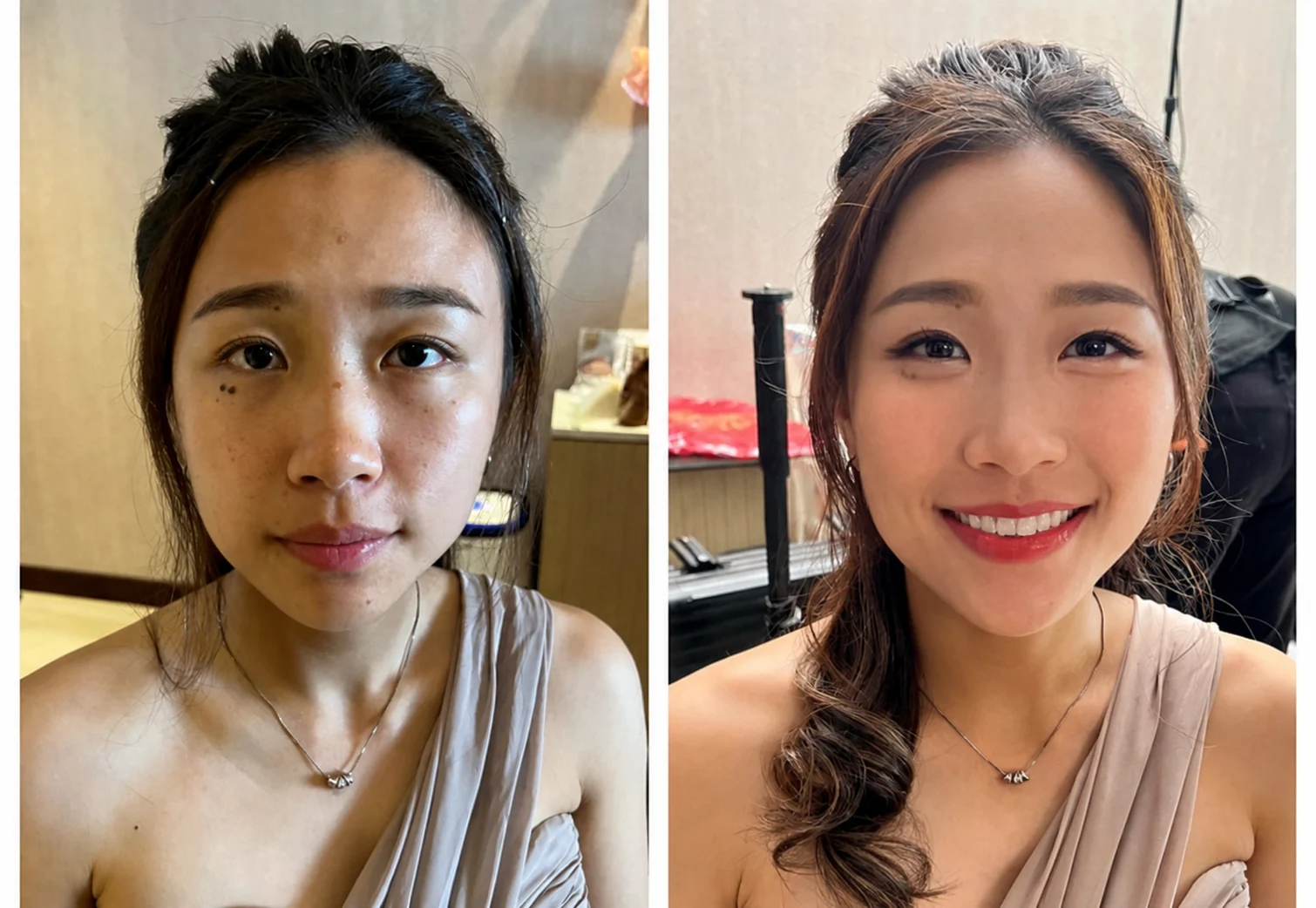
Start with a decision, not a mirror verdict
A bridal trial can be confusing precisely when it goes well. You may like the luminous skin of one direction and the defined eyes of another. The mirror captures an important question—do you still feel like yourself?—but it is one distance, angle and lighting condition. Your day also includes movement, portraits, group photographs and changing light.
Give every candidate look the same evidence. Take the photos, wear the look long enough to notice comfort, then review a simple scorecard later—ideally when you are no longer in the excitement of the chair. This turns “I think I liked the first one” into a choice you can explain to your artist and act on.
A trial is most useful when its scope is clear. The published description for bridal trial Hong Kong frames a first session around bringing references, dress and accessory information, sensitivities and lens details to settle one wearable direction. That makes it a sensible starting point when your main task is to establish a baseline look, rather than attempt every possible variation.
Build two genuinely different directions
Do not label two nearly identical lip colours as Look A and Look B. You will spend your attention deciding between details before you know which overall direction serves the wedding. Instead, make each look answer a different question. For example: “fresh daylight skin with loose hair” versus “more sculpted evening definition with a low chignon.” Or: “eyes are the focus” versus “lip colour and clean skin are the focus.”
Write one sentence for each direction before the trial, including the setting, dress mood and feeling you want. Then choose up to three visual anchors: a full-face image, hair from the side or back, and the whole outfit or a similar neckline. References show preference; they cannot reproduce someone else’s features, filter or lighting.
Keep the variables visible
For each direction, record the complexion finish, brow strength, eye definition, lash choice, lip family, hair silhouette and accessory placement. If you later combine favourite elements, you will know exactly what you mean by “the eyes from A, but the hair from B.” Without this record, a revision request such as “make it softer” can mean five different things.
If the real decision is between two complete makeup-and-hair directions, ask in advance whether there is time for both rather than assuming a standard appointment includes them. The two-look bridal trial information says the published standard trial is one makeup look and one hairstyle, with a second direction to be confirmed separately for time, availability and fees. The important principle is not the number of looks; it is giving each candidate enough time to be finished, photographed and assessed fairly.
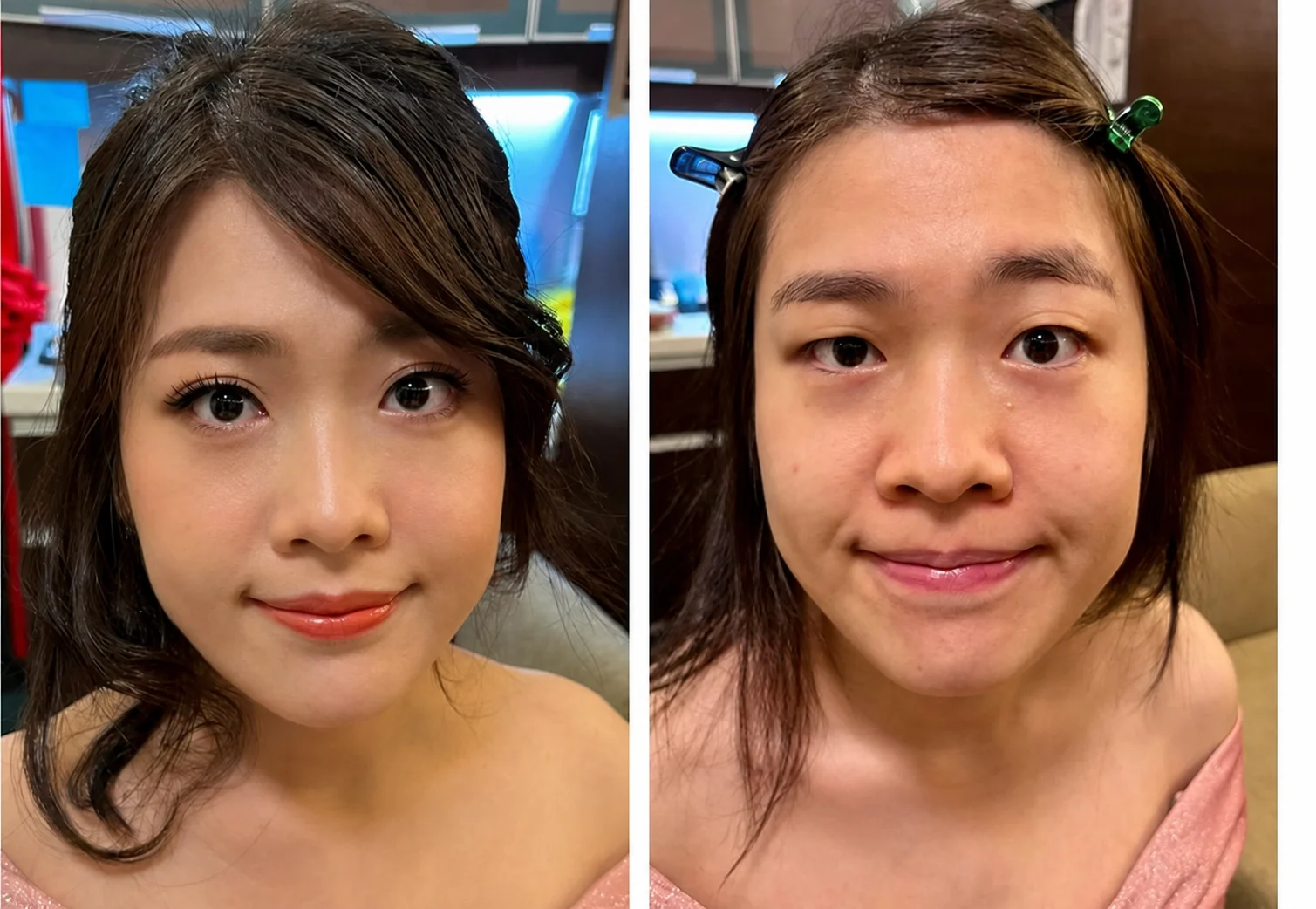
Collect comparable evidence during the trial
Ask for the same set of pictures for every completed look. Use the same uncluttered background where possible and avoid a beauty filter. Take one straight-on close-up, left and right three-quarter views, a full-length image with the dress or a similar white top, and one photo that shows the back or side of the hair. Repeat these in daylight near a window, in the warm indoor light closest to the venue mood, and with flash if flash photography is likely.
You do not need a perfect technical shoot; you need a fair comparison. Keep pose and distance similar, use the same phone where practical, and label the album immediately: A-daylight, A-indoor, A-flash. Repeat for B. Retain the unfiltered files and make your own notes before other opinions alter your memory.
Test the outfit relationship
Bring actual earrings, veil, hairpiece or fabric swatch when possible. A hairstyle that seems elegant alone may compete with statement earrings, obscure a detailed neckline or leave no secure veil placement. Stand several steps away and assess the outline: does the face remain the focus while clothing, jewellery and hair read as one look?
A white or dress-coloured top with a similar neckline is a useful substitute when the gown cannot travel. This aligns with Kleinfeld Bridal’s trial preparation guidance, which also suggests a dress photo and personal images from occasions when you loved—or disliked—your hair and makeup. Your own history is often more informative than an aspirational image, because it reveals your real tolerance for polish, colour and hair volume.
Use this 12-point scorecard after the photos arrive
Score each line from 1 to 5 after the trial, not while looking at the mirror. A 1 means “this creates a real concern”; 3 means “acceptable, with a defined change needed”; 5 means “I would choose this as it is.” Add a brief reason, not merely a number. The numbers reveal a pattern; the notes tell the artist what to preserve or change.
| No. | What you score | Question to answer |
|---|---|---|
| 1 | Daylight complexion | Does the base look like believable skin at conversational distance? |
| 2 | Indoor and flash behaviour | Do shine, texture, under-eye coverage and colour still look balanced? |
| 3 | Close-up detail | Are brows, liner, lashes and lip edge polished without feeling overdone? |
| 4 | Full-length balance | Does the face hold its place within the whole outfit? |
| 5 | Dress and accessory fit | Do neckline, earrings, veil and hair placement support one another? |
| 6 | Hair silhouette | Does the shape work from front, side and back, not just face-on? |
| 7 | Personal recognition | Would a loved one immediately recognise you, at your preferred level of polish? |
| 8 | Physical comfort | Can you blink, smile, turn your head and wear the hair without distraction? |
| 9 | Wear confidence | After a few hours, do you still want to be photographed in it? |
| 10 | Ceremony suitability | Does it suit the time, venue and formality you are actually planning? |
| 11 | Revision clarity | Can you describe the one or two changes needed in concrete terms? |
| 12 | Decision confidence | If the wedding were tomorrow, would you choose this direction? |
There is no magic passing score. As an example, total the 12 items (maximum 60), then circle every 1 or 2. A 52-point look with a clear comfort problem deserves revision, not an automatic win over a 49-point look that feels easy. A pretty look with several vague 3s may not yet be ready.
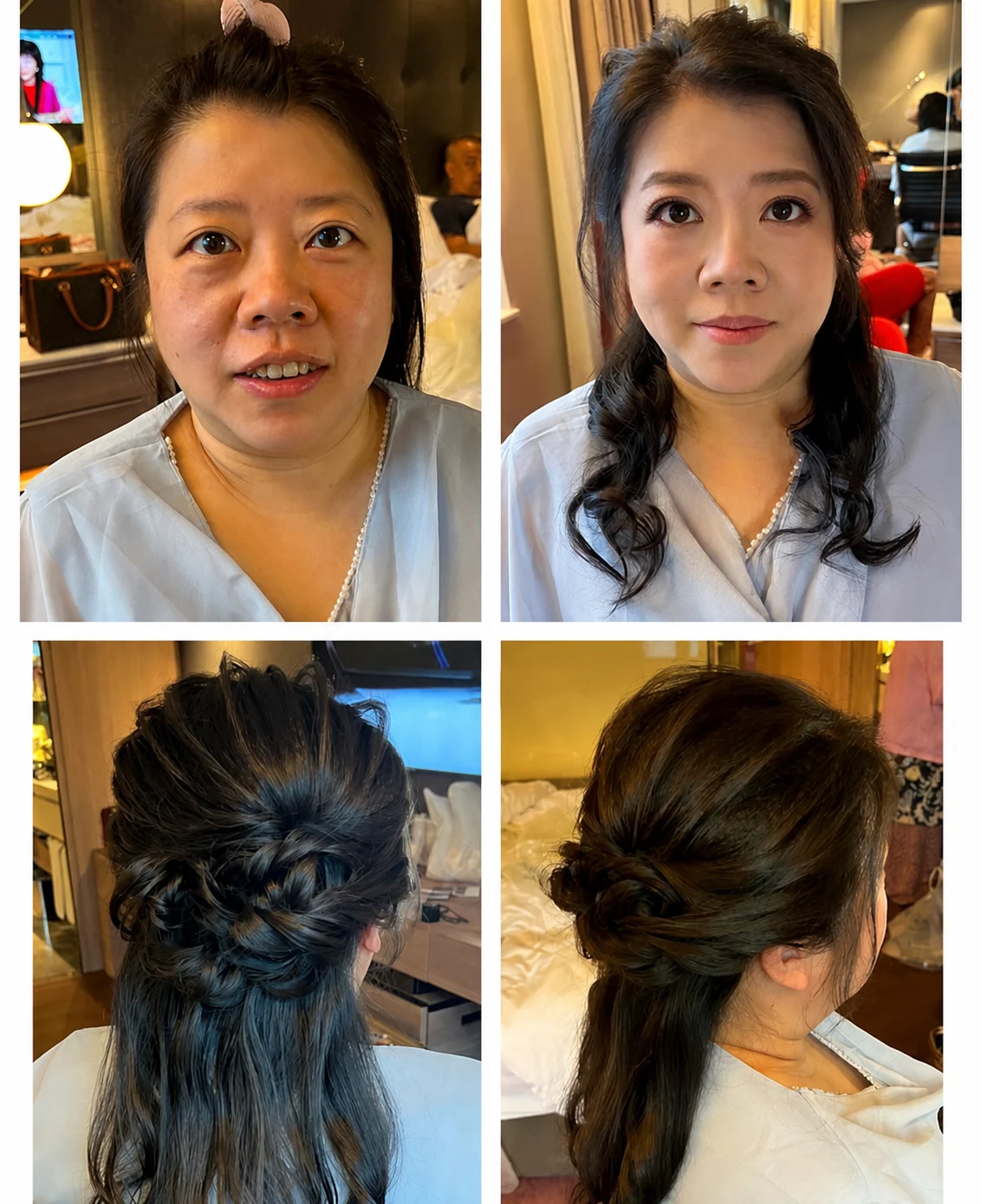
Make the trade-offs explicit
A strong decision does not pretend every quality can be maximised. More coverage may feel secure in photographs, while a lighter base shows more natural texture up close. Larger lashes may read clearly from distance, while smaller ones may feel more familiar. A sleek updo frames the neckline; loose hair offers softness.
Name the priority before you decide. If your ceremony is outdoors and you rarely wear makeup, “recognition and daylight skin” may outrank dramatic eye definition. If you are holding an evening reception in a formal room and expect flash photography, you may accept a little more structure in the base and eyes. Neither choice is more bridal; it is only more consistent with your setting and your comfort.
When selecting an artist as well as a direction, use the trial notes as a practical conversation tool. The guide on how to choose bridal makeup artist Hong Kong suggests comparing natural-light, indoor-light and flash images, and confirming scope and logistics in writing. A useful next step is to ask whether the documented revision is achievable in the agreed time, who will provide the service, and what the final schedule includes.
Turn scores into a usable wedding-day brief
Turn the scorecard into a short instruction sheet: overall mood, non-negotiables, changes, things to avoid and items to bring. Use observable language. “Neutral rose lip, not brown”; “face-framing pieces soft but off the eyes”; and “medium coverage with real skin visible” are more useful than “make me glowy.”
Here is an illustrative final note, not a client case: “Choose Look B’s low chignon and pearl placement. Keep Look A’s lighter base and softer brow. Add one level of B’s eye definition, but retain the shorter comfortable lash. Avoid high-shine centre-face highlight. Recheck lip colour in flash.” It gives a direction and a measured compromise.
Send the notes with the labelled photos, not with a large unlabelled inspiration board. Ask for written confirmation of the final scope, including any second style, travel, touch-up or timing arrangements that matter to you. The trial’s creative decision and the wedding-day booking are related, but they are not the same administrative step.
Protect comfort and skin without turning the trial clinical
Tell the artist before application about known sensitivities, prior reactions, contact lenses and products you already know work for you. Bring lenses if you plan to wear them, and note whether lashes, liner or fragrance have caused discomfort before. Hygiene and product suitability deserve the same attention as the shade of lipstick because an uncomfortable look is difficult to wear naturally.
If you are considering a genuinely new skincare or cosmetic product for your routine, avoid introducing it at the last moment. The American Academy of Dermatology’s guidance on testing skin-care products describes applying a product to a small test area twice daily for seven to 10 days, using it as normally intended. If redness, itchiness or swelling develops, wash it off and stop using it; a severe or persistent reaction warrants advice from a dermatologist. This is general safety information, not a promise that a product will suit every person.
Review once, decide once
Set a 24-to-48-hour review window. Review alone first, then with one trusted person who understands your usual style. Ask scorecard questions, not “Which is prettier?” Too many opinions turn a personal choice into a trend vote.
Choose the higher-confidence direction, document no more than two revisions, and stop reopening it unless a material element changes. A different gown, major accessory change, new skin issue or genuinely different venue lighting may justify another check. A new social-media image usually does not. The aim is a look you can wear comfortably and recognise as yours throughout the day.
Questions & answers
Should I choose the look with the highest total score?
Usually, but read the low scores first. A high total cannot cancel a specific problem such as uncomfortable lashes, a hairstyle that slips, or a flash result you dislike. Choose the direction with the fewest important compromises and a revision plan you can state clearly.
What if I like the makeup from one look and the hair from another?
That can be a useful outcome. Name the exact elements you want to combine and check whether they still suit the dress and accessories together. Ask for a labelled photo or concise written brief so ‘the hair from A’ does not become an ambiguous memory on the wedding day.
How long should I wear a trial look before scoring comfort?
There is no universal number that proves wear performance. Keep it on long enough to notice whether lashes, lenses, lip texture and hair tension distract you during normal talking and movement. Record when discomfort begins and what triggered it; that is more actionable than a generic endurance claim.
Should I ask friends to vote from the photos?
Invite one or two people whose taste and honesty you trust, but give them specific questions about recognition, outfit balance and comfort rather than a popularity vote. You are the person who must wear the look, so your score should carry the most weight.
When is a second trial worth considering?
Consider one if the first session exposed a material uncertainty: the dress or accessories changed, neither direction feels comfortable, an important photo condition was missed, or the revision needed is substantial. If your notes identify only one small adjustment, clear documentation may be more useful than repeating the whole decision.
Put the next step into practice
For the learning options at Canvas, explore makeup course Hong Kong。
For another practical reference, see bridal makeup Hong Kong。
To plan a next step that fits your needs, read makeup course Hong Kong。
Sources & further reading
- How to test skin care products | American Academy of Dermatology
Supports the general safety section on testing a new product and stopping use after a reaction.
- Expert-Approved Wedding Makeup Trial Tips | Kleinfeld Bridal
Supports bringing dress context, personal reference images and products the reader already likes.