Read your hair in three separate ways
A soft wave and a rough straight strand are both possible. That is why a photograph alone cannot explain what bothers you. Look at your ordinary dry hair in daylight, without pulling it taut. Then notice where normal handling becomes difficult. Keep your observations separate rather than putting every concern under the word frizz.
Use the table below as a description tool, not a home damage test. There is no need to stretch wet strands, repeatedly comb a knot or rub the ends to produce evidence. Record what happens during your usual routine. An observation such as ‘the bottom section catches, but the wave above it feels comfortable’ is already useful.
| What to observe | Everyday example | What to discuss first |
|---|---|---|
| Feel | Ends feel rough against your fingers; lengths feel softer. | Targeted conditioning and handling of the ends. |
| Tangling | The comb catches near the nape after wearing a scarf. | Where knots form, detangling technique and product slip. |
| Curvature | Soft hair forms a visible bend around the cheek. | Whether you actually want that bend changed. |
| Root outline | Crown looks close to the scalp while ends look full. | Application area, drying direction and the cut. |
Curvature belongs to the visible outline; tangling describes an event during handling. They can occur together without needing the same solution. For example, liking your cheek-level waves but disliking catching ends points towards a different starting conversation from wanting straighter side sections. Decide which observation interferes most with your day before choosing a service category.
Choose the change, not the smooth-sounding name
Cosmetic conditioning aims to improve feel and manageability. The American Academy of Dermatology explains that conditioner moisturises and detangles hair, making it easier to manage. This gives you a meaningful goal: less resistance during ordinary combing. It does not mean the hair must become straight, nor that a glossy finish proves previously processed hair has returned to an untouched state. 1
A blow-dry or iron creates a temporary styled outline. A scientific review distinguishes these thermal methods, which affect weaker hydrogen bonds, from chemical straightening methods that change stronger disulfide bonds within hair keratin. That distinction matters when you want an occasional sleek finish rather than a lasting change to the lengths. Neither route should be treated as damage-free. 2
| Route | Useful goal | Main trade-off |
|---|---|---|
| Conditioning-focused care | Softer feel and easier detangling while keeping movement. | Product weight and application need to suit different sections. |
| Temporary styling | A smoother or straighter finish for a particular occasion. | The shape resets with washing; repeated heat adds exposure. |
| Chemical smoothing | A product-specific change in manageability, sometimes with looser bends. | The name does not establish how much curl remains. |
| Permanent straightening | A lasting straighter pattern in treated lengths. | New growth keeps its own texture; growing out needs planning. |
Vit So's discussion of hair smoothing vs hair straightening is relevant when your request mixes touch and shape. Put the question plainly: ‘Will this mainly make the ends easier to handle, or also change the bends after washing?’ A clear answer about the actual process is more useful than choosing the softest-sounding treatment name.
Keep root lift out of the heavy-care zone
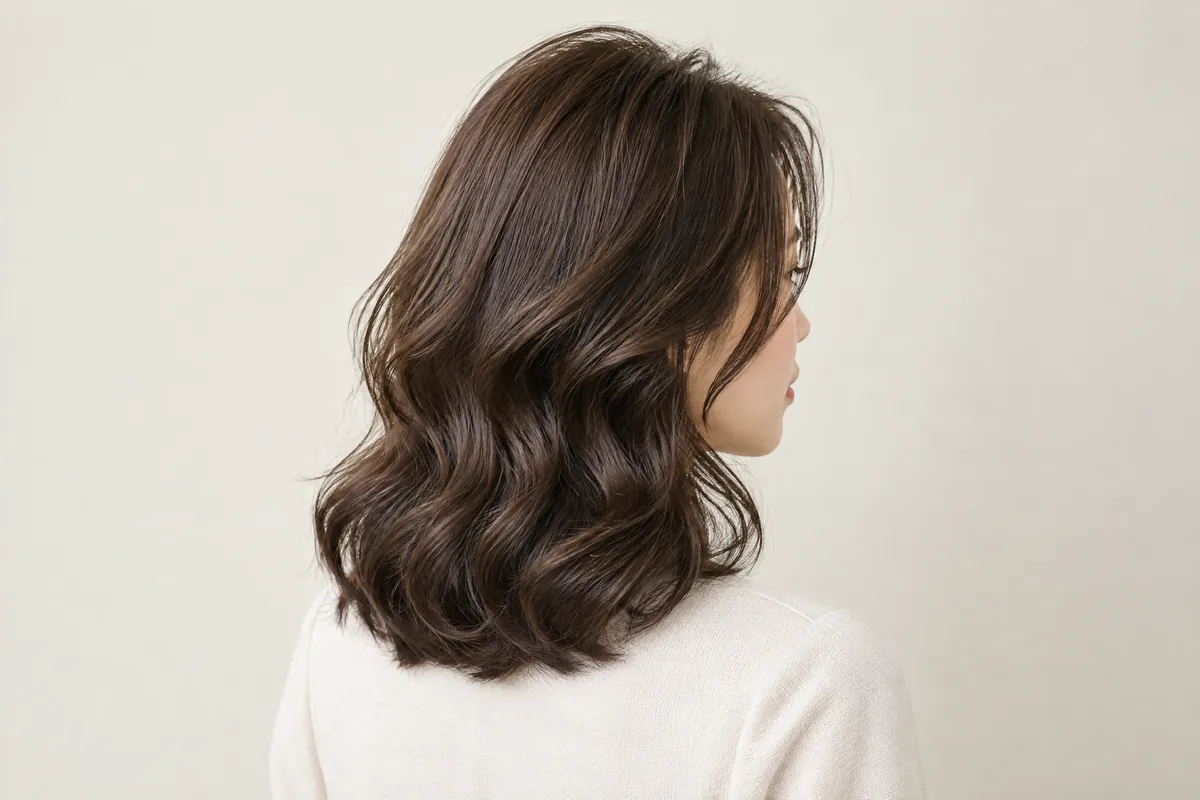
Root lift is an appearance, not the same thing as strand thickness or the number of hairs. If your lengths feel dry while the crown feels coated, do not automatically spread a richer mask over the whole head. First check the product directions and where you applied it. The roots and older ends can need different handling.
Condition the sections that need it
For fine or straight hair, the AAD recommends conditioner on the ends; for dry or curly hair, it recommends application through the lengths. Use that distinction to guide a conversation about your own pattern rather than adopting one rule for everyone. Follow the label's amount, contact time and rinsing instructions before adding another layer of care. 1
If a product leaves your crown heavy, change one relevant variable next time: for example, keep an ends-only conditioner away from the root area. Do not simultaneously change the shampoo, mask, leave-in and drying method. You will have little idea which change helped. For dry curls, avoid stripping conditioning from the lengths simply to chase a flatter product feel.
A clear goal: ‘I want the ends to comb more easily, but I want the crown to stay light and my cheek-level waves to remain.’
Also distinguish a smooth finish from a flattened silhouette. Ask to see your hair with the roots dried in the direction you normally wear them, not only with everything pulled down by a brush. A softer end does not have to sit poker-straight. The cut, parting and finishing technique remain separate choices, even if you choose a shape-changing service.
Rough ends need care, not a repair promise
Dry-feeling hair is a description of touch, not a complete explanation of its condition. If the same section catches repeatedly, note whether it was lightened, coloured, permed or straightened. Older treatment can remain in the ends after newer growth appears. A darker colour over previous bleach does not remove that history from the conversation.
Vit So's hair treatment service information separates moisture care, pre-colour or pre-perm protection and smoothing care. These are different purposes, not an intensity ladder where the strongest-sounding option is always best. For a care-focused appointment, ask which sections will receive conditioning and whether washing, drying or trimming is part of the agreed visit.
Improved slip can be valuable without proving complete reversal of damage. Judge cosmetic care by the handling it improves, not by a claim that every split or broken strand is permanently restored. If the ends keep catching in one visibly split area, discuss the amount you could trim alongside care. Keeping length and removing worn ends may involve a compromise.
Before another chemical service, share:
- Where bleach or highlights remain, including hidden or lighter sections.
- Previous perms, straightening and home smoothing products.
- Any product names or salon records you still have.
- Breakage noticed during normal washing or detangling.
This history can change the plan. The straightening review notes that hydroxide and thioglycolate processes are chemically incompatible and combining them can cause breakage. You do not need to identify the chemistry yourself. Say when an earlier product is unknown, and let the professional assess the hair rather than treating softness after a mask as permission for more processing. 2
Try a useful comparison at the next ordinary wash
Compare handling without chasing a salon finish
Choose one question for the next wash: ‘Can I make the ends easier to detangle without coating the roots?’ Keep your familiar shampoo and usual drying method where practical. Use conditioner as directed for your hair type. Note its application area. This is a simple way to organise observations, not a controlled experiment or a guarantee of improvement.
Detangle gently rather than using speed as a test. The AAD recommends working from the ends upwards, with different timing for different textures: straight hair can dry a little before combing, while thick curly hair can be detangled with conditioner before rinsing. Absorb water with a towel or T-shirt instead of rough rubbing. 1
Once dry, write down three separate findings: whether the ends feel softer, where the comb still catches and whether the silhouette feels too heavy. Do not score waves as a failure if you wanted to keep them. Equally, a lighter root area does not compensate for rough ends that still need attention. This keeps your next decision tied to the original goal.
If you are considering a dry hair treatment, bring those observations and your product names to the discussion. An example enquiry is: ‘My highlighted ends catch after washing; my darker roots feel coated with a rich mask. I want easier detangling without loosening my waves.’ That explains more than asking for the most intensive treatment available.
Make the choice fit an ordinary Hong Kong day
Consider these hypothetical situations, not client results. Someone with fine, wavy hair likes a full crown but dislikes rough ends against a jacket collar. Conditioning the ends and changing forceful detangling habits is a more direct starting point than permanently flattening the waves. The priority is comfort during handling, so the final outline should still have movement.
Another person has soft hair but dislikes the bends that widen the silhouette beside the face. More conditioning may improve handling without delivering the desired outline. They could try a temporary styled finish before discussing lasting shape change. The useful comparison is how they feel about the straighter look and its upkeep, not whether it looks shinier in a photograph.
Before choosing a lasting change, separate ‘I dislike this bend’ from ‘I dislike the effort of managing this bend’.
A humid commute or washing after exercise makes the home routine important. Ask what happens after an ordinary wash, whether your preferred root lift still needs drying work and how new growth will meet treated lengths. Permanent straightening alters the treated shaft, not the follicle producing future hair. Stopping appointments therefore does not simply reset all those lengths to their original pattern. 2
Avoid replacing one burden with another. If you would need repeated hot-tool passes to recreate a particular finish, say so before committing. The AAD advises limiting heated styling and using low or medium settings with heat protection. A protective product is part of cautious styling, not a reason to increase heat until every strand looks identical. 1
Bring a short, specific brief to the consultation
Take ordinary dry-hair photographs of the front, side and back, including the root area and ends. Add one reference showing movement you like, rather than only a very glossy finish. Explain how you normally wash and dry your hair. ‘I air-dry most weekdays’ and ‘I am happy to style the crown’ suggest different practical finishing plans.
Use this preparation checklist:
- Name your main concern: rough feel, catching, visible bends or heavy roots.
- Name what must stay: waves, crown lift, curved ends or length.
- Map previous processing by section, with unknown details marked clearly.
- Bring home-product names and describe application areas.
- Ask what the proposed formula changes after washing, not just after styling.
- Agree on included finishing work, aftercare and the complete quote.
Ask about the formula when heat is involved
For chemical smoothing, ask for the actual product and manufacturer directions. The FDA explains that some products release formaldehyde when heated and identifies formaldehyde, formalin and methylene glycol as ingredient names to ask about. It also advises discussing ingredient information and ventilation. Not every smoothing product contains formaldehyde; the label ‘smoothing’ alone does not answer the question. 3
Share previous reactions before application. If burning, eye irritation or breathing discomfort occurs, tell the professional and stop rather than accepting discomfort as part of the finish. Seek healthcare advice for significant or persistent symptoms, and urgent help for breathing difficulty. Cosmetic conditioning addresses the hair's feel and manageability; it does not diagnose scalp concerns, treat hair loss or promise growth.
Finish the discussion with two concrete priorities: the handling you want to improve and the movement you want to preserve. That gives you a useful basis for choosing care now, trying temporary styling or accepting the commitments of chemical shape change. The goal is hair that feels easier in your own routine, not straightness for its own sake.
Questions & answers
Should I use an oil instead of conditioner to keep the roots light?
Not automatically. Oil and conditioner are different product categories, and a heavy application of either can be unwelcome on fine hair. Choose a product intended for your hair and follow its directions. If you use an oil as a finishing product, assess it separately rather than assuming it replaces the detangling step.
Can one appointment address softness and a straighter outline?
Possibly, but they remain separate goals. Ask which step is care and which changes shape, whether both are appropriate for your processing history and how the combination affects the agreed scope. You can also prioritise handling first and revisit the outline later instead of committing to both changes together.
Why does my hair look smoother in one photograph than another?
Light, brushing, drying direction and camera angle can change the appearance of shine and flyaways. Compare photographs under similar conditions if you want to track the outline. For handling, rely on what happens during ordinary detangling as well. A flattering photograph cannot tell you whether a formula suits your hair.
How should I compare the cost of two proposed treatments?
Compare written scopes rather than names alone. Check whether washing, drying, cutting or another care step is included, then consider the home products and future appointments involved. A lower initial quote may describe less work; a higher one does not prove a better result. Choose the plan that addresses your priority within your budget.
Can I use a rinse-out mask as an overnight leave-in?
Use it only as the manufacturer directs. A rinse-out product is not automatically suitable for prolonged contact or for leaving on the scalp. If you need easier handling between washes, choose a product labelled for that use and introduce it separately so you can notice whether it adds unwanted heaviness.
Put the next step into practice
Develop your understanding of shape, cutting and styling with structured learning at Canvas. Hair styling courses in Hong Kong。
Explore practical guides for a clearer plan before your next style change. Canvas hair and beauty journal。
Tell the team which cutting or styling skills you would like to learn. Contact Canvas Academy。
Sources & further reading
- Tips for healthy hair — American Academy of Dermatology
Practical guidance on conditioner placement for different hair types, gentle detangling from the ends upwards, towel handling and limiting heat exposure.
- Straight to the Point: What Do We Know So Far on Hair Straightening?
Explains temporary thermal styling versus chemical changes to hair bonds, the origin of natural hair shape and why incompatible straightening histories matter.
- Formaldehyde in Hair Smoothing Products: What You Should Know — FDA
Useful questions about smoothing ingredients, heat, manufacturer directions and ventilation, with advice to stop use and seek healthcare guidance after a bad reaction.