Start with the next visit, not the finish photograph
Put your next salon opportunity in your diary before selecting a colour reference. The useful design question is not whether the colour looks beautiful on departure. It is whether you will still like the distribution of dark and light hair when you can return.
Choose your most important feature. That might be brightness around the face, lighter ends visible when the hair is loose, or fine ribbons through a dark base. Then name the change you would tolerate least: a pronounced root boundary, a warmer finish or the loss of pale ends after a haircut. These are different priorities and may call for different compromises.
Use a next-visit stress test. Imagine the natural root area is more visible, the finish is less cool and the hair is worn without salon waves. If the design still appeals, its placement may fit your routine. If it only works while everything looks freshly toned and curled, either allow for a follow-up or choose a different balance of brightness and depth.
- Keep one must-have feature, such as a bright face frame.
- Name one change you can live with, such as more visible natural roots.
- Name one change that would prompt an enquiry, such as an unwanted orange-looking finish.
- Record the earliest visit you can genuinely manage, not an optimistic maintenance date.
Compare the light areas by their future boundaries
Balayage describes hand-painted highlighting, not a separate colour category. Wella's explanation also notes that placement height affects regrowth visibility. A lower start can leave the natural root area as part of the intended design. That does not make every painted result subtle: broad pale sections can create strong contrast against a deep base. 1
Selected highlights let you discuss individual strands: how fine they are, their spacing and where they start. Painted placement directs attention to areas of brightness and their upper transition. These approaches can overlap in one design. The important difference for a busy diary is the boundary you will notice later, rather than whether a brush or foil appears in a process photograph.
For a visual explanation of balayage vs highlights, Vit So compares selected strands, painted placement and retained depth. Borrow the vocabulary, then make it personal: specify whether you want separate ribbons or a broader bright area, and whether the parting should remain predominantly dark. A technique name alone does not settle those choices.
| Placement choice | What you may notice as roots become more visible | Main trade-off |
|---|---|---|
| Fine light strands starting high | The meeting point between new roots and selected strands | Brightness near the scalp versus a visible boundary |
| Painted lightness starting lower | A larger dark upper area above the brightness | Less root-focused brightness versus an intentional darker top |
| A bright face frame with a deeper crown | Contrast concentrated around the hairline | Front impact versus a locally noticeable growing-out edge |
| Broader light areas through the ends | A substantial pale lower section | Stronger end brightness versus more lightened length to care for |
The table compares design directions, not fixed refresh schedules. Fine strands can be dense enough to make the head look very light. A painted design can also begin high. Ask to see where the bright sections will meet your natural base, and where dark strands will continue through the lengths. Those details are more useful than calling either option low maintenance.
Read the lines with your everyday hairstyle
Check the parting, then the tied-back view
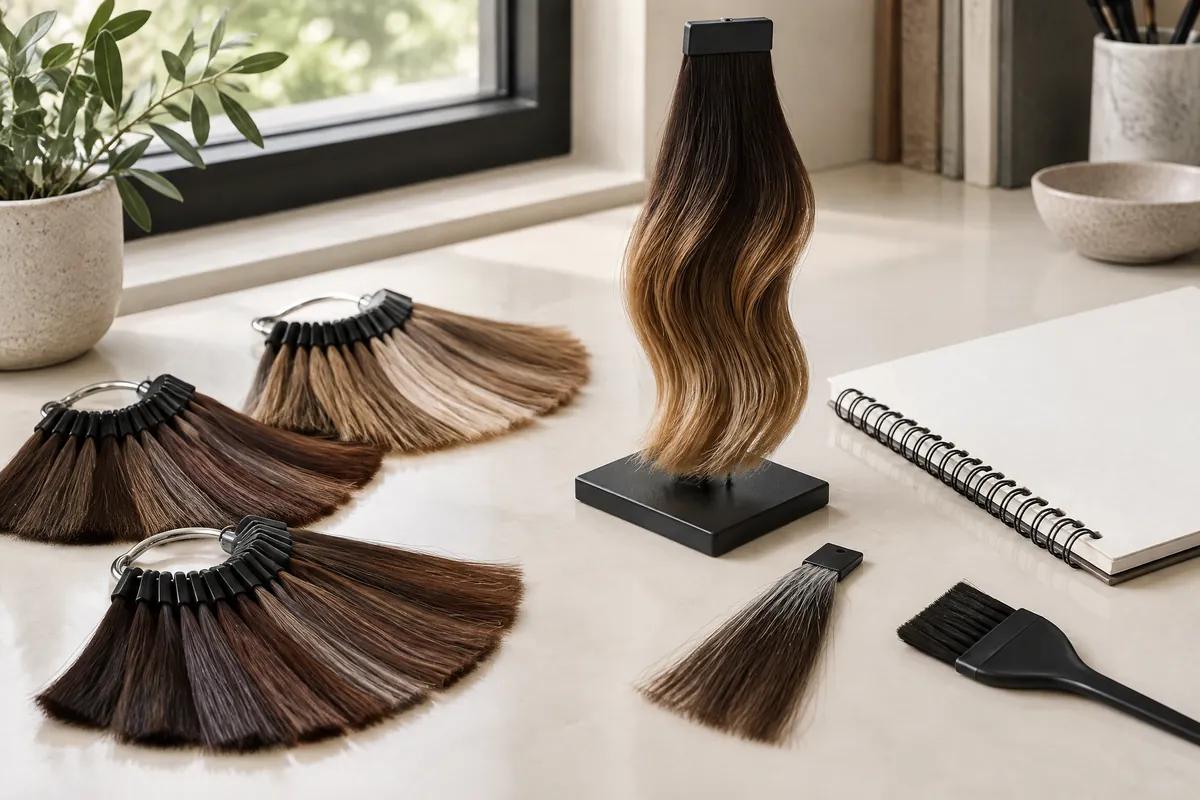
Start at the parting in your reference. Look for distinct light lines, a scattered blend or a mostly dark crown. Move down to the sides and note where brightness first becomes noticeable. Finally, look at the ends. A continuous pale lower area makes a different impression from lighter ribbons with dark hair still running between them.
Now repeat the inspection on your own hair. Take a loose-hair photograph with your normal parting, then a tied-back view if you wear a ponytail for commuting or exercise. Sections hidden underneath when the hair is down may become prominent when it is lifted. Do not choose the whole colour distribution from a front-facing photograph alone.
Straight and waved finishes also reveal the pattern differently. Waves gather light areas into visible ribbons; a smooth finish shows their direction and spacing more clearly. Bring a reference that resembles your usual texture, alongside any polished inspiration. If you rarely use a curling tool, let the colour be judged in the finish you will actually wear.
For an enquiry about balayage sheung wan, Vit So's service description discusses transition height, coverage and retained dark base at 252 Hollywood Road, Sheung Wan. Mark the areas you want brighter and those you want left deep. If you also want the natural base recoloured, describe that as separate work rather than part of the light placement by default.
- Photograph the front, side and back without a colour filter.
- Include your usual parting and one practical tied-up style.
- Mark the first visible light area on the reference.
- State the haircut length you intend to keep after colouring.
Separate tone change from a placement problem
Decide what warmth you can accept
Wella distinguishes the lightened pieces that remain from the toner applied over them, which may need refreshing to maintain the finish. Its guidance highlights this distinction for cooler results. You can therefore like the growing-out pattern while becoming less happy with the tone of the lengths. More visible warmth does not automatically mean the light areas need to be bleached again. 1
Describe the concern in ordinary terms before selecting a service. Is the root boundary more obvious? Are the same pieces now looking yellower, more orange or less muted? Or is the whole lower section simply too bright? A tone concern, a placement concern and an excess-of-lightness concern are not interchangeable. Photograph the area you dislike rather than requesting another full colour appointment by habit.
Make a small tone-change note beside your reference: desired finish, acceptable change and unacceptable change. For example, a hypothetical preference might be neutral beige at departure, some golden warmth acceptable later, but a distinctly orange front piece worth discussing. This is a communication tool, not a prediction of how a particular head of hair will fade.
If you want a very cool finish but cannot fit in a tone refresh, that is a real trade-off. You could prioritise keeping the cool shade and reserve time for maintenance, or discuss a tone you also enjoy as it becomes warmer. The aim is not to persuade you to accept an unwanted colour. It is to avoid a plan whose upkeep conflicts with your diary.
Compare the menu with the work in your quote
When checking balayage cost, distinguish Vit So's published entry from your agreed total. On 6 November 2026, the menu lists Balayage / Ombré at HK$2,500 with one bleaching session. Its women's wash, cut and blow-dry combination is HK$2,980–HK$3,680, with one bleaching session, one toner application and pre-colour protection. These are different stated scopes, not interchangeable quotes.
The combination's toner is part of that appointment, not an allowance for future visits. Equally, the standalone entry's stated inclusion does not establish that cutting, toner and protection are all included. Additional lightening, changing an existing dark base or working through old colour needs its own discussion. Choose the work you need first, then compare the applicable total.
Hong Kong's Consumer Council advises clarifying less prominent surcharges before a salon service and retaining a receipt that lists the services provided. Apply that practical habit to colour planning: ask for the proposed work and any applicable extras in writing. A clear quote makes it easier to decide which optional changes to leave for another visit. 3
Build a follow-up budget and tone-change worksheet
Use separate budget lines even if you expect few appointments. The first design, a possible tone refresh and a later placement change solve different problems. Keep unquoted amounts blank rather than borrowing another salon's charges. Include home care you intend to buy and travel costs if relevant; the cost of maintaining a look is not only the first salon bill.
| Budget or observation line | What to write | Decision it supports |
|---|---|---|
| First appointment | Agreed sections, bleaching scope, toner, cut, finishing and total | Whether the initial design fits your ceiling |
| Possible tone-only follow-up | Trigger, proposed service and quoted inclusions | Whether you can maintain the preferred finish without new light placement |
| Later lightening or placement change | Areas to move higher or brighten, subject to assessment | Whether another major colour visit is actually wanted |
| Home care and travel | Products already owned, intended purchases and transport | A practical follow-up reserve |
| Acceptable tone change | Warmth you still enjoy and the change you dislike | When to ask about tone rather than automatically repeating bleaching |
| Next feasible visit | Realistic date window and available time | Whether the design fits your diary |
Add the confirmed first-visit amount to the follow-up amount you have chosen to reserve. Keep the reserve visibly separate: it is money set aside, not a salon charge. If the overall plan exceeds your budget, reduce an optional goal, such as all-over brightness, rather than silently removing a component the stylist says the assessed plan requires.
Map the hair you are asking to lighten
Roots, middle lengths and ends need their own history
New roots, dark-dyed middle lengths and previously bleached ends may carry different treatment histories. Record approximate dates for home dye, salon colour, bleach, henna, perms and straightening. Say which treatments are still present in the lengths. When you cannot recall a product or date, mark it unknown rather than guessing; the uncertainty itself is useful information.
The American Academy of Dermatology explains that chemical appearance-changing treatments can leave hair dry and brittle, and that greater lightening can cause more damage. A soft-looking transition is therefore not proof of a gentler process. Describe roughness, persistent tangling or visible breakage before agreeing to more lift; the chosen placement must also fit the hair's condition. 2
Keep cosmetic care separate from a promise to undo processing. Conditioner or a salon care component can be discussed for handling and appearance, but should not be treated as permission for unlimited further bleaching. For time outdoors, the Academy also advises sun protection for dyed or bleached hair, including a wide-brimmed hat. Build manageable care into the plan instead of relying on the technique name. 2
A worked example for an irregular diary
Consider a hypothetical person with a dark natural base who wears a centre part at work and ties the hair back at weekends. They want brighter ends and some light near the face, but cannot promise a mid-cycle salon visit. Their priorities are a deep crown, colour visible in a ponytail and a tone they still like with some warmth.
Their brief could ask about selected brightness near the face and a lower transition elsewhere, with dark strands retained through the lengths. They would bring front and tied-back references, disclose earlier colour and ask whether the existing ends should be retained rather than made lighter. A pale, densely highlighted crown might deliver more immediate brightness, but would not match their preference for a darker upper area.
Before leaving, they would note what to watch: the front boundary, the tone of the lighter ends and the amount of coloured length remaining after the next trim. When another appointment becomes possible, those observations guide the enquiry. The next step might concern tone, cutting or placement; it need not repeat the original service. Bring your own worksheet to your consultation and choose the compromise you can comfortably maintain.
Questions & answers
Can I change the colour direction after this appointment?
Yes, but explain the next direction before committing to today's plan. Becoming much lighter later, returning to a darker overall colour or cutting off the bright ends creates different starting points. Ask which parts of the proposed design you could retain if your preference changes.
How should I plan if covering grey roots matters most?
Treat root coverage as its own priority, rather than assuming lighter lengths will provide it. Discuss whether you want coverage or a softer blend with the visible grey. Keeping a natural-looking dark crown and concealing every new grey root may involve different maintenance commitments.
What if I need the colour to look its best for one event?
Give the event date and your available appointments early. Decide whether you want a new light pattern or mainly a refreshed tone and finish. Build the plan around the assessed work and confirmed timing, rather than combining several major changes immediately before the occasion.
Should I buy purple shampoo before choosing the colour?
Wait until the intended finish and actual lightened areas are clear. Ask whether a colour-depositing product fits that tone, which areas to apply it to and how to follow its instructions. An ordinary care product and a pigment-depositing one serve different purposes; buying both automatically is unnecessary.
What should I request if I have to switch salons later?
Ask for a record of the agreed service and the work actually completed, then keep your own photographs and treatment dates. Bring that history to the new consultation. It helps explain what is present in the lengths, but the next stylist will still need to assess the hair before proposing more processing.
Put the next step into practice
Develop your understanding of shape, cutting and styling with structured learning at Canvas. Hair styling courses in Hong Kong。
Explore practical guides for a clearer plan before your next style change. Canvas hair and beauty journal。
Tell the team which cutting or styling skills you would like to learn. Contact Canvas Academy。
Sources & further reading
- What is Balayage? Your Complete Guide
Wella Professionals explains hand-painted highlighting, placement height and the difference between retained lightening and toner upkeep, especially for cooler finishes.
- Coloring and perming tips for healthier-looking hair
The American Academy of Dermatology describes dryness and brittleness from chemical treatments, greater damage with substantial lightening and sun protection for dyed or bleached hair.
- Consumers' Woes against Hair Salons Many and Varied — CHOICE 456
Hong Kong's Consumer Council advises checking hair-length and other surcharges before a salon service and keeping a receipt listing the services provided.