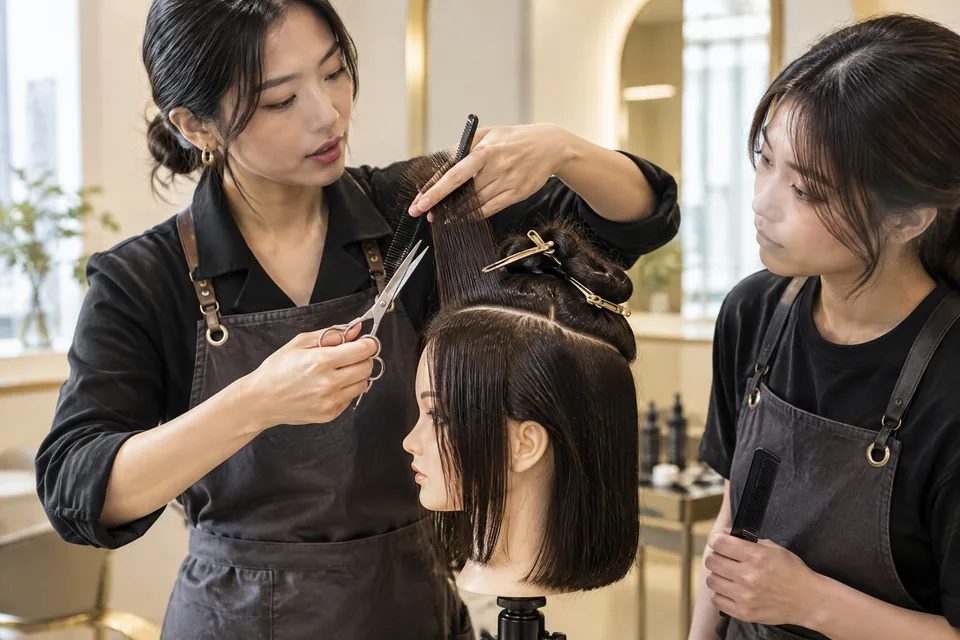
Read the dry outline, not just the pretty curl
A bob can look quite different when its ends bend away from a straight line. The interesting question is not simply whether waves suit you. It is where the widest point moves, where the front finishes against your jaw, and how much of the neck stays visible. Those observations give you a more useful starting point than a curl-size name.
Begin with your usual dry hair and normal parting. Wear the glasses you use most days, and keep your head upright. Take a front, side and back photograph from similar distances. Avoid a wide-angle close-up or a tilted selfie: changing the viewpoint can make a small outline difference look more dramatic than it really is.
At cheek level, look at the outer edge rather than every loose strand. Does the hair sit close beside the face, or open out near the ears? At the jaw, note whether the front rests above, beside or below the chin. At the neck, distinguish the lower edge from the fuller area sitting above it.
These landmarks are not rules about which face shape should wear which haircut. They are repeatable places to describe your preferences. Someone may love a broad cheek-level wave and a visible neck; another may prefer compact sides and a longer front. Neither choice needs to be justified by a face-shape label.
| Landmark | Compare in the dry photograph | A useful preference to record |
|---|---|---|
| Cheeks and ears | Where the side outline becomes widest | Keep the ear area close, but allow movement below it |
| Jaw and chin | Where the front ends rest without stretching | Retain front length below the chin when dry |
| Neck and nape | Exposed neck and fullness above the lower edge | Keep a clear neckline without adding a bulky back |
Try two wave placements before committing
A styling trial is a way to explore an outline, not a home chemical experiment. Use a method you already handle comfortably, or ask a stylist to create a temporary version. If heat is used, the American Academy of Dermatology recommends the lowest heat setting, limited contact with hot tools and less frequent use. Do not keep reheating a section to chase a photograph. 2
Change one feature at a time
For the first trial, keep the sides relatively smooth and add movement mainly near the lower edge. For the second, let a bend appear higher through the side lengths. Use the same parting for both. This comparison separates the position of the fullness from the mere presence of a wave, which is often what makes a short style feel different.
Look at each version fully dry, with your hands away from the hair. A lifted section held between your fingers is not its resting outline. Save the photographs before changing the parting, adding a stronger hold product or tucking an ear. Those later changes can be useful, but they answer a different question about how you will wear the style.
Repeat the ordinary movements that matter to you. Put on your glasses, tuck the front behind one ear, and turn your head in a collared shirt. An open lower edge may be attractive loose but awkward beside your usual collar. A softer front may look lovely down yet no longer tuck as easily as your straighter bob.
Record observations rather than a score:
- Which trial puts the widest point where you like it?
- Does the front still reach your preferred jaw position?
- Does ear-tucking change the balance more than expected?
- Which section needs deliberate styling to look right?
Decide what the added width is doing
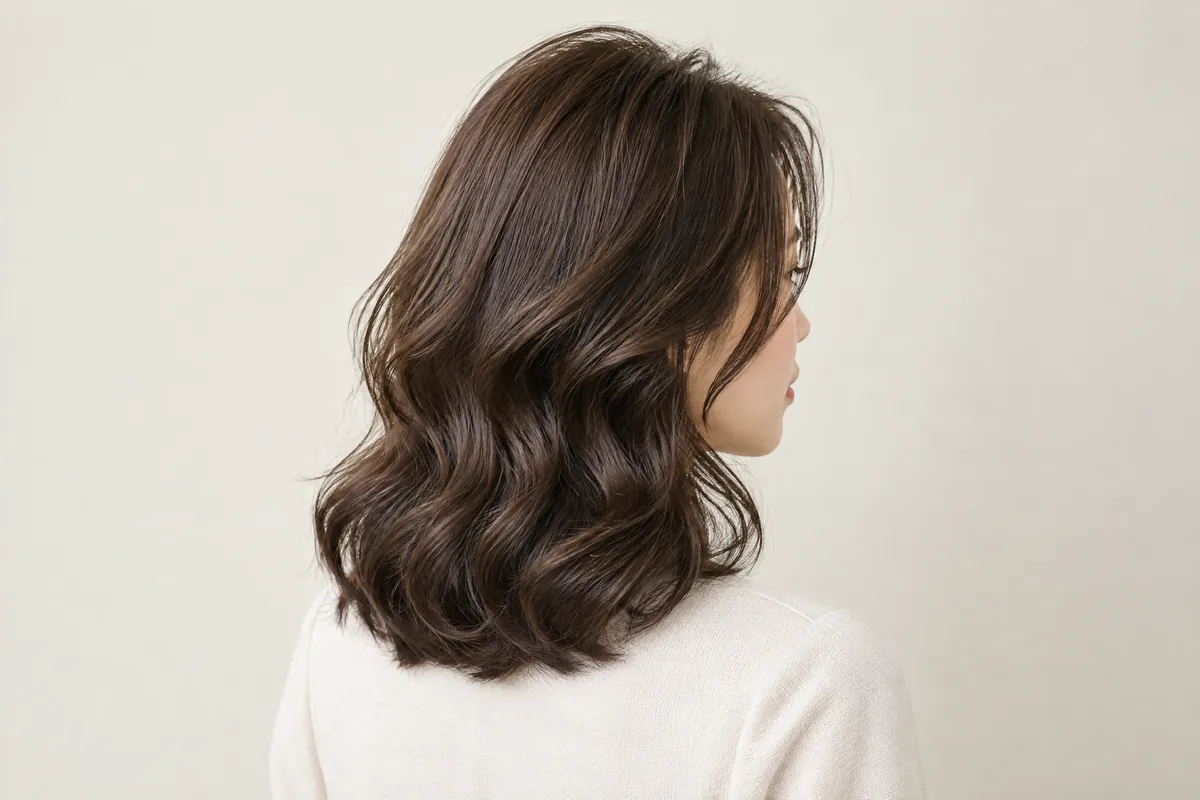
Extra width is not automatically a problem. It can make a compact bob feel more playful or soften a very straight lower edge. The trade-off is that the sides become a stronger part of the silhouette. If your favourite feature is a narrow outline beside the cheeks, movement lower down may interest you more than fullness near the ears.
Consider this hypothetical comparison: a chin-length bob gains outward movement on both sides. Its widest point now sits beside the cheeks, while the front appears to finish higher. The wearer likes the liveliness but misses the longer face-side line. A sensible next trial keeps the front smoother and places more movement behind it, rather than making every wave smaller.
A useful design note: “I like the movement at the back, but want the front to stay below my chin and the ear area to sit closer.”
Check the back separately. A pleasing front photograph can hide a rounded, heavy-looking area above the nape. Conversely, a compact back may make the side waves look intentional rather than excessive. Compare all three views before deciding to remove length or add layers; either change alters the base shape you are testing.
Vit So's discussion of a perm for short hair considers the shortest layers, dry length and direction of the ends together. That is particularly useful when your front is longer than your crown or nape. Show which section must remain tuckable, instead of using the longest strand as evidence that every part can take the same movement.
Separate a temporary outline from a texture change
Temporary setting and permanent waving do not change hair in the same way. Chemistry LibreTexts explains that water can disrupt hydrogen bonds and that new bonds form as hair dries in a different shape. Permanent waving instead involves reducing some disulfide bonds and reforming them after the hair has been shaped. This is why a styling trial is not equivalent to a chemical service. 1
The trial can tell you that you enjoy a wider outline or dislike a shorter-looking front. It cannot tell you how your existing hair will respond to a particular formula, wrapping plan or treatment sequence. Nor does a smooth, polished trial establish that the same finish will appear after washing with no attention from you.
If you like waves mainly for evenings, a reversible styling approach may be enough. If you want movement as part of your regular wash-and-dry routine, a texture change may be worth discussing. Compare the effort on ordinary mornings, not just the effort for one finished photograph. A permanent change still leaves decisions about the parting, front sections and drying.
For that next discussion, Vit So's hair perm service information distinguishes full-head coverage, partial coverage and named menu entries. Describe the areas you want to change and those you want to retain. “Short hair” does not by itself mean a partial service, and a menu name does not identify a particular hot, cold or digital procedure.
Map the chemical history by section
A short bob may still contain previously treated lengths. Write down colour, bleach, straightening and earlier perms by area, including home products and approximate dates. If you cannot remember a product name, say what you know and what is uncertain. Do not leave out an older treatment simply because you have since cut the hair or changed its colour.
Colour alone is not a full history. A dark-looking section may have been lightened before it was coloured darker. A smooth section may have been chemically straightened rather than only blow-dried. The practical task is to identify which treatments remain in the hair, so a stylist can discuss the proposed service with more than its present appearance.
The American Academy of Dermatology notes that appearance-enhancing treatments can leave hair dry and brittle, and advises caution with perming. If excessive stinging or burning occurs during treatment, tell the stylist immediately; its guidance calls for immediate rinsing and dermatological advice. Discomfort is not something to tolerate for a better wave. 3
Use a short record rather than a long message that mixes every treatment together:
| Area to describe | History or observation to bring | Question it helps you ask |
|---|---|---|
| New roots and crown | Recent colour and the shortest layers | How will the treated shape connect with new growth? |
| Face-side sections | Highlights, lightening or straightening | Should these sections be handled differently? |
| Mid-lengths and ends | Older chemical work that may remain | Which retained lengths can support the proposed change? |
| Whole head | Unusual snapping, tangling or scalp discomfort | Should the chemical plan be reduced or postponed? |
Do not use a successful styling trial as permission to skip this conversation. The hair may tolerate a temporary arrangement yet need a different chemical plan. A revised cut, less treatment coverage or keeping the style temporary are meaningful alternatives. A conditioning service is cosmetic care, not a guarantee that all previously processed hair can safely take another change.
Build the drying plan around the outline
Choose the home finish alongside the wave placement. If the reference has close-fitting sides and separated ends, ask which steps create each feature. A demonstration is most useful when it uses tools you own and movements you can repeat. Tell the stylist if you normally air-dry, leave home soon after washing or prefer not to use a round brush.
Give the front, sides and nape separate jobs
The front may need a deliberate parting; the sides may need less lifting than the back; the lower edge may need help keeping its agreed direction. Ask to see those areas individually rather than watching a fast whole-head finish. Notice whether the stylist is encouraging movement or pulling it straighter, because the two actions serve different outline goals.
For gentle handling, the AAD recommends conditioner after shampoo, towel absorption rather than rubbing, and avoiding tugging. Its detangling advice differs for straight hair and textured hair or tight curls. Ask how to apply those principles to your new texture rather than assuming your former brushing habit still suits it. Use low heat if you dry with heat. 2
A practical demonstration can follow this sequence:
- Place the parting. See how the front is arranged before the lengths dry.
- Handle the sides. Ask how to retain movement without creating unwanted lift beside the cheeks.
- Check the lower edge. Watch the hand movement used to encourage the chosen end direction.
- Finish fully dry. View the jaw position and nape without holding strands in place.
- Practise the ordinary version. Separate essential steps from optional polishing for an evening out.
After a chemical service, follow the first-wash instructions for the actual treatment. During later home styling, note the tools, products and sequence you used before judging the outline. If the sides feel too wide, identify whether the change appeared during drying or after brushing. Change one styling variable at a time instead of layering more product and hotter tools across the whole head.
Turn the trial into a clear appointment brief
Bring a baseline photograph and the trial you prefer, plus one you dislike if it explains the boundary better. Annotate the features, not the whole image: movement below the ears, front below the chin, or less fullness above the nape. References with a different parting or much longer hair can still inspire you, but separate that inspiration from your present cut.
When discussing a women's perm with Vit So, include the haircut plan in the same conversation. Its published information separates a standalone perm from a named combination including cutting and finishing. Ask what the proposed scope includes, how the cut and treatment will be sequenced, and which home styling steps are essential for your chosen outline.
Before agreeing to the design, keep these priorities in one place:
- The dry front length you want to retain.
- The position where added width is welcome.
- Any ear-tucking, glasses or neckline requirement.
- The chemical history and sections that may need a different plan.
- The tools and drying steps you are willing to use.
If the temporary trial already gives you the shape you want for occasional wear, there is no need to turn that preference into a permanent change. If you prefer waves day to day, take the trial as a clear design brief rather than a promised result. The strongest decision joins an outline you enjoy to hair that can support the proposed work and a routine you can manage.
Questions & answers
Can I do the width test without using heat?
Yes. Use a familiar heat-free set or ask a stylist for one. Compare only when the hair is fully dry and released. The trial need not reproduce every strand in a reference.
Will bigger waves always make my bob wider?
Not necessarily. Placement, direction, parting and the haircut affect the outline. Compare the widest point in front and side views rather than judging only the size of an individual wave.
Should I grow my bob before trying a texture change?
Possibly, if retaining a longer dry front matters most. Discuss the shortest layers and space for the intended bend. Avoid a major trim before agreeing which lengths the design needs.
What if I like the trial only with one ear tucked?
That is a useful preference. Photograph both arrangements and check comfort beside glasses. Explain that the tucked version is your everyday goal; selective movement or temporary styling may suit it better.
Does more texture mean I can stop using styling products?
Not automatically. Ask to see a minimal-product version beside the polished reference. If you dislike the feel or effort needed for stronger definition, agree on a softer everyday finish first.
Put the next step into practice
Develop your understanding of shape, cutting and styling with structured learning at Canvas. Hair styling courses in Hong Kong。
Explore practical guides for a clearer plan before your next style change. Canvas hair and beauty journal。
Tell the team which cutting or styling skills you would like to learn. Contact Canvas Academy。
Sources & further reading
- Permanent Hair Wave — Chemistry LibreTexts
Explains temporary wet-setting through hydrogen bonds and permanent waving through reduction and reformation of disulfide bonds, helping distinguish a shape trial from a chemical texture change.
- 10 hair care habits that can damage your hair — American Academy of Dermatology
Offers practical guidance on conditioning, absorbing water with a towel, gentle detangling according to texture, avoiding tugging and reducing heat exposure.
- Coloring and perming tips for healthier-looking hair — American Academy of Dermatology
Describes dryness and brittleness associated with appearance-enhancing treatments and advises caution with perming and prompt action for excessive stinging or burning.