Start with a familiar wash, not a perfect curl day
Choose a week when you can follow your ordinary routine. Keep your usual parting, washing frequency and drying method. Do not buy several products or force a new technique into the first wash. The purpose is to see the hair you live with, including a rushed morning, rather than produce the most defined photograph possible.
Take the first pictures when your hair is fully dry and resting freely. Use the same background and camera position for later views. Include the front, both sides and back. Write down whether you air-dried, used a diffuser, brushed through the lengths or tied them up before the photograph. These details explain differences that a picture alone cannot.
For curls and coils, the American Academy of Dermatology advises sectioned detangling on wetted hair with leave-in conditioner, using fingers or a wide-toothed comb, and avoiding dry brushing to reduce breakage and frizz. Follow gentle handling rather than brushing the pattern out for your record. Loose waves do not all need the same conditioner or product routine.1
One entry should take only a few notes
Record three things: the setting, the visible change and whether it bothered you. For example, write 'after the MTR journey, ends turned out against my jacket; comfortable but wider than I like'. That is more useful than 'bad hair'. Keep handling notes separate from appearance: a section can look full while remaining easy to detangle.
Give each day a small observation job
You do not need to wash every day or photograph every strand. Use the schedule below as prompts, moving the wash-day entry to your normal wash. If the week stays dry, simply leave the humid-weather comparison open. Do not soak your hair or seek difficult conditions to complete a row.
| Day or moment | What to record | Question it helps answer |
|---|---|---|
| First ordinary wash | Fully dry outline; usual products and drying | What movement appears without extra arranging? |
| Next morning | Front and slept-on side, before refreshing | Which changes mainly happen overnight? |
| Outdoor journey | Same view before leaving and after arriving | Does the outline change outside or against clothing? |
| Usual tied-back day | Loose shape before tying and after release | Does your daily hairstyle leave bends you dislike? |
| Next normal wash | Same drying method as the first wash | Does the awkward area return after washing? |
| Optional styling day | One familiar finishing change | Does arranging the hair address your main concern? |
| End of the week | Best everyday view and most awkward view | What do you want to keep, and what needs changing? |
Label optional styling separately from your baseline. If you use a new gel and a new diffuser method together, you will not know which made the difference. One modest change gives a clearer comparison. Keep the original photographs even when another finish looks better; they remain useful evidence of your lower-effort days.
Map mixed patterns without choosing one curl type
Divide your notes into front, crown, sides and back. Describe what you see in ordinary language: loose bends, small curls, straighter roots or a fuller underside. A single category can miss the section that makes the whole haircut inconvenient. The goal is not to classify every hair but to locate a practical design problem.
Compare visible length as well as curl shape. Let the fringe rest instead of pulling it down to the eyebrows. Check whether the two sides sit at different heights and whether the back reaches your collar. Apparent dry length is the boundary you actually wear, so record it before requesting a much shorter outline.
Make two separate notes for each troublesome area: what you want less of, and what must remain. Wanting less width beside the ears can coexist with wanting a full crown. Wanting clear vision can coexist with keeping a curved fringe. This stops a local annoyance becoming a request to remove movement everywhere.
- Mark a comfortable boundary using your eyebrows, ears, jaw or collar.
- Name one section whose movement you enjoy.
- Identify pieces needed for your usual ponytail, clips or ear tuck.
- Distinguish a wide silhouette from knots or rough-feeling ends.
Separate overnight changes from weather changes
Before refreshing in the morning, compare the slept-on side with your first dry view. Note compression at the crown, separated curls or a front piece pointing differently. If length permits, the AAD suggests a loose high ponytail or loose braid to preserve curls and reduce pillow friction. Do not pull short pieces tightly to make them fit.1
On another day, compare your hair before an outdoor journey and afterwards. In Hong Kong, moving between outdoor air and air-conditioned spaces offers a useful everyday comparison. Note drizzle, sweating, headwear and collar contact too. A wider outline after the journey is an observation; it does not prove humidity was the only cause.
UMBC's chemistry explanation describes how water and heat rearrange weaker hydrogen bonds in hair proteins. Changes in moisture can therefore alter a styled shape. This differs from chemical texture work that changes more lasting bonds. A finish that changes outside is not automatically evidence that your haircut is wrong or that your natural texture needs removing.2
Do not use a photograph to diagnose damage
Flyaways alone cannot tell you why a section behaves differently. Record persistent snagging, visible broken pieces or fragile-feeling ends separately, especially if those lengths have been bleached or straightened. Share those observations and your processing history with the stylist. Avoid pulling strands hard or repeatedly ironing an awkward section as a home test.
A useful note describes an area and a moment: 'the front loses its bend after sleeping' is a clearer brief than 'my curls never work'.
Compare three changes with different commitments
Look for the concern that repeats. If a fringe is consistently too long in its ordinary dry position, a shape adjustment addresses a different problem from a smooth finish that disappears after washing. Compare the choices by what they change, not by which reference photograph looks most polished.
| Choice | What it can address | Main compromise |
|---|---|---|
| Haircut shape adjustment | Length, perimeter and placement of fullness | Removed length needs growing back; it does not manufacture a chosen curl pattern. |
| Temporary styling | Direction, definition or a straighter appearance for a particular day | The finish needs recreating; tools and products add effort. |
| Chemical texture change | A lasting alteration to the treated hair's curvature, depending on the procedure | Processing history matters; future natural growth creates a transition. |
You can combine choices, but agree on their roles separately. A cut may improve the outline while a little styling arranges the front. Chemical straightening may still leave decisions about the end line and everyday drying. Choosing more services is not the same as identifying the smallest change that addresses your actual frustration.
When the outline matters more than the curl pattern
Use your map to locate the proposed cut. Shortening the perimeter changes where the bottom edge lands. Layers introduce shorter lengths within the shape and change where fullness is visible. Reducing density removes hair within an area. These are different requests; 'make it lighter' does not say which result you want or what support should stay.
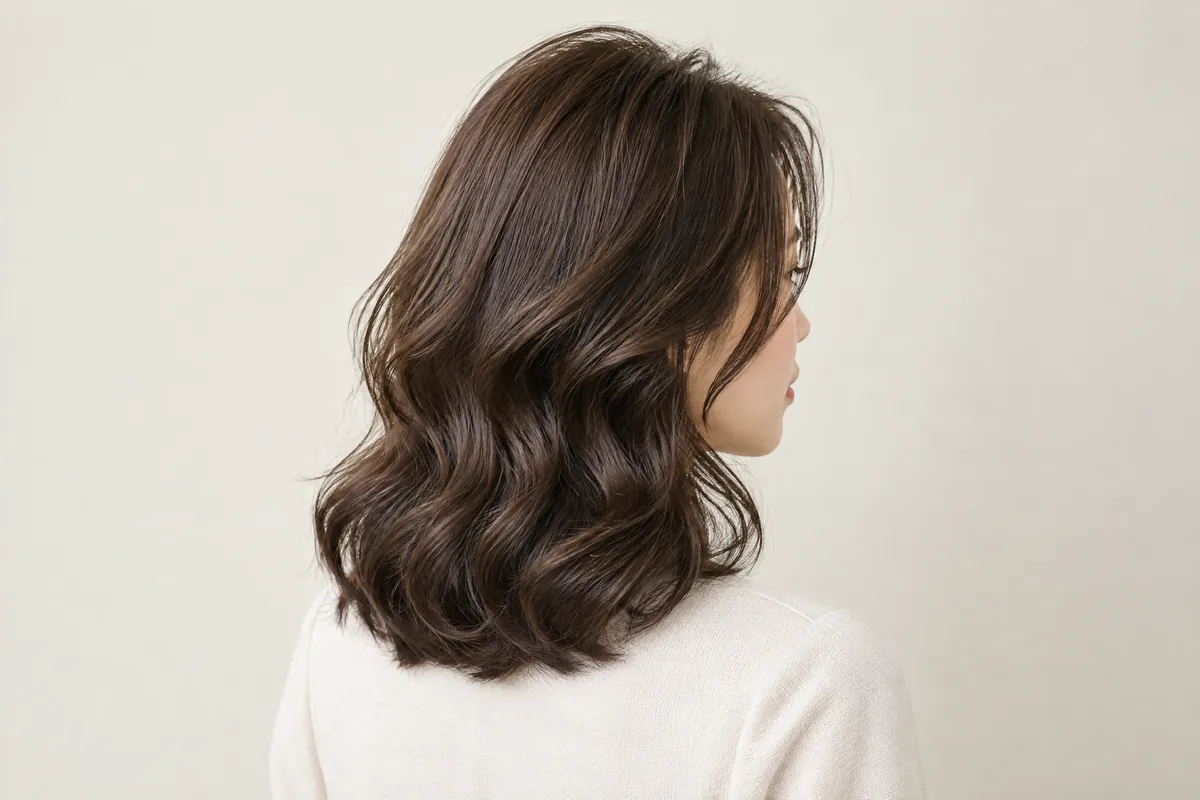
For a shoulder-length example, first check whether the ends turn out only when caught by a jacket. Clearing the shoulders changes neck exposure and tying options; keeping more length changes the landing point another way. Vit So's guide to a haircut for naturally wavy hair discusses dry wave placement, retained weight and these length trade-offs.
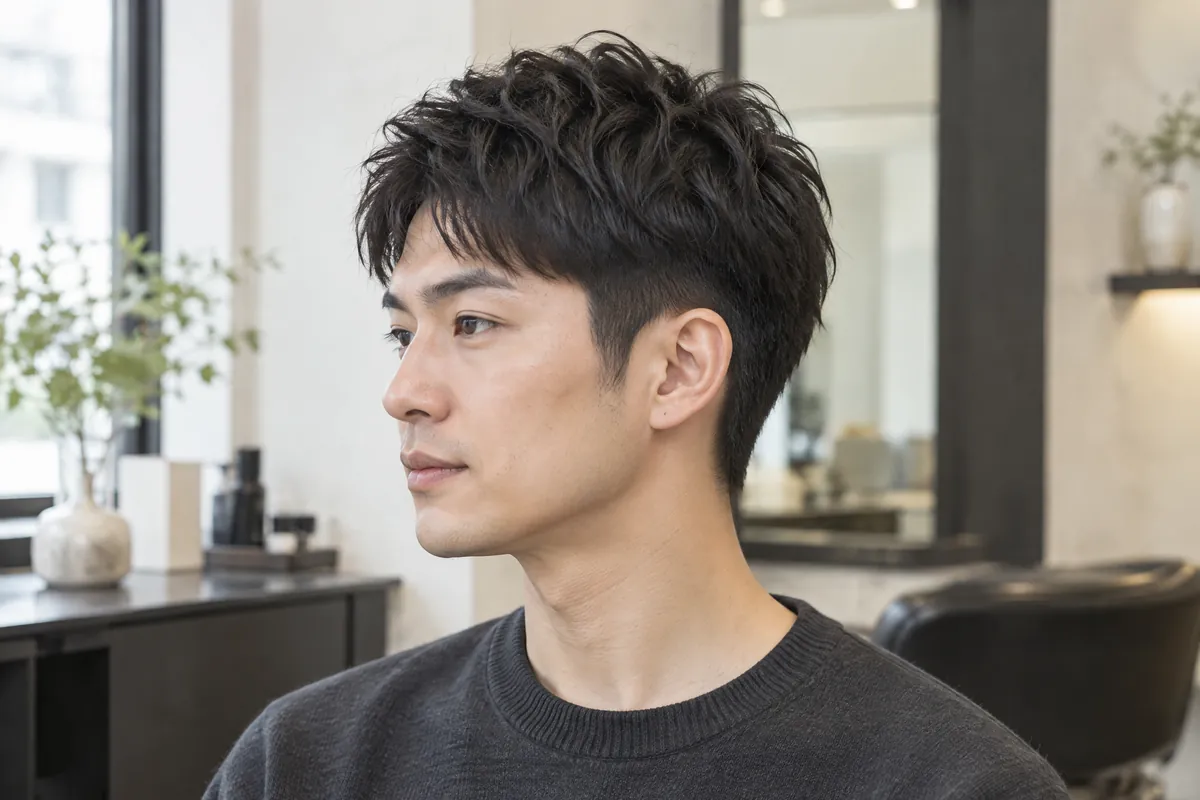
For a shorter shape, decide whether you want the side curls visible or prefer closer sides with more emphasis on the top. Keep the dry fringe boundary separate from the ear outline. The discussion of curly haircuts for men compares those areas without treating a perm or a specialist cutting certification as part of every haircut.
A hypothetical mixed-pattern brief might be: 'Keep the loose bends at the back and enough side length to tuck away. The front sits in my glasses after every wash, so I want that boundary adjusted.' This asks for a specific change while protecting the movement that already works.
Try a temporary finish for a temporary preference
If you enjoy your curls most days but want a smoother outline for an event, treat that as a separate styling preference. Choose one familiar method and record the time and steps it requires. Evaluate the finish when you move and after your normal journey, not only immediately after arranging it in front of a mirror.
Temporary does not mean harmless. The Canadian Dermatology Association advises reducing heat styling, using cool or low heat for blow-drying and the lowest setting for heated styling tools. It also says not to use curling irons or straighteners on wet hair. Avoid repeated passes merely to make a trial photograph match a reference.3
- Notice whether you miss the fullness around your face.
- Check how straighter ends meet your shoulders and clothing.
- Ask whether the routine is acceptable on an ordinary workday.
- Keep an unstyled view beside the temporary finish.
A styling trial can clarify your preference for movement and silhouette. It cannot predict the exact result of a chemical service. If the smooth version appeals only when carefully curled ends are added back in, include that extra work in your decision rather than treating the straight-looking photograph as the whole routine.
Include the next roots in a chemical-change decision
Ask which procedure is being proposed, which areas it would affect and how much movement is intended to remain. Terms such as smoothing and straightening are not interchangeable promises. The Canadian Dermatology Association warns that colour, perming and relaxing chemicals can weaken hair and increase breakage, and advises avoiding application to already damaged hair.3
Bring the history of the lengths, not just a statement that your roots are natural. Include bleach, highlights, home colour, previous perms or straightening and regular heat use. If you cannot recall a product, say so and bring any available packaging or appointment record. Older processing still present in the ends belongs in the assessment.
If your week log points towards wanting a different everyday texture rather than just a tidier edge, the guide to hair straightening for naturally curly hair explores retained movement, previous processing and the contrast between natural roots and treated lengths. Discuss those trade-offs before choosing how straight you want the hair to look.
For permanent shaft straightening, waiting does not simply restore the treated length's former curls. New growth comes from the follicle and is not changed by straightening the existing lengths. Growing out therefore means living with different textures while choosing what to retain or trim; product-specific results and maintenance still need discussion.2
Choose whether you would rather keep length and manage the contrast, or gradually shorten the treated ends. Ask how detangling and drying would work across the transition, and what a future assessment would examine before further processing. Do not turn a maintenance plan into automatic treatment of the whole head whenever roots become visible.
Turn the week into a brief you can actually send
Choose three photographs rather than sending every entry: ordinary wash-day hair, a recurring awkward moment and your preferred achievable finish. Add one inspiration image only if it clarifies a feature. Separate its outline from its curl pattern, and write one sentence about the feature you want to borrow.
- State the area that causes the most inconvenience and when it happens.
- Name the movement and practical lengths you want preserved.
- Summarise washing, drying and morning-refresh habits.
- List past processing and any uncertain parts of that history.
- Ask which change addresses the concern and what daily effort it adds.
Finish with an everyday goal, such as 'I want the front clear of my glasses without smoothing away the back waves'. That gives the conversation a useful direction. A week's record is not a permanent verdict on your hair. It is a way to choose a manageable change without sacrificing features you already enjoy.
Questions & answers
What if I do not wash my hair during the chosen week?
Extend the record to your next normal wash rather than washing solely for the exercise. Meanwhile, label how long it has been since washing; product, tying and daily handling may influence the view.
Do I need to stop using styling products for the record?
Keep your usual products and note their names or type. Make any lower-product comparison a separate entry. Dropping everything at once may show an unfamiliar finish rather than the routine your haircut needs to accommodate.
What if my scalp feels oily but my ends feel dry?
Record those separately rather than changing washing frequency to encourage curls. Focus gentle shampooing on the scalp and conditioner on the lengths that need it. A shape change does not replace comfortable cleansing or careful handling.
Can an inspiration photo with tighter curls still be useful?
Yes, for a feature such as ear coverage or a fuller bottom edge, but not as a texture prediction. Ask what comes from cutting and what needs arranging or chemical change. Bring your own photographs too.
Should I arrive at the salon with my hair completely unstyled?
Ask about preparation for the agreed appointment. Familiar dry hair may help the discussion, but do not assume a dry-cutting method is included. Avoid extra straightening or tight tying merely to make it look tidier.
Put the next step into practice
Develop your understanding of shape, cutting and styling with structured learning at Canvas. Hair styling courses in Hong Kong。
Explore practical guides for a clearer plan before your next style change. Canvas hair and beauty journal。
Tell the team which cutting or styling skills you would like to learn. Contact Canvas Academy。
Sources & further reading
- 6 curly hair care tips from dermatologists
Sectioned detangling on wetted, conditioned curls and coils, avoiding dry brushing, and loose bedtime arrangements that can reduce pillow friction. The advice helps preserve an ordinary pattern while observing it.
- Why does your hair curl in the summer? A chemist explains the science behind hair structure
A university chemist explains how water and heat affect hydrogen bonding and why changing moisture can alter a hairstyle, distinct from chemical changes to the treated hair.
- Hair Care — Canadian Dermatology Association
Practical guidance on gentle washing and detangling, lower-heat styling, keeping heated irons off wet hair, and the breakage risks of colouring, perming and relaxing previously vulnerable lengths.