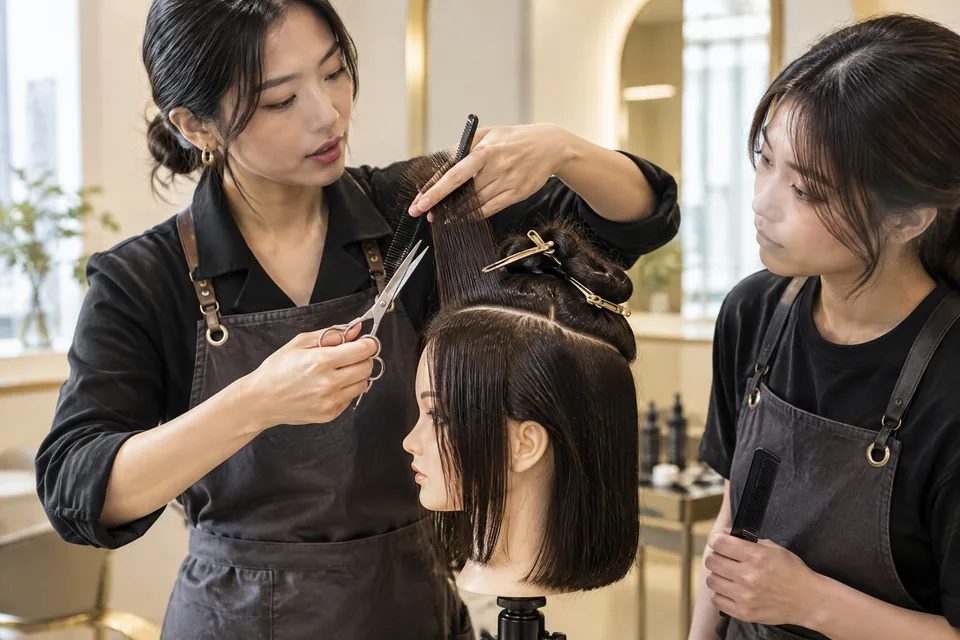
Read the reference as three separate requests
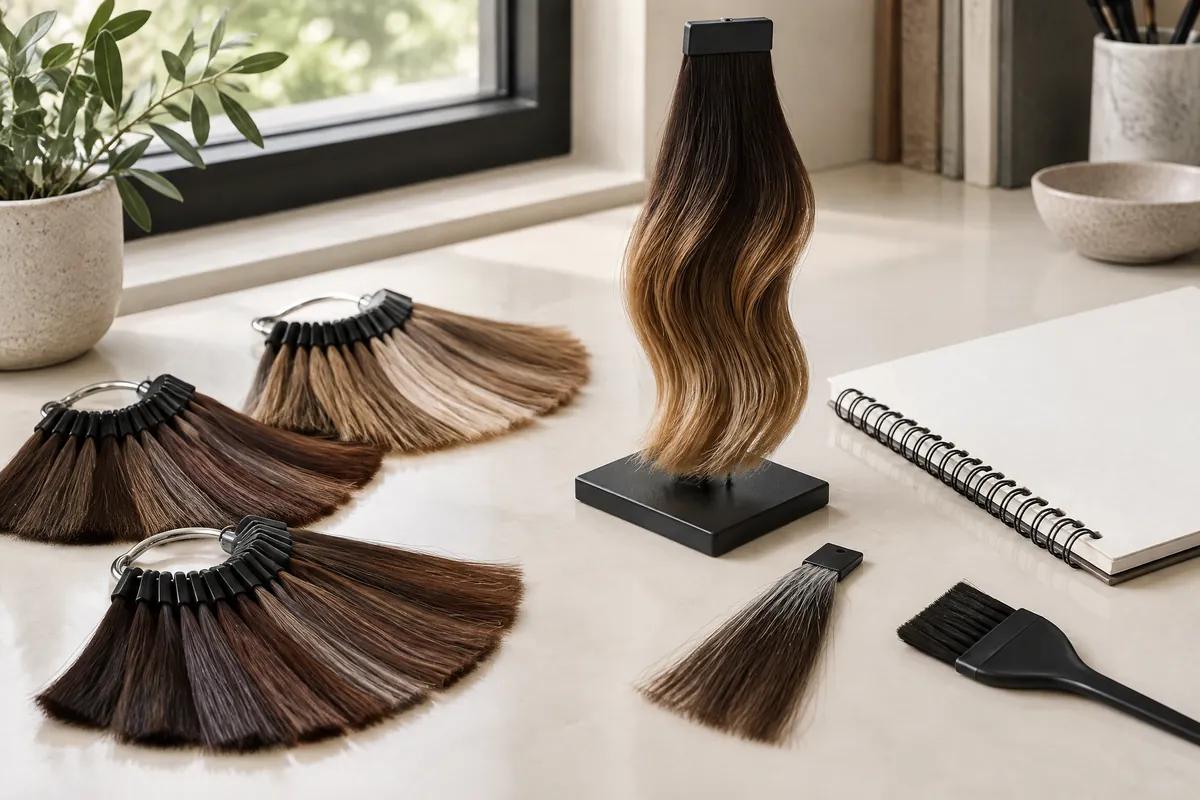
A saved photograph often combines three things: a lighter brown base, a smoky reflection and darker roots. You may like only one of them. Before choosing a shade, cover the brightest part of the picture and look at the hair in shadow. Would you still want that overall darkness? Then decide whether the attraction is pale colour or simply less red-looking reflection.
Treat depth as how light or dark the hair looks overall. Treat tone as the warmth or coolness within that depth. Distribution describes where the colours sit: roots, broad lengths, selected strands or ends. Separating these requests helps prevent a subtle cool-brown idea from becoming an unplanned lightening project. It also makes a deeper alternative easier to judge on its own merits.
Check the broad sections, not just the shine
A bright edge on a curl is poor evidence of the whole head's colour. Look at a broad section away from direct light, then at the root area and ends. A reference that remains pale in shadow asks for a different result from a dark brunette with a cool sheen. If only illuminated strands look greyish, do not describe the entire design as uniformly light.
Vit So's comparison of ash brown hair colour separates the cooler reflection from the depth, and contrasts it with a more softly balanced beige direction. Compare examples at similar brightness. Otherwise, you may choose the brighter beige picture while believing you are choosing its tone. Keep a second reference that shows the hair away from strong window light.
Your reference brief: “I want to stay visibly brunette indoors. I like the less reddish reflection, but the pale ends are optional.”
Map your starting colour from roots to ends
Dark regrowth and dark dyed lengths can look almost identical while needing different consideration. Regrowth has natural pigment; the lengths may also contain accumulated artificial colour. Wella's technical guide describes bleach-free lightening methods specifically for virgin hair, then treats previously coloured hair separately. In the coloured-hair lightening situation it describes, tint alone is insufficient. That is why a root result cannot predict a length result.1
This does not mean you should select a stronger product for the lengths. It means the decision changes: retain their depth, adjust their reflection where appropriate, or discuss removing artificial colour as a separate undertaking. A plan described as one brown may still involve different work in different sections. Ask what changes at the roots and what stays on the lengths.
Locate bands and older lightened sections
Part the hair in several places and examine it dry in soft daylight. Look for a horizontal darker band, brighter tips or lighter pieces underneath. Describe where each begins and ends; do not try to diagnose the chemistry from its appearance. A dark band could have more than one explanation. Its position and the treatments applied there are more useful than guessing why it happened.
Old highlights can remain beneath a later brown tint, even when they are difficult to see. Include earlier bleaching, colour removal, straightening and perming that may still be present in the hair you are keeping. If the ends catch or snap during ordinary handling, say where. Do not repeatedly stretch or pull strands at home to decide how much processing they can tolerate.
Choose between depth, warmth and waiting
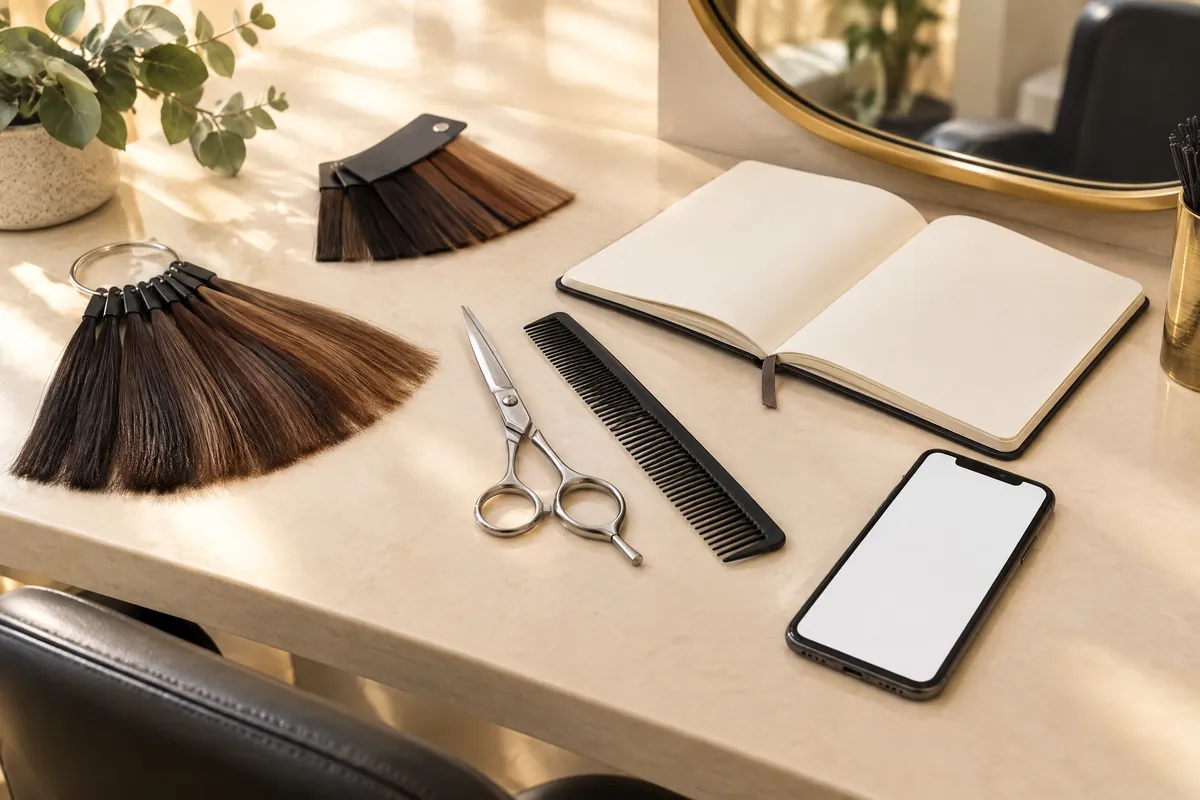
Staying darker is the first route when your main wish is a quieter, less red-looking brunette. Its benefit is keeping the overall depth rather than chasing a pale reference. The compromise is visibility: the difference may be restrained indoors, and there may be no silver-looking finish. Judge the darker option beside your current shade, not beside an image with dramatically brighter ends.
Accepting some warmth is a different choice. You might prefer a balanced brown that still looks brown in daylight over a strongly smoky finish. This only works if you genuinely like the remaining warmth. A warmer shade name is not proof that old dark dye can be lifted without bleach, so keep the depth question separate from your willingness to accept a softer reflection.
Waiting is sensible when pale cool lengths are essential but bleaching is not acceptable, or when further processing would conflict with preserving fragile hair. Waiting need not mean doing nothing: gentler handling or a considered trim can improve your daily routine. However, waiting alone does not remove the treatment history from retained lengths. New growth and eventual cutting change which sections remain.
| Route | What you prioritise | Compromise to accept | When it is a poor fit |
|---|---|---|---|
| Stay deeper | Brunette depth with a less warm direction | A subtler change, without the reference's pale detail | You would feel disappointed without obvious brightness |
| Keep some warmth | A softer, balanced brown you enjoy | Warm reflection may remain visible | Any red or golden reflection would bother you |
| Postpone major colour | Retaining length or keeping a firm no-bleach boundary | The current colour stays for now | You expect waiting alone to erase old dye |
For a service discussion, no bleach hair colour at Vit So starts with your existing base and the change you want. State whether your boundary excludes a bleaching step only, or also any lightening of natural hair. Ask whether the proposed work retains your natural darkness or changes it, so the agreed boundary is about the process as well as the shade.
Work through a divided-history example
Imagine natural dark roots, middle lengths repeatedly dyed dark brown and ends that were highlighted before being covered with brown. The desired photograph shows light, cool brown throughout. This is a hypothetical planning example, not a client result. There are several starting points even though the hair currently appears brown from a distance.
If the priority is a more even dark outline, retaining the lengths' depth may be more acceptable than making only the natural roots brighter. Ask whether the proposed root work would emphasise the root-to-length difference. A visible transition is not automatically wrong, but it should be a design choice you like rather than a surprise caused by treating all sections alike.
If the priority is the photograph's pale finish, calling the appointment a tone refresh would understate the request. The darker lengths raise a pigment-removal question, while the previously lightened ends raise a condition question. Discuss the scope separately before approving anything. If that scope crosses your no-bleach boundary, the useful outcome may be a different brown or no colour service.
The American Academy of Dermatology advises staying near the natural shade and explains that substantial lightening can involve more damage. This supports weighing brightness against condition rather than treating the absence of bleach as a guarantee of gentle processing. Its general advice does not determine a formula or the suitability of this hypothetical head of hair.2
Build a history sheet that explains each zone
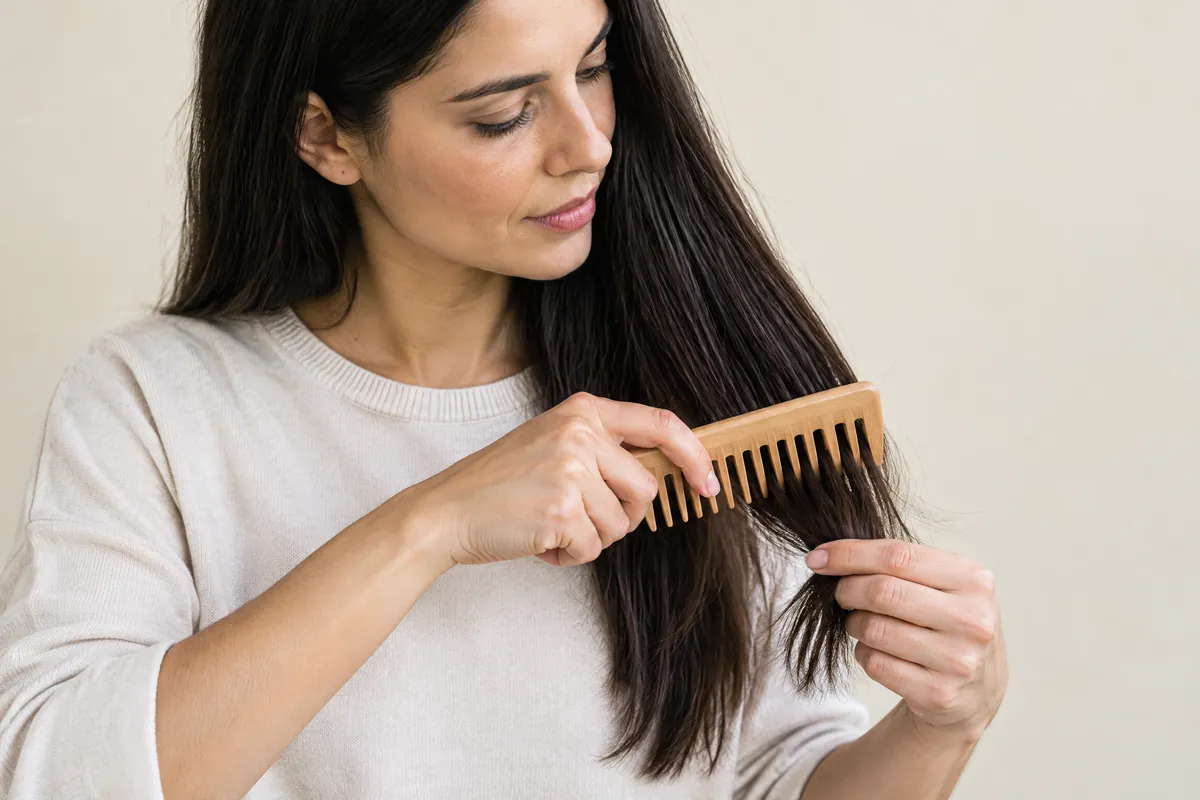
Start with the hair you intend to keep, not just your most recent appointment. A dark tint applied last month may cover highlights from much earlier. Write approximate dates when exact ones are unavailable. Product photographs, receipts or older unfiltered hair photographs can help explain the sequence, but an honest unknown is better than a confident guess.
Use a simple worksheet so that every section has a history and a present concern. Include home dyes, colour-depositing masks and products described as herbal or henna. Mention straightening and perming even if the current shape has changed. The aim is to identify overlapping work, not to create a polished salon record or prove that your hair is ready.
| Hair zone | History to record | Present detail to describe |
|---|---|---|
| Roots and temples | Natural regrowth, recent root colour, visible white strands | Depth, coverage preference and root contrast |
| Middle lengths | Repeated tint, earlier red or copper colour, smoothing or perming | Dark bands, uneven reflection, rough patches |
| Ends and hidden pieces | Old highlights, bleach, colour removal or home colour | Tangling, brighter sections, snapping during normal handling |
| Whole head | Product names, uncertain dates, any previous reaction | What you want to retain and what you will not accept |
Alongside the worksheet, photograph the parting, back and ends with dry hair in soft daylight. Add an indoor image if the office is where the colour matters most. Keep the same parting and avoid beauty filters. These photographs describe colour distribution; they do not replace checking the hair's condition or reviewing products before a service.
Keep pre-colour care within its cosmetic limits
A smoother-feeling strand is easier to manage, but that feeling is not a measure of how much chemical work it can tolerate. The AAD explains that conditioner coats hair to create a smoothing effect and that leave-in products can help with detangling and manageability. Those are useful cosmetic benefits, not evidence that previous processing has been undone.3
Vit So's pre-colour hair treatment sits within a care menu that also distinguishes moisture and smoothing services. Ask what the proposed protection step is intended to do, which areas receive it and whether it is included in the agreed colour scope. Do not infer a particular bond-building brand, permanent repair or colour-removal function from the treatment name.
For your own decision, describe the care goal in ordinary terms: fewer catching ends, easier combing or softness without flat roots. Judge it after your usual wash and drying routine, not only after a styled finish. If the hair still breaks with normal handling, raise that before further colour. A pleasant finish should not become a reason to disregard the history sheet.
Keep scalp concerns separate from length care. A mask cannot establish why a scalp feels sore or make an irritated scalp ready for dye. Mention discomfort before products are selected, and seek appropriate healthcare advice for persistent symptoms. Cosmetic hair protection is not scalp treatment for a medical condition, hair regrowth or permission to continue a process that feels uncomfortable.
Prepare at home without adding another colour variable
Do not try to make your hair more receptive by adding an unrequested stripping routine or a new colour-depositing product just before the appointment. That introduces another product or processing history to explain. Keep your normal care simple, and ask for preparation instructions for the actual proposed service rather than borrowing a wash schedule from a different chemical treatment.
For ordinary conditioning, follow the product's directions and apply it where needed. The AAD distinguishes rinse-off from leave-in conditioner: their chemistry and intended use differ, so leaving a rinse-off formula in the hair is not a substitute. A product that improves slip still has no role in lifting accumulated dark dye or deciding whether the colour change is feasible.3
Prepare these five items before sending an enquiry:
- A current daylight photo set showing roots, lengths and ends.
- A zone-by-zone history, including products and details you cannot recall.
- One preferred reference and one deeper alternative you would actually enjoy.
- A clear boundary: no bleach, no lightening, or preserving length above matching brightness.
- A short note on tangling, normal handling, washing and heated styling.
Agree on the work, then plan the upkeep
Before proceeding, ask for the work to be described by area and purpose: root colour, length refresh, lightening or separate corrective work. Confirm any care step and finishing work within the quote. A lighter transformation is not automatically a standard tinting appointment because both results are called brown. If the suggested alternative changes the scope, pause and decide whether you still want it.
Discuss which later change would trouble you most: warmer reflection, root contrast or rough-feeling ends. Each requires a different conversation, rather than automatically repeating colour through the whole head. Compare photographs in similar lighting when tracking tone. Ask about care and future review for the actual process; there is no universal lifespan that follows from the words cool brown.
Before agreeing, complete this sentence: “If the pale reference is not compatible with my limits, I would prefer ___, and I would not accept ___.”
A useful next step is to send your history and photographs with that sentence, then discuss a darker option, retained warmth or postponement. If enquiring with Vit So, the appointment location is 252 Hollywood Road, Sheung Wan. Confirm the proposed work and arrangements before travelling. Choose the compromise you can enjoy in everyday life, not one you merely accept in the chair.
Questions & answers
Does an ash shade automatically cover white hairs?
No. Ash describes a cool tone, while coverage is a separate objective. Mention white hairs around the parting and temples, and decide whether you want them concealed or softly blended. A cool-looking reference does not tell the colourist how much visible white hair you want to retain.
If I reacted to dye before, is a no-bleach appointment a safer substitute?
Do not use the no-bleach label to resolve a previous reaction. Share the product and what happened before arranging colour, and discuss the relevant testing and advice. The AAD advises against dyeing after a reaction and recommends dermatology advice. A different shade is not itself evidence of suitability.[2]
Would a shorter haircut make a cooler brown easier to plan?
It may remove some older processed ends, depending on where the proposed cut falls. It does not remove dye from the lengths that remain. Mark the length you want to keep first, then review the history of those sections. Do not cut more than you want solely to pursue a colour photograph.
How should I plan colour before a trip with swimming and outdoor days?
Mention the trip before choosing a demanding tone and ask about care for the proposed process. Consider whether you would enjoy the shade if its reflection changes while you are away. Sun protection is useful for coloured hair; the AAD recommends a wide-brimmed hat outdoors. Avoid assuming a fixed refresh interval.[2]
Can I compare a cool-brown swatch with my skin to make the final choice?
A swatch can help you judge whether you like the reflection near your face, especially beside your usual clothes. It cannot predict the same colour on your roots and dyed lengths. Compare deeper and softer options at similar brightness, then combine that preference with the assessment of your actual hair.
Put the next step into practice
Develop your understanding of shape, cutting and styling with structured learning at Canvas. Hair styling courses in Hong Kong。
Explore practical guides for a clearer plan before your next style change. Canvas hair and beauty journal。
Tell the team which cutting or styling skills you would like to learn. Contact Canvas Academy。
Sources & further reading
- How to Lighten Hair Without Bleach
Wella's professional guide distinguishes specific bleach-free lightening systems for virgin hair from the separate limitations of tint on previously coloured hair. It helps readers understand why natural roots and artificial pigment on lengths need different consideration.
- Coloring and perming tips for healthier-looking hair
The American Academy of Dermatology explains dryness and brittleness associated with chemical treatments, the greater demands of substantial lightening, product-reaction precautions and sun protection for treated hair.
- Dermatologists' top tips for using leave-in conditioner
The American Academy of Dermatology describes conditioner's cosmetic smoothing and detangling role, appropriate application, and why rinse-off and leave-in formulas should not be interchanged.